What is Open Enrollment and Why It Matters
Medicare’s open enrollment is a specific timeframe when you can make changes to your Medicare coverage. This period, often referred to simply as “open enrollment,” occurs once a year, providing enrollees the opportunity to evaluate and modify their Medicare Advantage or Medicare Part D plans.
Understanding open enrollment is important because decisions made during this time can have lasting effects on your coverage and out-of-pocket costs. During Medicare open enrollment, careful consideration should be given to each option, allowing you to determine which plan fits your healthcare and financial needs best.
The ability to switch plans or make changes during this period means you can respond to plan alterations or personal healthcare requirements that may have developed over time. Open enrollment helps enrollees adapt to changes within Medicare and personal circumstances, ultimately enabling informed decisions about their healthcare journey.
For anyone navigating Medicare choices, recognizing the significance of this period ensures continued access to suitable and comprehensive healthcare coverage that supports individual health needs.
By being proactive during this time, you can compare your current plan against others available, whether it’s assessing benefits, costs, or network providers, all aimed at enabling a confident decision-making process.
Medicare Open Enrollment Period Details
The Medicare Open Enrollment Period is a vital opportunity for enrollees to make important decisions regarding their healthcare coverage. This period, occurring annually, allows you to review and possibly modify your Medicare Advantage or prescription drug plans to better suit your healthcare needs.
Understanding the specifics of this period is key to ensuring your current or new plan aligns well with your expectations for treatment and cost. In addition, knowing the exact dates and procedures involved in open enrollment can empower you to navigate the Medicare landscape confidently, helping you stay informed about your healthcare options.
Key Dates and Deadlines You Should Know
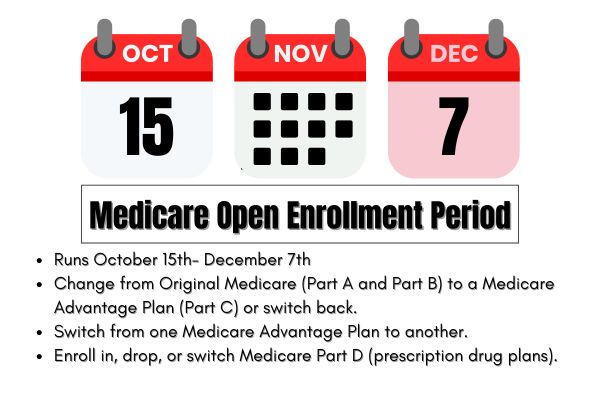
The Medicare Open Enrollment period begins on October 15 and concludes on December 7 each year. Within this window, enrollees can review, adjust, or change their Medicare plans.
If you’re considering a switch from Original Medicare to a Medicare Advantage plan or want to alter your current Medicare Part D prescription drug plan, these changes must be finalized before the enrollment ends.
During the annual enrollment period, it’s crucial to compare different plans to understand how they may impact your healthcare and finances. Many are unaware that any changes you make during this annual period will take effect starting January 1 of the following year.
To avoid last-minute stress, mark your calendars and start early. This will give you ample time to evaluate your options and ensure you’re making a choice that best fits your needs.
By staying engaged with the Medicare open enrollment process, you can better manage your healthcare and financial responsibilities, creating peace of mind as you approach the new year. Remember, understanding the enrollment deadlines is vital to ensuring you don’t miss out on optimal healthcare solutions.
Comparing Medicare Advantage and Original Medicare
Making sense of the differences between Medicare Advantage and Original Medicare is key to making informed healthcare decisions. Medicare Advantage plans, also known as Medicare Part C, offer bundled plans that can include prescription drug coverage, dental, vision, and more.
In contrast, Original Medicare, which consists of Part A and Part B, provides straightforward coverage but may require additional plans for comprehensive coverage. By understanding the distinct benefits and considerations of each Medicare plan, you can select a plan that best meets your healthcare needs and financial circumstances during the open enrollment period.
Benefits and Considerations for Each Medicare Plan

When deciding between Medicare Advantage and Original Medicare, it’s essential to weigh the benefits and considerations of each plan carefully. A Medicare Advantage plan often bundles services, including prescription drug benefits, dental, and vision coverage, which can be appealing if you’re looking for an all-in-one solution.
These plans may also offer additional benefits, such as wellness programs, and typically have a network of healthcare providers you must use. This can lead to lower out-of-pocket costs compared to piecing together standalone coverage, but it also requires you to work within the network’s constraints.
On the other hand, Original Medicare, which encompasses Part A (hospital insurance) and Part B (medical insurance), provides more flexibility as you can see any doctor or specialist that accepts Medicare.
However, this option might involve higher expenses when extra coverage is needed, like a separate Medicare Part D plan for prescription drugs, or a Medicare Supplement plan for additional cost-sharing. Both options have different plan structures and coverage details, so a thorough review of your personal healthcare needs and budget is important.
Consider factors such as your current health status, preferred providers, and how often you visit healthcare services when assessing each plan. Understanding these distinctions allows for a more tailored approach to your healthcare, ensuring comprehensive and affordable coverage that aligns with your lifestyle.
The Role of the Annual Enrollment in Medicare
The annual enrollment period plays a crucial role in shaping your Medicare experience, offering a yearly opportunity to reevaluate your healthcare choices. This timeframe is your chance to consider whether your current Medicare Advantage or Original Medicare plan meets your evolving health needs and financial situation.
Missing this window can mean sticking with a plan that no longer serves you effectively. With the right information, you can explore new plan options or make necessary changes to your Medicare coverage, ensuring a smoother healthcare journey.
Familiarizing yourself with the ins and outs of annual enrollment is essential to maximizing your Medicare benefits.
How Annual Enrollment Affects Your Medicare Choices
The Medicare annual enrollment period significantly impacts the choices you have in managing your healthcare. During this crucial time, you can switch from Original Medicare to a Medicare Advantage plan, or vice versa, and even make adjustments to your Medicare Part D coverage.
This flexibility allows you to tailor your coverage based on your current healthcare needs and financial priorities. For example, if you require additional coverage such as dental or vision, a Medicare Advantage plan might offer benefits that Original Medicare does not include.
Evaluating your plan options during annual enrollment ensures that you’re not overspending on coverage you don’t need, or underinsured in areas that are important to your health. Each year, plan benefits and costs can change, making it essential for you to assess your plans carefully during this period.
By comparing various plans, you can make informed decisions that align with your budget and healthcare requirements, ensuring comprehensive coverage. The annual enrollment period is more than just a timeframe, it’s an empowering opportunity to refine your Medicare choices and enhance your healthcare experience.