If you’re wondering about the differences between Medicare and Medicare Advantage, you’re not alone. Both provide essential health coverage for those 65 and older, but differ significantly in terms of administration, benefits, and costs. This article will break down these differences to help you decide which option best suits your healthcare needs.







Differences Between Medicare and Medicare Advantage
Key Takeaways
- Medicare consists of two main parts (A and B), while Medicare Advantage plans (Part C) are offered by private insurers and often provide additional benefits.
- Original Medicare does not cover certain services like dental and vision care, whereas Medicare Advantage plans typically include these benefits along with prescription drug coverage.
- Medicare Advantage plans may have lower premiums but impose out-of-pocket expense caps, contrasting with Original Medicare, which has no limit on annual out-of-pocket costs.
Compare Plans In One Step!
Medicare and Medicare Advantage: An Overview
Medicare, the cornerstone of health coverage for Americans aged 65 and older, is a federal program divided into two main parts a and b: Medicare Part A (hospital insurance) and Medicare Part B (medical insurance). When you turn 65, you’re eligible to enroll in this traditional program sponsored by the federal government.
Medicare Advantage plans, also known as Medicare Advantage Part C, are offered by private insurance companies and must cover all services that Original Medicare covers. These plans often come with additional benefits, making them an attractive alternative to the traditional medicare plan.
Deciding between Original Medicare and Medicare Advantage is a critical step for new beneficiaries. While both provide a foundational level of hospital and medical insurance, they differ significantly in administration, additional benefits, and provider networks. Understanding these differences is crucial to selecting the plan that best meets your healthcare needs.
Coverage Differences
Original Medicare covers several essential medical services, including Medicare coverage for inpatient hospital services, skilled nursing services, doctor visits, outpatient care, health care, medical care, and some preventive services. However, original Medicare doesn’t cover areas such as long-term care, routine physical exams, and dental, vision, and hearing care.
In contrast, Medicare Advantage plans must cover all medically necessary services that Original Medicare provides, often including prescription drug coverage as part of their benefits. This integration can simplify your health coverage by bundling all in one plan into one comprehensive package, as outlined in the medicare contract.
Both Original Medicare and Medicare Advantage cover critical services such as:
- Blood work
- Diagnostic tests
- Doctor visits
- Hospitalizations
- Outpatient surgery
However, Medicare Advantage plans often require prior authorization for certain services, adding a layer of complexity to accessing care.
Cost Comparison
When evaluating Medicare costs, it’s essential to consider several factors:
- Premiums
- Deductibles
- Copays
- Coinsurance
The total costs can vary based on the specific coverage chosen and the healthcare services used.
Generally, Medicare Advantage plans have lower premiums than Original Medicare but may come with higher out-of-pocket costs. For instance, the Part B premium, which is crucial for Original Medicare, has a monthly premium of approximately $185 in 2025. Additionally, about two-thirds of enrollees in Medicare Advantage plans do not pay an additional premium.
Out-of-Pocket Costs with Medicare Advantage
One significant advantage of Medicare Advantage plans is the annual cap on out-of-pocket expenses, providing financial protection that original medicare costs lack. In 2025, the out-of-pocket maximum for in-network services under Medicare Advantage is projected to be $9,350, with a total expenses cap of $14,000. This cap can be a crucial factor in managing your healthcare expenses.
Unlike Original Medicare, which has no limit on out-of-pocket costs per year, Medicare Advantage plans offer a yearly limit for your annual spending. Understanding these cost differences can help you make an informed decision, ensuring that you select a plan that aligns with your financial situation and healthcare needs.
Provider Networks
One of the most significant differences between Original Medicare and Medicare Advantage is how provider networks are managed. Original Medicare allows beneficiaries to see any doctor that accepts Medicare across the entire United States, offering unparalleled flexibility.
Medicare Advantage plans, however, typically restrict members to specific doctors and providers within their plan’s network for non-emergency care. This means you may need prior authorization for certain medical services and could face higher costs if you go outside your plan’s network or utilize out of network services.
Patients in Medicare Advantage plans may also need referrals from their primary care doctor to see a specialist, adding another layer of complexity to your health care providers. Understanding these network restrictions is crucial for ensuring that you have access to the healthcare providers you prefer.
Compare plans and enroll online

Prescription Drug Coverage
Prescription drug coverage varies significantly between Original Medicare and Medicare Advantage plans. While Original Medicare requires you to enroll in a standalone Part D plan to obtain prescription coverage, Medicare Advantage plans often include these benefits within the plan.
Most Medicare Advantage plans provide some form of a prescription drug plan to cover prescription drugs, making it easier to manage your healthcare needs in a single plan. This integrated approach can simplify your coverage, ensuring that you have access to the medications you need without additional enrollment steps.
In contrast, participants in Original Medicare must navigate the enrollment process for a separate Part D plan to cover their prescription drugs. This added complexity can be a deciding factor for many when choosing between Original Medicare vs the two options.
Additional Benefits
Additional benefits provided by Medicare Advantage plans.
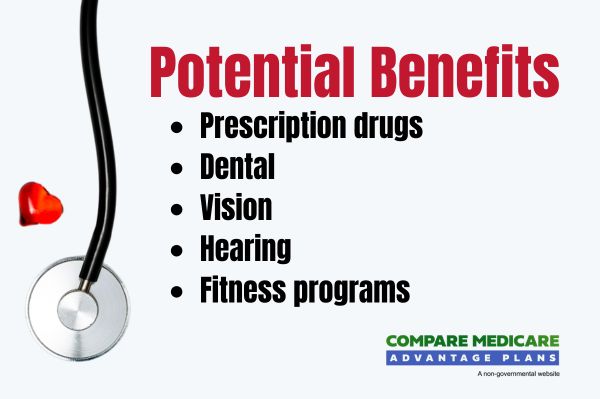
Medicare Advantage plans may provide various additional benefits. These benefits are not available with Original Medicare. These extra benefits often include routine dental, vision, and hearing care, which are essential for many beneficiaries. Unlike Original Medicare, which does not cover services like routine exams, Medicare Advantage plans often provide these essential services, adding value to the plan.
This comprehensive coverage can make Medicare Advantage an attractive option for those who need these types of care. The availability of additional coverage benefits, such as dental care and vision care, makes Medicare Advantage plans an appealing choice for many, offering more holistic health coverage.
Travel and Geographic Considerations
Travel and geographic considerations are crucial when choosing between Original Medicare and Medicare Advantage. Original Medicare provides nationwide coverage, allowing access to healthcare providers across all states and territories. However, traveling outside the U.S. generally does not have coverage under Medicare, with some exceptions for emergencies.
Medicare Advantage plans, on the other hand, typically have a defined service area, which may limit access to healthcare providers outside that region. If you receive care outside of your Medicare Advantage plan’s network, you may face additional costs or a lack of coverage.
However, Medicare Advantage plans are required to cover emergency and urgent care services anywhere in the U.S., and some plans may offer limited coverage for emergencies abroad. Considering these geographic limitations is essential, especially for those who travel frequently.
Switching Plans
Switching between plans is an important aspect of managing your healthcare. Individuals can opt to switch from a Medicare Advantage Plan to Original Medicare if they move outside their plan’s service area. Beneficiaries whose Medicare Advantage Plan is terminated or not renewed can enroll in Original Medicare if they do not choose another plan during the designated period.
If a Medicare Advantage Plan is sanctioned due to issues, beneficiaries can switch to a different plan starting when the sanction is imposed. Additionally, a low-performing plan allows beneficiaries to switch to a different Medicare Advantage or drug plan at any time.
Understanding these switching options ensures that you can adapt your healthcare coverage options to meet changing needs and circumstances.
What to Consider When Choosing
Choosing between Original Medicare and Medicare Advantage involves several key factors. Consider your health needs, financial situation, and lifestyle when evaluating your options. Cost and coverage differences are crucial elements to weigh.
Some potential downsides of Medicare Advantage plans compared to Original Medicare include provider networks and prior authorization requirements. However, Medicare Advantage plan members often benefit from negotiated prices with network providers, leading to cost savings.
If you travel frequently, consider how coverage may work while you are away from your home area, as Medicare Advantage plans can have geographic restrictions. The Medicare Annual Enrollment Period and Special Enrollment Periods allow for switching between Original Medicare and Medicare Advantage, providing flexibility to adapt your coverage to your needs.
Find & Compare Plans Online
Summary
In summary, understanding the key differences between Original Medicare and Medicare Advantage is essential for making an informed decision about your healthcare. From coverage and costs to provider networks and additional benefits, each option has its unique advantages and potential drawbacks.
By considering your health needs, financial situation, and lifestyle, you can select the plan that best aligns with your goals. Empower yourself with the knowledge to choose wisely and ensure that your healthcare needs are met with confidence and peace of mind.
Frequently Asked Questions
What are the main parts of Original Medicare?
Original Medicare is comprised of Part A, which covers hospital insurance, and Part B, which covers medical insurance.
How do Medicare Advantage plans differ in terms of provider networks?
Medicare Advantage plans often require members to use a specific network of doctors and providers, unlike Original Medicare, which permits beneficiaries to see any doctor that accepts Medicare nationwide. This restriction can impact the flexibility and choice available to members.
Do Medicare Advantage plans include prescription drug coverage?
Yes, most Medicare Advantage plans include prescription drug coverage, unlike Original Medicare, which requires a separate Part D plan for this benefit.
What additional benefits do Medicare Advantage plans offer?
Medicare Advantage plans offer additional benefits like routine dental, vision, and hearing care that are not available through Original Medicare. This enhances overall healthcare coverage for enrollees.
Can I switch from Medicare Advantage to Original Medicare?
Yes, you can switch from a Medicare Advantage plan to Original Medicare, particularly if you experience changes like moving outside the plan’s service area or if the plan is not renewed.
Have Questions?
Speak with a licensed insurance agent
1-833-641-4938
TTY users 711
Mon-Fri: 8am-9pm ET
Find & Compare Plans Online
ZRN Health & Financial Services, LLC, a Texas limited liability company

Russell Noga is the CEO of ZRN Health & Financial Services, and head content editor of several Medicare insurance online publications. He has over 15 years of experience as a licensed Medicare insurance broker helping Medicare beneficiaries learn about Medicare, Medicare Advantage Plans, Medigap insurance, and Medicare Part D prescription drug plans.