Understanding Medicare Advantage Plan Types

Understanding the various types of both Medicare Advantage plans and Medicare plans is key to making an informed decision. These plans, also known as Medicare Advantage Part C, combine benefits from Part A and Part B and may include additional features like prescription drug coverage, vision, dental care, and a medicare contract.
The main types include HMO, PPO, and Special Needs Plans (SNPs), each catering to different healthcare needs and preferences.
HMO Plans
Health Maintenance Organization (HMO) plans are popular Medicare Advantage plans with the following characteristics for a UHC Medicare member:
- Members must receive care from a network of doctors and hospitals.
- Members typically need to select a primary care physician (PCP).
- Referrals from the PCP are required to see specialists in a Medicare Advantage organization.
This structure helps manage healthcare costs and ensures coordinated care.
HMO plans often have:
- Lower out-of-pocket costs
- Lower costs, premiums, and copayments compared to other plan types
- A focus on preventive care which can lead to early detection of health issues and further cost savings over time in an HMO plan.
PPO Plans
Preferred Provider Organization (PPO) plans offer more flexibility in choosing healthcare providers within a provider network. Key features include:
- Members can see any healthcare provider without a referral, unlike HMO plans.
- Flexibility to see specialists directly.
- Ability to receive care from out-of-network providers.
- Usually results in higher out-of-pocket costs.
PPO plans are ideal for those who value the freedom to choose their healthcare providers and are willing to pay a bit more for that flexibility. While premiums for PPO plans may be higher than HMO plans, the added premium freedom and access to a wider range of healthcare services can be worth the extra cost.
Special Needs Plans (SNPs)
Special Needs Plans (SNPs) cater to individuals with unique health needs or dual eligibility. These plans provide specialized care for people with specific diseases or conditions, including end-stage renal disease, ensuring their health issues are appropriately managed. For example, c snps must include Medicare prescription drug coverage, essential for managing chronic conditions, including dual special needs plans.
SNPs can be a lifeline for those with complex health needs, offering tailored healthcare services that meet their specific requirements. Whether managing chronic conditions or dual eligibility, DSNPs and cSNPs ensure enrollees receive the comprehensive care they need.
Important Considerations When Buying Medicare Advantage Insurance Online
When purchasing Medicare Advantage insurance online, consider the following:
- Understand the plan’s coverage areas, especially if you travel frequently.
- Be aware that some plans may have limitations outside specific regions, affecting your access to care when away from home.
- Consider additional benefits offered by various plans, such as dental, vision, or wellness programs, which can enhance your overall healthcare experience.
Assessing the total potential annual out-of-pocket costs is crucial for understanding a plan’s financial implications. This includes evaluating prescription drug coverage options, as some Medicare Advantage plans may include additional drug benefits. Considering these factors ensures you choose a plan that meets your healthcare needs and fits your budget.
Eligibility and Enrollment Periods
Eligibility for a Medicare Advantage plan requires enrollment in Medicare Part A and Part B. Those turning 65 or with qualifying disabilities can enroll in Medicare coverage and then choose an eligible Medicare Advantage plan if they live in the plan’s service area. Enrollment in Original Medicare is a prerequisite for joining a Medicare Advantage plan.
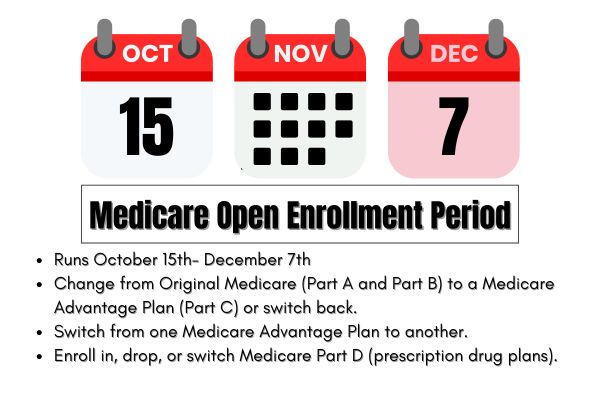
The Initial Enrollment Period is a seven-month window around your 65th birthday, during which you can enroll in a Medicare Advantage plan. The Open Enrollment Period for Medicare Advantage plans runs from October 15 to December 7 each year, allowing individuals to switch plans or make changes to their existing coverage.
Special enrollment period allows for plan changes due to qualifying life events, such as moving or losing other health coverage. Understanding these enrollment periods ensures you don’t miss the opportunity to select the best plan for your needs.