Speak with a licensed insurance agent

1-833-641-4938

TTY user 711 Mon-Fri : 8am-9pm EST

Medicare Supplement Plans 2027

Exploring Medicare Supplement Plans for 2027? This guide helps you understand the options available, offering insights into how different plans can complement your Original Medicare coverage.

We’ll delve into the potential benefits, such as covering copayments and deductibles, and discuss varying costs to assist you in making informed decisions.

Our aim is to provide a clear, unbiased overview so older adults and caregivers can navigate Medicare choices with confidence. As healthcare needs change, understanding your options becomes crucial. Stay informed and confident with our comprehensive look at Medicare Supplement Plans for the coming year.

Brief Overview

Exploring Medicare Supplement Plans for 2027 is crucial for seniors managing healthcare in retirement.

These plans, also known as Medigap, fill gaps left by Original Medicare, covering costs like copayments and deductibles. By understanding how these plans work, seniors can better evaluate their options and decide if a supplement plan suits their needs and budget. Comparing Medigap with Medicare Advantage plans helps determine the right fit based on specific healthcare needs, financial situations, and personal preferences.

It’s essential to consider the timing, benefits, and limitations to ensure comprehensive healthcare coverage and peace of mind.

Selecting Your Medicare Supplement Plan with Aetna

Key Highlights

  • Medicare Supplement Plans fill gaps in Original Medicare, covering copayments and deductibles.
  • Medigap and Medicare Advantage plans have different coverage methods and cost structures.
  • Medigap plans offer flexibility with no network restrictions; costs may vary by plan and location.
  • Enrolling during the Medigap Open Enrollment Period ensures coverage without health condition concerns.
  • Medigap provides financial predictability and broad access to healthcare providers nationwide.

Medicare Supplement Plans Comparison for 2027

When it comes to managing your healthcare in retirement, understanding Medicare Supplement Plans, also known as Medigap, is crucial.

These plans serve as extra insurance you can buy to fill the gaps left by Original Medicare coverage.

Medicare Supplement Plans offer valuable solutions by covering costs that Medicare doesn’t, such as copayments and deductibles. In this section, we will explore what a Medicare Supplement is, break down how Medicare Supplement Plans work, and provide insights to help you decide if they align with your healthcare needs and budget for 2027.

What is a Medicare Supplement?

Medicare Supplement, often referred to as Medigap, is a type of supplemental insurance designed to cover costs not included in Original Medicare.

These costs can include deductibles, copayments, and certain out-of-pocket expenses that can accumulate and potentially overwhelm seniors on a fixed income. Medigap plans are offered by private companies and require individuals to be enrolled in both Medicare Part A and Part B before applying. This layer of extra insurance you can buy acts as a safety net, providing peace of mind by potentially reducing unexpected medical bills.

It’s important to note that Medigap policies are standardized, which means that plans with the same letter offer the same basic benefits, but costs may vary between insurers.

Standardized plans simplify the comparison process, allowing for informed decisions based on coverage needs and affordability. Moreover, each Medigap policy is renewable, even if you have health problems, ensuring continuity of coverage. These plans must also comply with federal and state laws to protect you, which adds another layer of security as you navigate your healthcare choices.

Understanding Medicare supplement plans

How Medicare Supplement Plans Work

Medicare Supplement Plans, or Medigap, work by complementing your Original Medicare coverage. After Medicare pays its share of the approved healthcare costs, your Medigap plan covers its share. For instance, if you have a Medigap policy that covers copayments, once Medicare Part B pays its 80% for outpatient services, your Medigap plan can cover the remaining 20%.

This arrangement helps in minimizing out-of-pocket expenses, making it easier to manage unexpected healthcare costs. The array of standardized plans available allows you to select the benefits that suit your needs. For example, some plans cover hospital stays more extensively, while others might offer broader coverage for outpatient care or foreign travel emergencies.

These supplement plans do not cover everything; services such as long-term care, vision or dental care, hearing aids, and private-duty nursing are typically not included.

Understanding the limits of your Medigap plan is crucial in budgeting for additional expenses. It’s also essential to opt for a plan during your Medigap open enrollment period when you’re guaranteed to get coverage regardless of health conditions. Remember, while Medigap plans provide valuable coverage, they generally come with a monthly premium in addition to what you pay for Medicare Part B.

Thus, assessing your healthcare needs and financial situation is key to choosing the right Medigap plan that seamlessly fits into your overall healthcare strategy.

Compare plans & Rates in your area

Comparing Medicare Supplement Plans and Medicare Advantage

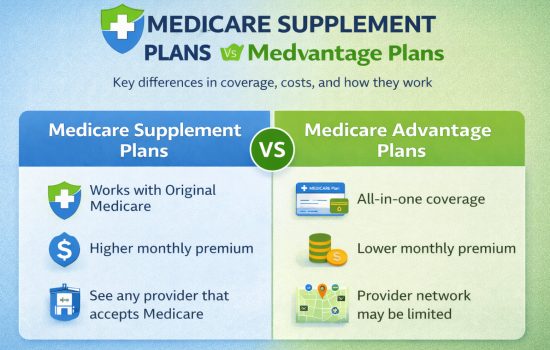
When exploring Medicare options, it’s important to understand the difference between Medicare Supplement Plans and Medicare Advantage.

Both offer ways to enhance your healthcare, but they function differently in terms of coverage, costs, and how they integrate with Original Medicare. On one hand, Medicare Supplement Plans, or Medigap, provide extra insurance by covering costs that Original Medicare doesn’t.

On the other hand, Medicare Advantage plans, sometimes known as Part C, are provided through private companies and offer all-in-one alternatives. This section will detail the differences and help determine which might be suitable for your healthcare needs in 2027.

Differences Between Medicare Supplement and Advantage

Understanding the differences between Medicare Supplement Plans and Medicare Advantage plans is crucial as you evaluate your healthcare options.

Medicare Supplement Plans, also called Medigap, are designed to work alongside your Original Medicare by covering additional costs like copayments and deductibles.

These plans are sold by private companies and have standardized benefits across the same letter plan types, ensuring that basic benefits are consistent no matter which insurer you choose. This standardization simplifies choosing a plan based on your specific needs without worrying about differing core benefits between companies.

On the other hand, Medicare Advantage plans function quite differently. Offered by private companies approved by Medicare, these plans provide an alternative way to receive Medicare benefits.

A Medicare Advantage plan typically includes services covered under Parts A and B, and often Part D for prescription drugs, as well.

What makes these plans appealing is their all-in-one nature, allowing seniors to receive comprehensive coverage that could include extras like vision, dental, and health and wellness benefits that Original Medicare does not cover.

However, Medicare Advantage plans may have network restrictions, limiting your choice of healthcare providers to within a specified network, which is a significant difference from Medicare Supplement Plans.

In contrast, Medigap policies give you the freedom to visit any doctor or hospital nationwide that accepts Medicare patients, an advantage especially if you travel frequently. Additionally, costs between these two types of plans also differ. Medicare Advantage plans often have lower premiums but could result in higher out-of-pocket costs under certain circumstances.

Meanwhile, Medigap plans might come with a higher monthly premium, but offer predictability by minimizing unexpected healthcare costs, enhancing your financial peace of mind.

Understanding Aflac Medicare Supplement Plans in 2027

Which Option Might Suit Your Needs?

Determining which plan, between Medicare Supplement and Medicare Advantage, might suit your needs depends on several personal factors such as your financial circumstances, health requirements, and lifestyle preferences.

If you’re someone who values flexibility in choosing healthcare providers without worrying about network limitations, a Medigap policy may be more suitable. This type of plan is particularly appealing if you travel frequently and need healthcare anywhere in the United States.

Also, if you want peace of mind with fewer unexpected costs, knowing that you’ll have coverage for copayments and other out-of-pocket expenses may be reassuring.

Conversely, a Medicare Advantage plan might be more appealing if you are comfortable with network providers and appreciate an all-inclusive coverage package that might include additional benefits not found in Original Medicare, such as dental or vision care.

Many Medicare Advantage plans also include prescription drug coverage (Part D), which can simplify your healthcare process by bundling services into one plan.

Given their often lower premiums, they’re suited for those looking for comprehensive coverage at a potentially lower monthly cost, though with the caution of possible additional out-of-pocket expenses depending on healthcare usage.

It’s vital to assess your budget, healthcare needs, and future expectations when choosing between these options. During 2027’s Medicare enrollment period, examining these factors carefully will help you select a plan that’s the best fit for your situation.

Remember, both plan types aim to enhance your Original Medicare benefit, but they do so differently, each with its advantages and trade-offs. Take the time to understand how well each one aligns with your expectations and medical needs.

You might consider consulting with a Medicare expert to further explore your options before making a decision. This thoughtful approach ensures you get precisely what you need for your healthcare journey.

Best Medicare Supplement Plans 2027

The best Medicare Supplement plans for 2027 are typically the plans that provide the strongest balance of coverage, premium value, provider freedom, and predictable out-of-pocket costs.

For many Medicare beneficiaries, the most popular options are Medicare Plan G, Medicare Plan N, and High-Deductible Plan G. Each plan works with Original Medicare to help pay certain costs that Medicare does not fully cover, such as coinsurance, copayments, and hospital-related expenses.

The right Medicare Supplement plan for 2027 depends on your budget, health needs, doctor usage, and whether you prefer lower monthly premiums or more complete cost protection.

Medicare Supplement Plan G in 2027

Medicare Supplement Plan G 2027

Medicare Supplement Plan G is expected to remain one of the most popular Medicare supplement plans for 2027 because it offers broad, predictable coverage for people who want strong protection from out-of-pocket Medicare costs.

Medicare Plan G works alongside Original Medicare Part A and Part B, helping pay many of the expenses that Medicare approves but does not fully cover.

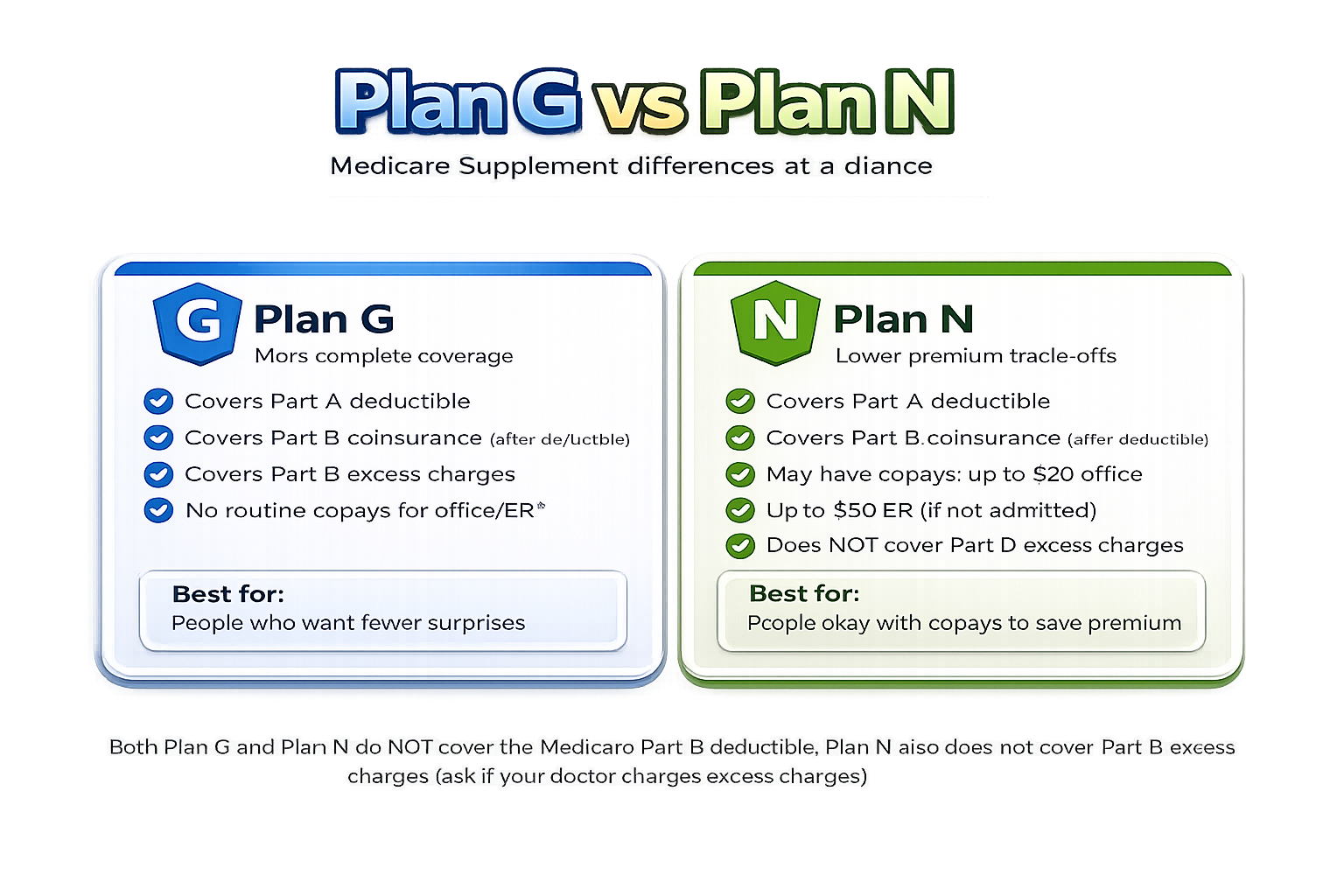
This can include Part A hospital coinsurance, skilled nursing facility coinsurance, hospice coinsurance or copayments, Part B coinsurance, Part B excess charges, and the first three pints of blood.

The main cost that Medicare Plan G does not cover is the Medicare Part B deductible. Once you pay that deductible for the year, Plan G generally covers the remaining Medicare-approved Part A and Part B cost-sharing amounts.

This makes Plan G attractive for beneficiaries who want comprehensive coverage without the uncertainty of larger medical bills throughout the year.

For 2027, Medicare Supplement Plan G may be a good fit for people who visit doctors regularly, want freedom to see any provider that accepts Medicare, or prefer not to deal with network restrictions. Unlike many Medicare Advantage plans, Medicare Supplement Plan G does not usually require referrals, and coverage is standardized by plan letter.

That means Plan G benefits are the same regardless of which insurance company sells the policy, although premiums can vary by carrier, location, age, tobacco use, household discounts, and underwriting rules.

When comparing Medicare Supplement plans for 2027, Plan G is often considered the most comprehensive option available to people who became eligible for Medicare after January 1, 2020. It may not have the lowest monthly premium, but it can provide one of the strongest combinations of coverage, flexibility, and long-term predictability.

Medicare Supplement Plan G in 2027

Medicare Supplement Plan N 2027

Medicare Supplement Plan N is another popular Medicare supplement plan for 2027, especially for beneficiaries who want lower monthly premiums while still keeping many of the key protections of a Medigap policy.

Plan N helps cover major gaps in Original Medicare, including Part A hospital coinsurance, skilled nursing facility coinsurance, hospice coinsurance or copayments, and the first three pints of blood. It also helps with Part B coinsurance, but with some cost-sharing differences compared to Plan G.

With Medicare Plan N, you may pay a small copayment for certain doctor office visits and emergency room visits that do not result in an inpatient admission.

Plan N also does not cover the Medicare Part B deductible or Part B excess charges. Because of these tradeoffs, Plan N premiums are often lower than Plan G premiums, making it a strong option for people who want dependable coverage but are comfortable paying occasional out-of-pocket costs.

For 2027, Medicare Supplement Plan N may appeal to beneficiaries who are relatively healthy, do not mind small copays, and want to reduce their fixed monthly premium.

It can also be attractive for people who want the freedom of Original Medicare without relying on a Medicare Advantage provider network. Like other standardized Medicare Supplement plans, Plan N allows you to see any doctor or hospital that accepts Medicare, regardless of the insurance company that sold you the policy.

When reviewing Medicare Supplement plans for 2027, Plan N is often viewed as a balanced choice.

It does not cover as much as Plan G, but it can provide meaningful protection against large Medicare-approved medical expenses while helping keep monthly premium costs more affordable.

Medicare Plan G vs Plan N

Costs and Coverage of Medicare Supplement Plans

Exploring Medicare Supplement Plans requires understanding how they impact your expenses and what coverage they offer. These Medigap plans are extra insurance you can buy to fill the gaps in Original Medicare, minimizing out-of-pocket costs like copayments and deductibles.

Here, we’ll delve into the coverage benefits and limitations of Medigap, as well as how costs might differ between the options available for 2027. This information will support seniors in making informed decisions about their health insurance needs.


Plan Features Cost Influencers Timing Impact
Covers gaps in Original Medicare Age at enrollment Open Enrollment Period
Variety of plan options Geographic location Guaranteed issue rights
Regulated by federal and state laws Insurance provider pricing Pre-existing condition considerations
Standardized benefits across plans Smoking status Potential waiting periods

This table provides a clear overview of how Medicare Supplement Plans work, including their specific features, cost determinants, and important enrollment timelines, aiding in informed decision-making for seniors evaluating their health insurance options.

View Costs of Medigap Plans in your area

Coverage Benefits and Limitations

Medicare Supplement Plans, often called Medigap, are designed to cover the costs that Original Medicare typically leaves behind.

These costs can include copayments, coinsurance, and deductibles that might otherwise burden those on a fixed income. The standardized plans offered by private companies ensure that any plan with the same letter provides the same basic benefits, regardless of the insurer.

This standardization helps seniors compare options without the complexity of differing core benefits, making it easier to select a plan aligned with one’s healthcare needs.

However, it’s vital to recognize that while Medigap plans provide substantial coverage, they don’t cover everything.

They don’t usually cover services such as long-term care, vision or dental care, hearing aids, or private-duty nursing. Seniors should weigh these limitations when considering a Medigap plan, as expansions in healthcare may require additional policies or out-of-pocket expenses.

Understanding these limitations is key to ensuring a comprehensive healthcare strategy that effectively meets all your needs.

Another point to consider is the flexibility offered by Medigap plans. They allow you to visit any doctor or hospital nationwide that accepts Medicare patients, adding an invaluable layer of comfort, especially if you travel frequently.

This flexibility contrasts with some restrictions on networks found in other types of Medicare plans, adding to their appeal for many seniors. Whichever option you choose, ensuring it fits into your health goals and financial circumstances is critical for peace of mind.

How Costs May Vary Between Plans

The costs associated with Medicare Supplement Plans can vary significantly depending on several factors, including the specific plan chosen, the insurance company offering the plan, and even the geographic location of the policyholder.

Premiums for Medigap plans are generally higher than those for Medicare Advantage, yet they often provide more comprehensive coverage that can reduce unexpected medical expenses. This can be particularly appealing for those wanting predictability in their healthcare budgeting.

One of the primary aspects affecting Medigap costs is the choice of plan. For instance, a plan that provides extensive coverage, like covering almost all copayments and deductibles, will likely have a higher premium compared to more basic plans.

It’s essential for seniors to carefully compare these plans against their healthcare expenditure forecasts to select an option that balances affordability with adequate coverage. The trade-off between premium costs and out-of-pocket expenses should be a central consideration in this process.

Costs can also vary by location due to differences in healthcare costs across states and regions. Some areas may have higher healthcare expenses, impacting the premiums set by private insurers.

Additionally, different pricing methods such as community-rated, issue-age-rated, or attained-age-rated can influence the cost of a Medigap plan over time. Each of these methods handles premium calculus differently based on age and community demographics, affecting what you might pay annually.

Moreover, while shopping for a Medigap plan, the timing of your enrollment significantly impacts costs. Enrolling during the Medigap open enrollment period, a six-month timeframe starting the month you turn 65 and are enrolled in Medicare Part B, ensures acceptance without consideration of health status, often resulting in lower premium costs.

Delaying enrollment could result in higher premiums or limited options, underscoring the importance of early and informed decision-making regarding your Medicare Supplement choices.

Find & Compare Plans Online

Speak with a licensed insurance agent

1-844-919-4660TTY 711

Mon-Fri: 8am-9pm ET

Enrollment and Timing for Medicare Supplement

Navigating the enrollment process for Medicare Supplement Plans, or Medigap, is crucial for ensuring you have the coverage you need when you need it. Understanding your enrollment timing is essential, especially since your decisions can significantly impact the costs and availability of your plan.

In this section, we’ll explore the details of the Medigap Open Enrollment Period, unpack the necessary steps to enroll in a Medicare Supplement Plan for 2027, and guide you through decisions that can affect your healthcare coverage and costs as you plan for the future.

Enrollment Tips for Medicare Plan N

Understanding the Medigap Open Enrollment Period

The Medigap Open Enrollment Period is a critical time frame for seniors looking to join a Medicare Supplement Plan.

This six-month period begins the month you turn 65 and are enrolled in Medicare Part B. During this time, you’re guaranteed the right to buy any Medigap policy offered in your state, regardless of your health condition. This can be invaluable, as insurers can’t deny you coverage or charge higher premiums due to pre-existing conditions.

Understanding this enrollment window is vital, as missing it could result in a more complex and costly process later.

The main advantage of enrolling during the Medigap Open Enrollment Period is the assurance of receiving the standardized plan benefits of your choosing without medical underwriting.

This means that health conditions won’t affect your eligibility or costs, which is a critical consideration given the unpredictable nature of health issues as we age.

Beyond just eligibility, the peace of mind that comes with knowing that hospitals, doctors, and other healthcare providers will be covered by your plan is comforting.

Standardized plans, typically labeled A through N, all come with different benefits but must include essential protections under federal law.

This standardization ensures that you’re able to compare plans like-for-like across different private companies, making the selection process straightforward.

It’s essential to remember that Medigap plans work with Original Medicare by covering costs like copayments, coinsurance, and deductibles, which can provide significant financial relief.

The Medigap Open Enrollment Period is your prime opportunity to select the right plan tailored to your health needs and financial situation. While costs can vary widely depending on the plan and private company, making your choice within this period can help you secure a plan that balances your healthcare needs and costs efficiently.

Thus, keeping an eye on these timelines and understanding their implications can help you maintain comprehensive health coverage with fewer surprises.

As you consider enrolling in a Medigap plan, it’s crucial to weigh several key factors to ensure the plan you choose best suits your needs:

  • Understand the role of Medigap in mitigating various out-of-pocket costs not covered by Original Medicare, such as copayments, coinsurance, and deductibles.
  • Assess your current healthcare needs carefully. Consider factors such as frequency of doctor visits, potential hospital stays, and any existing medical conditions to determine the level of coverage required.
  • Be aware of the factors that impact the cost of Medigap plans, including age, location, tobacco use, and the type of plan you select. Premiums can vary significantly based on these variables.
  • Research how Medigap plans may differ based on geographic location, with some plans being more or less available depending on state regulations and local offerings.
  • Stay informed about annual changes to Medigap plans. Review how alterations in plan benefits or premiums may affect your current or prospective coverage options.
  • Gain a clear understanding of the interaction between Medigap and Original Medicare. Know that while Medigap helps cover additional costs, it does not replace or serve as standalone health insurance.

In conclusion, making an informed choice during the Medigap enrollment period is vital. Compare plans thoroughly, consider your long-term healthcare needs, and seek professional advice if necessary to ensure you choose the most suitable coverage.

Compare plans & Rates in your area

Steps to Enroll in Medicare Supplement for 2027

Enrolling in a Medicare Supplement Plan for 2027 involves several key steps, starting with understanding your eligibility and specific needs. Firstly, it’s important to ensure that you are enrolled in both Medicare Parts A and B, as this forms the foundation on which a Medigap plan builds.

Without being a part of Original Medicare, you cannot proceed to purchase a supplement plan. Planning early for this transition ensures that all timelines align, reducing potential stress or delays.

Once eligible, the next step is to compare the standardized plans available. You’ll want to consider what each plan covers, the costs involved, and how they align with your expected healthcare needs.

Each plan type, from the basics of Plan A through to the broader coverage provided by Plan F or Plan G, comes with different benefits. Examining each carefully helps determine which plan suits your lifestyle, whether you frequently travel or just need a plan that covers hospital stays and essential health care effectively.

After understanding your options, it’s time to compare plans offered by various private insurance companies. Although the benefits of each standardized plan are identical, premiums can vary, as do the customer service reputations of insurers like Blue Cross or Humana.

Researching these companies, focusing on their reputation for service quality and claims processing, can provide added assurance that you’ll be well-supported.

The final step is applying for the chosen Medigap policy during the Medigap Open Enrollment Period.

This guarantees coverage without medical underwriting complexities. Applying early during this window is beneficial as it often secures better premium rates and guarantees coverage despite pre-existing conditions.

For those needing extra guidance during this period, consulting with an independent Medicare advisor may help clarify any questions.

They can offer insights into specific plan details, help balance costs and coverage options, and provide a more personalized approach to securing your 2027 health coverage. Following these proactive steps ensures that your Medicare Supplement enrollment is smooth and that your future healthcare needs are met with your chosen plan.

Find & Compare Plans Online

Speak with a licensed insurance agent

1-844-919-4660TTY 711

Mon-Fri: 8am-9pm ET

Using Supplement Insurance for Peace of Mind

Navigating the intricacies of healthcare can be overwhelming, particularly as you approach retirement. One way to alleviate these challenges is by considering supplement insurance, often referred to as Medigap, for peace of mind.

When Original Medicare doesn’t cover all your healthcare expenses, a Medigap policy steps in to fill the financial gaps. Medigap, or supplement insurance, acts as extra insurance you can buy, designed to cover expenses that can catch you off guard, such as deductibles, copayments, and coinsurance.

Supplement insurance plans, standardized by the government, ensure that whether you opt for Plan A or Plan G, the core benefits remain consistent across different private companies offering these plans.

While the benefits do not vary, the premiums can, depending on your provider, such as Humana, which competes in this space. This consistency simplifies decision-making, allowing you to focus on comparing costs and understanding how each plan fits your healthcare needs.

Using a supplement plan means more predictability with out-of-pocket expenses, particularly in areas like hospitals or other healthcare services not fully covered by Original Medicare.

This predictability allows for better healthcare planning and helps maintain financial stability. For instance, if Medicare covers 80% of a medical bill, your Medigap policy could cover the remaining 20%, minimizing unexpected expenses.

Medigap plans don’t just provide financial relief, they offer the comfort of knowing you have access to a wide array of healthcare providers nationwide. Unlike some plans that may have restrictive networks, a Medigap member can visit any hospital or doctor that accepts Medicare.

This is especially beneficial if you travel frequently or live in different states throughout the year, ensuring continuous and consistent care.

For those considering supplement insurance for 2027, it is crucial to weigh the benefits of these standardized plans against your personal health needs and financial situation.

Supplement plans offer comprehensive coverage, reducing worry and allowing you to focus on maintaining your health rather than stressing over potential medical costs.

Consider entering your ZIP code below to explore options in your area or contacting an independent Medicare advisor for insightful guidance tailored to your unique situation.

Exploring Medicare Supplement Plans for 2027 can be an important step in meeting your healthcare needs. Take your time to understand the diverse options available and how each one may align with your circumstances. For a more detailed comparison, enter your ZIP code on our site.

This can help you browse plans specific to your area. Additionally, our resources are here to provide guidance and insights into Medicare coverage as you make informed decisions.

Stay confident and knowledgeable as you navigate your Medicare Supplement choices.

Frequently Asked Questions

What are Medicare Supplement Plans, also known as Medigap?

Medicare Supplement Plans, or Medigap, are additional insurance policies offered by private companies that help cover costs not included in Original Medicare, such as copayments, deductibles, and coinsurance.

When is the best time to enroll in a Medicare Supplement Plan?

The optimal time to enroll in a Medicare Supplement Plan is during the Medigap Open Enrollment Period, which is a six-month period starting the month you turn 65 and are enrolled in Medicare Part B.

How do Medicare Supplement Plans work with Original Medicare?

Medicare Supplement Plans complement Original Medicare by covering additional costs. After Original Medicare pays its share, your Medigap plan covers its part, minimizing out-of-pocket expenses.

What are the differences between Medicare Supplement Plans and Medicare Advantage Plans?

Medicare Supplement Plans and Medicare Advantage Plans offer different types of coverage. Medigap works alongside Original Medicare to cover extra costs, while Medicare Advantage provides an all-in-one alternative that may include additional benefits but usually within network restrictions.

What costs do Medicare Supplement Plans not cover?

Medicare Supplement Plans typically do not cover long-term care, vision or dental care, hearing aids, or private-duty nursing. It’s important to consider these limitations when evaluating your healthcare options.

Have Questions?

Speak with a licensed insurance agent

1-844-919-4660

TTY users 711

Mon-Fri: 8am-9pm ET

Find & Compare Plans Online

Speak with a licensed insurance agent

1-844-919-4660TTY 711

Mon-Fri: 8am-9pm ET

ZRN Health & Financial Services, LLC, a Texas limited liability company

( Medicare Expert )

Russell Noga is the CEO of ZRN Health & Financial Services, and head content editor of several Medicare insurance online publications. He has over 15 years of experience as a licensed Medicare insurance broker helping Medicare beneficiaries learn about Medicare, Medicare Advantage Plans, Medigap insurance, and Medicare Part D prescription drug plans.