






What Medicare Gives You for Free
Wondering what Medicare may give to you for free? Medicare will likely cover several essential services at no cost, such as the Welcome to Medicare checkup, annual wellness visits, and certain preventive vaccinations. Read on to discover what Medicare might give to you for free and the potential benefits.
Key Takeaways
- The ‘Welcome to Medicare’ checkup and Annual Wellness Visit may provide essential preventive services at no cost, helping beneficiaries establish a foundation for ongoing health care.
- Medicare will likely cover a wide range of preventive services, including various cancer screenings, vaccinations, diabetes management, and mental health assessments, likely aimed at promoting early detection and maintaining overall health.
- Several programs may also be available to assist beneficiaries with managing healthcare costs, such as financial support through Medicare Savings Programs and some additional services for those with limited income.
Compare Plans in One Step!
Enter Zip Code
Welcome to Medicare Checkup

The ‘Welcome to Medicare’ checkup could act as your golden ticket to a healthier future. Available within the first 12 months of enrolling in Medicare Part B, this one-time appointment will likely be designed to help set you on the right path. Unlike a routine physical exam, this visit will likely focus on preventive services, possibly ensuring you have a solid foundation for your health care journey.
During this comprehensive checkup, your healthcare provider and other healthcare providers might:
- Review your medical history
- Check your medications
- Monitor your vital signs
- Administer flu and pneumococcal shots if needed
- Conduct vision tests
- Ask mental health questions to get a complete picture of your well-being
- Provide assistance with advance directives to help you make important decisions about your future health care.
Bring a list of your current medications, including any prescription drug information, and health history to maximize the benefits of this visit. This may also enable your doctor to offer personalized advice and preventive measures. Medicare will likely cover this visit at no cost if your healthcare provider accepts assignment. This small step could have a significant impact on your health.
Annual Wellness Visit
The annual wellness visit serves as your yearly check-in to ensure everything is on track. It’s more than a routine checkup; it updates your personalized prevention plan to avoid disease or disability. Participating doctors might provide these preventive services at no cost, possibly making it an invaluable benefit for Medicare beneficiaries.
During the annual wellness visit, your healthcare provider will likely conduct various assessments, such as blood pressure checks, weight measurements, and screenings for cognitive impairments. You may also need to complete a Health Risk Assessment questionnaire and a lifestyle assessment, which could help tailor prevention strategies to your health.
These follow up visits could be crucial for maintaining your health and catching potential issues before they become serious.
Potential Vaccines Covered by Medicare

Keeping up-to-date with vaccinations could be crucial for preventing serious illnesses, and Medicare might simplify this by covering various vaccines at no cost, which might include:
- Seasonal flu shot
- Pneumococcal vaccines
- Hepatitis B vaccine for high-risk individuals
- COVID-19 vaccines and boosters in response to recent global health challenges
Medicare may also expand its coverage to include certain vaccines through a Medicare Advantage plan and Part D prescription plans. This could potentially ensure you get the vaccines you need without worrying about the cost, likely making it easier than ever to stay healthy and protected against preventable diseases.
Cancer Screenings
Cancer screenings will likely be a cornerstone of preventive health care, and Medicare might offer comprehensive coverage for various types of cancer screenings, such as:
- Colorectal cancer
- Lung cancer
- Breast cancer
- Cervical cancer
- Prostate cancer
Early detection through these screenings could significantly improve treatment outcomes and potentially save lives.
Here are some of the specific types of cancer screenings that might be covered by Medicare.
Colorectal Cancer Screenings
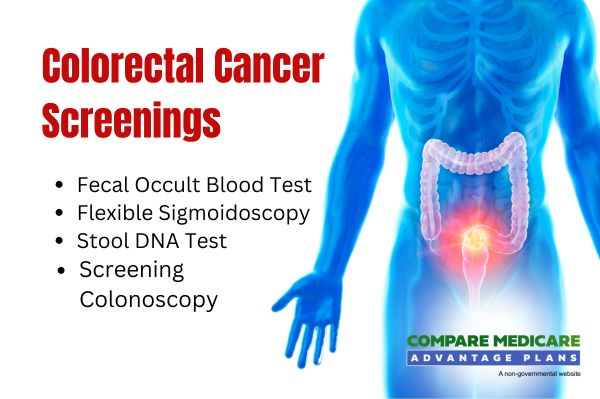
Medicare may provide coverage for four types of colorectal disease cancer screening tests:
- Fecal occult blood test: checks for hidden blood in the stool, which can indicate colon cancer.
- Flexible sigmoidoscopy: allows doctors to view the rectum and lower colon using a flexible tube.
- Stool DNA test: analyzes stool samples for cancerous DNA.
- Screening colonoscopy: examines the entire colon and rectum for abnormalities.
Each test plays a crucial role in detecting cancer early.
These screenings could be vital for early detection and improving treatment outcomes. Medicare’s potential coverage of these tests could help beneficiaries catch potential issues early, likely enhancing the chances of successful treatment.
Lung Cancer Screenings
Lung cancer screenings may be another critical preventive measure for smokers and ex-smokers. Medicare might cover annual low-dose CT screenings for eligible patients, detecting lung cancer at an early, more treatable stage and possibly providing a lifeline for those at high risk.
These screenings will likely be available to individuals with a history of heavy smoking, current smokers, or those who have quit within the past 15 years. Medicare may also provide these screenings at no cost to help ensure high-risk individuals have access to potentially life-saving early detection.
Mammograms
Breast cancer screenings could be another critical service covered by Medicare. This coverage might include:
- Women aged 40 and older are eligible for a screening mammogram once a year.
- This annual screening allows for early detection of breast cancer.
- Early detection is essential for catching cancer when treatment is most effective.
In addition to the standard annual screening, Medicare may also cover diagnostic mammograms when medically necessary. If a screening mammogram shows suspicious results, a diagnostic mammogram could provide a more detailed examination, to help ensure any potential issues are thoroughly investigated.

Diabetes Services
Diabetes has been a growing concern in recent years, and Medicare could potentially offer several services that could help manage and prevent this condition. Beneficiaries at risk for developing diabetes may be able to receive up to two diabetes screenings each year at no cost. Early detection through these screenings will likely help manage the disease and prevent complications.
Medicare may also cover certain medical nutrition therapy services for individuals with diabetes. This might include up to three hours of initial nutrition therapy in the first calendar year, followed by up to two hours of follow-up sessions each subsequent year. These services, provided by a registered dietitian, will likely be crucial in managing diabetes and maintaining a healthy lifestyle.
Depression and Mental Health Screenings
Mental health is just as important as physical health, and Medicare will likely recognize this by covering some annual depression screenings. These screenings will likely involve healthcare providers asking various questions to assess the presence of depression. Conducted within a primary care setting, these screenings could help ensure that follow-up treatment is readily available if needed.
With rising rates of depression among Medicare beneficiaries, these annual depression screening may be more essential than ever. Early detection and treatment could significantly improve quality of life, possibly making these screenings a vital part of preventive health care.
Substance Use Disorder Counseling
Addressing substance use disorders may be another critical aspect of health care, and Medicare might provide essential coverage for this. Beneficiaries may be eligible for one alcohol misuse screening per year, along with up to four counseling sessions for alcohol misuse. These services could potentially ensure individuals receive the support they need to address alcohol-related issues.
For opioid use disorder, Medicare may also cover certain recovery treatments and counseling when accessed through an enrolled opioid treatment program. These services might include assessments for risk factors and referrals to treatment if necessary, possibly providing comprehensive support for those struggling with substance use disorders.
Cardiovascular Screenings
Cardiovascular health is a major concern, and Medicare will likely cover screenings for cardiovascular diseases to help manage this risk. These screenings might include tests for cholesterol and triglyceride levels, which may be offered once every five years at no cost. By identifying risk factors early, these screenings could help prevent severe heart conditions and strokes.
For those with additional risk factors, such as a history of smoking, Medicare may also cover screening for abdominal aorta aneurysm. These preventive measures could potentially ensure that beneficiaries take proactive steps to maintain their heart health and overall well-being.
Bone Density Tests
Osteoporosis will likely be another significant health concern, especially for older adults. Medicare may cover bone density tests every 24 months, or more frequently if ordered by a healthcare provider. These tests could be crucial for detecting osteoporosis early and preventing fractures.
Patients might not pay anythings for these tests as long as their healthcare provider accepts Medicare assignments. By potentially offering coverage for bone density tests, Medicare could help beneficiaries maintain healthy bones and possibly reduce the risk of serious injuries.
STI and Hepatitis C Screenings
Preventing the spread of sexually transmitted infections (STIs) and managing Hepatitis C are critical public health goals. Medicare will likely provide annual screenings for STIs such as chlamydia, gonorrhea, syphilis, and HIV for those at risk. High-intensity behavioral counseling sessions for STI prevention may also be covered for sexually active adults at increased risk.
For Hepatitis C, Medicare might cover a one-time screening for adults born between 1945 and 1965 or those at high risk. These screenings and counseling sessions could be crucial for early detection and prevention, likely aiding beneficiaries in maintaining their sexual health.
Additional Preventive Services
Medicare may also offer a variety of additional preventive services to help beneficiaries stay healthy. For instance, counseling to reduce obesity may be available for those with a Body Mass Index (BMI) of 30 or higher, which will likely be provided in a primary care setting by a qualified physician. This service could be crucial for managing weight and preventing associated health problems.
Other services might include nutrition services for individuals with kidney disease, diabetes, or those who have received a kidney transplant in the last 36 months. Medicare may also provide up to eight counseling sessions for smoking cessation, helping individuals quit smoking and improve their overall health.
Programs to Help Defer Costs
Managing healthcare costs might be challenging, but several programs will likely be available to help Medicare beneficiaries defer certain costs, such as medicare costs. These programs might include:
- Medigap
- Extra Help
- Medicaid
- Medicare Savings Programs
These programs could potentially offer financial assistance to those who qualify and potentially reduce out-of-pocket expenses, making healthcare more affordable.
Eligibility for Medicare Savings Programs will likely depend on limited income and resources limits, which may vary by state, and may be subject to a certain limit. The Qualified Medicare Beneficiary (QMB) Program, for example, might cover both Part A and Part B premiums and may also prevent providers from billing enrollees for Medicare-covered services. Similarly, the Specified Low-Income Medicare Beneficiary (SLMB) Program could help pay for certain Part B premiums for eligible individuals.
Additional support for paying certain Part B medical insurance and Part A hospital insurance premiums may also come from programs like the Qualifying Individual (QI) Program and the Qualified Disabled and Working Individual (QDWI) Program. These programs could help beneficiaries with limited income access the healthcare they need without financial burden.
Summary
Medicare will likely offer a wide range of free services that could help keep beneficiaries healthy and detect potential health issues early. From the ‘Welcome to Medicare’ checkup to annual wellness visits, cancer screenings, vaccinations, and more, these potential benefits could provide a comprehensive approach to preventive health care.
By understanding and utilizing these services, you should take proactive steps to maintain your health and well-being. Remember, staying informed and taking advantage of these free services could make a significant difference in your overall health. So, make the most of your Medicare benefits and prioritize your health today.
Frequently Asked Questions
→ What might be included in the ‘Welcome to Medicare’ checkup?
The ‘Welcome to Medicare’ checkup will likely encompass a comprehensive review of your medical history, medication evaluations, vital sign monitoring, vaccinations, vision assessments, mental health inquiries, and support with advance directives. This checkup could be an essential step in ensuring your health as you enter Medicare.
→ How often could I get an annual wellness visit under Medicare?
You will likely receive an annual wellness visit under Medicare once a year at no cost if conducted by a participating doctor. This visit has been designed to help you access essential preventive health services.
→ What vaccines might be covered by Medicare at no cost?
Medicare may cover several vaccines at no cost, such as the seasonal flu shot, pneumococcal vaccines, hepatitis B vaccine for high-risk individuals, and COVID-19 vaccines, including boosters. This coverage could potentially ensure that beneficiaries could stay protected without incurring out-of-pocket expenses.
→ Who is eligible for lung cancer screenings under Medicare?
Eligible individuals for lung cancer screenings under Medicare will likely include current and former smokers, who may be able to receive annual low-dose CT screenings for lung cancer.
→ What programs could help defer Medicare costs for beneficiaries with limited income?
Programs such as Medicaid, Extra Help, Medigap, and Medicare Savings Programs could potentially assist Medicare beneficiaries with limited income in deferring costs. These options could provide crucial financial support that may be tailored to individual income and resource levels.

ZRN Health & Financial Services, LLC, a Texas limited liability company

Russell Noga is the CEO of ZRN Health & Financial Services, and head content editor of several Medicare insurance online publications. He has over 15 years of experience as a licensed Medicare insurance broker helping Medicare beneficiaries learn about Medicare, Medicare Advantage Plans, Medigap insurance, and Medicare Part D prescription drug plans.