Medicare Changes for 2026: What You Need to Know

Are Medicare Advantage plans good in 2026? With various changes on the horizon, it’s essential to evaluate whether these plans remain a good choice. This article will cover key updates like benefit reductions, premium adjustments, prescription drug improvements, and more, to help you decide if Medicare Advantage plans meet your needs in 2026.


Key Takeaways


  • In 2026, there will be notable changes in Medicare Advantage benefits, including a decrease in non-medical supplementary coverage and a stable availability of essential services such as dental and vision care.


  • Average monthly premiums for Medicare Advantage plans are expected to decrease to $14.00, but some beneficiaries may still face higher costs and reduced benefits depending on their specific plans.

Compare Plans in One Step!

Enter Zip Code


 Advertisement


Rising Popularity of Medicare Advantage Plans

 

Rising Popularity of Medicare Advantage Plans


Despite slight decreases in both enrollment and the number of available plans, Medicare Advantage plans continue to hold strong appeal among Medicare beneficiaries. In 2026, around 48% of Medicare enrollees are expected to opt for these plans, highlighting their enduring popularity. This trend persists even though enrollment is projected to slightly decrease to 34 million, and the number of available plans will drop from 5,633 in 2025 to approximately 5,600 under the current plan.

What keeps these plans attractive is the nearly universal access to at least one Medicare Advantage plan and a ma pd plan, with over 99% of beneficiaries having plan options to choose from. This high accessibility ensures that beneficiaries continue to have reliable coverage choices, contributing to the ongoing preference for HMO plans and Medicare Advantage plans.


Changes in Medicare Advantage Plan Benefits for 2026

As private insurers shift their focus from growth to profitability, many Medicare Advantage plans will see a reduction in benefits. This strategic move includes the decommissioning of 15% to 20% of plans in various markets, significantly impacting the choices available to beneficiaries. Such changes are part of a broader trend where insurers’ plan depends on managing costs more effectively, including considerations related to medicare part options.

New restrictions will also be implemented on non-medical benefits under Special Supplemental Benefits for the Chronically Ill (SSBCI). These restrictions are designed to ensure that beneficiaries concentrate on core health services rather than supplementary, potentially non-essential extra benefits. While these changes might seem like a drawback, they are intended to help beneficiaries focus on the most critical aspects of their health care.

Despite these reductions, certain supplemental benefits like hearing, dental, and vision are expected to remain stable in 2026. This stability provides some reassurance to beneficiaries that essential health services will continue to be covered under their Medicare Advantage plans.


Impact on Medicare Costs and Premiums

In 2026, the average monthly premium for Medicare Advantage plans is expected to decrease from $16.40 to $14.00. While this reduction is a positive change for many seniors, some might still face higher prices and reduced benefits in specific plans. The overall financial landscape of Medicare is also poised for shifts, with the implementation of the OBBBA accelerating the depletion of Medicare’s trust fund and risking insolvency sooner than expected.

These financial adjustments mean that Medicare Advantage enrollment is projected to decline for the first time in nearly two decades, with estimates dropping to 34 million. This decline highlights the complex interplay between cost management and enrollment trends, as beneficiaries navigate the evolving Medicare landscape.

Changes in Medicare rules and costs, including expected standard price increases and adjustments to drug coverage, may complicate plan choices and access to care. For beneficiaries, staying informed about these changes is essential to make the best decisions for their health care needs.


Prescription Drug Coverage Improvements

Prescription drug coverage under Medicare is set to see notable improvements in 2026. One significant change is the option for beneficiaries to spread out drug costs over the year, making it easier to manage their budgets. Additionally, Medicare prescription drug coverage will now require beneficiaries to pay 25% coinsurance for their medications until their out-of-pocket costs reach $2,100.

Medicare drug plans will have three coverage stages: deductible, initial coverage, and catastrophic coverage. These stages are designed to provide a structured approach to managing drug costs, ensuring that beneficiaries receive the necessary medications without facing overwhelming expenses.

However, the maximum deductible for Medicare drug plans is set to rise to $615 in 2026. While this increase might be challenging for some beneficiaries, the overall improvements in drug coverage aim to provide a more balanced and manageable approach to prescription drug expenses.


Compare 2026 Medicare Plans  

Enter Zip Code


 Advertisement

Compare plans and enroll online


 Advertisement

Speak with a licensed insurance agent

1-833-641-4938
TTY 711

Mon-Fri : 8am-9pm ET

compare medicare advantage plans


Prior Authorization Requirements


Prior Authorization Requirements


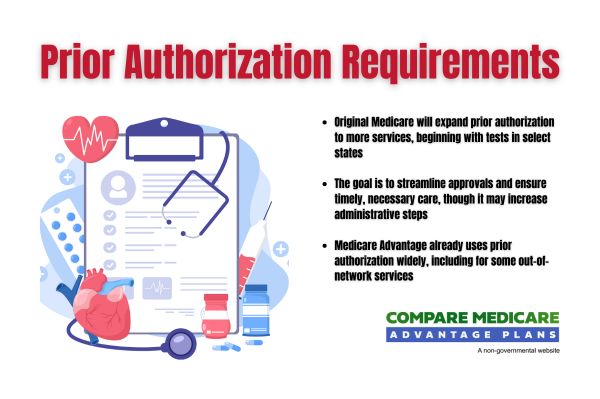
The landscape of prior authorizations is evolving with a new model for Original Medicare introducing expanded requirements. Historically limited to durable medical equipment and select outpatient services, prior authorization will now cover a wider array of services, requiring approval before treatment can occur.

This expanded requirement will be tested in states like Arizona, New Jersey, Ohio, Oklahoma, Texas, and Washington. The goal is to streamline the approval process and ensure that necessary treatments are provided in a timely manner, although this may initially add an administrative burden for both providers and beneficiaries.

Medicare Advantage plans already require prior authorization for a range of services, affecting nearly all enrollees. This requirement, while sometimes criticized, aims to manage costs and ensure that treatments are medically necessary. However, care received from out-of-network providers may also require pre-authorization, potentially limiting access.


Enhanced Preventive Care Services

Medicare Advantage plans in 2026 will enhance their preventive care services, providing certain services at no additional cost to beneficiaries. This includes home health assessments through annual visits from licensed health clinicians, ensuring that members receive comprehensive care evaluations without extra charges.

Additionally, vaccines recommended by health authorities will be available as free vaccines at in-network pharmacies. These enhancements make it easier for beneficiaries to access necessary health screenings and immunization practices, contributing to overall better health outcomes.


Network Restrictions and Provider Access

Medicare Advantage plans often impose network restrictions that require beneficiaries to seek services from in-network providers to receive full benefits. This can be a significant consideration when choosing a plan, as accessing out-of-network providers typically incurs higher out-of-pocket costs.

Some plans utilize tiered networks, where different providers may have varying cost-sharing levels based on the designated tier. The availability of providers in Medicare Advantage provider network can vary significantly by geographic area, impacting access to care and making it crucial for beneficiaries to consider network restrictions when selecting a plan.

Compare 2026 Medicare Plans  

Enter Zip Code


 Advertisement


Special Supplemental Benefits for the Chronically Ill

Starting in 2026, Medicare Advantage plans will implement stricter regulations on Special Supplemental Benefits for the Chronically Ill (SSBCI). These benefits, designed to enhance the lives of individuals with specific chronic conditions, will now focus more on non-medical benefits that directly improve health and functionality.

The new guidelines will exclude the following benefits from SSBCI coverage:

  • Unhealthy food options
  • Alcohol
  • Tobacco
  • Life insurance

These changes aim to ensure that SSBCI benefits are more health-focused and beneficial for chronically ill enrollees.


Comparing Medicare Advantage to Original Medicare


Comparing Medicare Advantage to Original Medicare


Medicare Advantage plans offer a bundled coverage approach, combining various parts of Medicare into one plan, unlike Original Medicare, which consists of separate parts. This bundling often includes additional benefits such as dental and vision care, which are not covered by Original Medicare, provided by a Medicare Advantage organization.

Another significant advantage of Medicare Advantage plans is the established caps on out-of-pocket expenses, providing financial predictability for beneficiaries. In contrast, Original Medicare has no annual out-of-pocket limit, potentially leading to higher medical costs.

However, Medicare Advantage plans restrict services to network providers, whereas beneficiaries with Original Medicare can see any provider that accepts Medicare. This flexibility in provider access is a key consideration when choosing between the two options.


How to Choose the Right Medicare Advantage Plan

Choosing the right Medicare Advantage plan requires careful comparison of different plans during the enrollment period. Seniors can save significantly on out-of-pocket costs by actively reviewing their options. Experts recommend:

  • Examining the Annual Notice of Change from your insurer
  • Understanding any adjustments to benefits
  • Reviewing changes to network providers for the upcoming year.

State Health Insurance Assistance Programs (SHIPs) provide unbiased assistance and guidance, helping beneficiaries navigate their Medicare choices. Additionally, tools like Medicare.gov’s Plan Finder can help individuals compare coverage and costs for the Medicare program, Medicare Advantage, and Part D plans in their area.

Using these resources enables beneficiaries to make informed decisions, choosing the Medicare Advantage plan that best fits their health care needs and financial situation, including the potential benefits of artificial intelligence.


Summary

Choosing a Medicare Advantage plan in 2026 doesn’t have to be confusing. With thousands of plans available nationwide, you can compare costs, coverage, and providers to find the best fit for your needs. Call 1-833-641-4938 for personalized assistance and navigate the Medicare landscape with confidence.


Frequently Asked Questions


What are the key changes in Medicare Advantage plans for 2026?

The key changes in Medicare Advantage plans for 2026 will entail a reduction in benefits, the introduction of stricter regulations on Special Supplemental Benefits for the Chronically Ill, and enhancements in prescription drug coverage options. These adjustments aim to refine the overall structure and offerings of the plans.

Will my Medicare Advantage premium go up in 2026?

Your Medicare Advantage premium may decrease to an average of $14.00 in 2026; however, it’s important to check individual plans, as some could have higher prices or reduced benefits.


How will prescription drug coverage change in 2026?

In 2026, changes to prescription drug coverage under Medicare will enable beneficiaries to spread their drug costs throughout the year, requiring a coinsurance payment of 25% until out-of-pocket expenses hit $2,100, while the maximum deductible will increase to $615.


What preventive care services are covered under Medicare Advantage plans in 2026?

Medicare Advantage plans in 2026 cover preventive care services such as home health assessments and recommended vaccines at no additional cost to beneficiaries. This comprehensive coverage ensures that essential health services are accessible and affordable.


How can I choose the right Medicare Advantage plan?

To choose the right Medicare Advantage plan, compare various options during the enrollment period, review the Annual Notice of Change from your insurer, and utilize tools like the Medicare.gov Plan Finder. Additionally, consider seeking assistance from State Health Insurance Assistance Programs (SHIPs) for unbiased guidance.


call today for help

 ZRN Health & Financial Services, LLC, a Texas limited liability company

Find & Compare Plans Online 


 Advertisement

Speak with a licensed insurance agent

 1-833-641-4938
TTY 711

Mon-Fri : 8am-9pm EST

Russell Noga
( Medicare Expert )

Russell Noga is the CEO of ZRN Health & Financial Services, and head content editor of several Medicare insurance online publications. He has over 15 years of experience as a licensed Medicare insurance broker helping Medicare beneficiaries learn about Medicare, Medicare Advantage Plans, Medigap insurance, and Medicare Part D prescription drug plans.