Difference Between Traditional Medicare and Medicare Advantage

As you explore Medicare options for 2026, understanding how Traditional Medicare and Medicare Advantage plans differ is vital. Each offers unique benefits and coverage features to fit diverse healthcare needs and budgets.

Traditional Medicare provides broad access to healthcare providers nationwide, while Medicare Advantage, also known as Part C, typically includes extra benefits and an all-in-one plan through private insurers. Let’s break down these differences to help seniors and caregivers make informed decisions about the right plan for future healthcare needs, offering peace of mind as you navigate this important choice.


Brief Overview

As seniors consider Medicare options for 2026, understanding the distinctions between Traditional Medicare and Medicare Advantage is crucial. Traditional Medicare offers broad access to healthcare providers and consists of Part A and Part B, yet often requires supplemental coverage for additional services.

Medicare Advantage, provided by private insurers, bundles Parts A and B, often adds extra benefits like dental and vision, and operates within provider networks. Each option has unique costs and structures.

Evaluating these differences helps seniors and caregivers make informed, confident decisions about healthcare coverage that aligns with their needs and budget.


Key Takeaways


  • Traditional Medicare offers broad access nationwide, covering Parts A and B, with separate Medigap policies for additional costs.


  • Medicare Advantage, or Part C, offers Part A and B coverage plus extras like dental and vision, under private insurers.


  • Medicare Advantage plans may have lower costs and network restrictions, whereas Traditional Medicare provides flexible provider choice.


  • Medicare Supplement plans (Medigap) cover gaps like copays and deductibles, standardizing options under lettered plans statewide.


  • Choosing between Medicare Advantage and Medigap depends on personal healthcare needs, lifestyle, cost, and coverage preferences.

Compare Plans in One Step!

Enter Zip Code


 Advertisement

What is Traditional Medicare?

Difference Between Traditional Medicare and Medicare Advantage


Traditional Medicare, often referred to as Original Medicare, is a federal health insurance program primarily serving seniors aged 65 and older, along with younger individuals with certain disabilities.

Comprised of Part A and Part B, it covers hospitalization and medical services. Understanding its components and how it operates is crucial to making informed healthcare decisions.

Original Medicare offers broad access to healthcare professionals and facilities, but does require beneficiaries to be mindful of costs and coverage details. Navigating these aspects can empower you to fully maximize the benefits available with traditional Medicare coverage.


Original Medicare and Its Components

Original Medicare divides into two main parts: Part A and Part B, providing critical healthcare services under each. Part A, often known as hospital insurance, assists in covering inpatient care at hospitals, skilled nursing facilities, and home health care if specific conditions are met.

Usually, there’s no premium for Part A if you or your spouse paid Medicare taxes while working. However, there are deductibles and co-insurance costs to consider. Understanding these financial responsibilities is vital, as they can impact your out-of-pocket spending.

Part B, or medical insurance, complements Part A by covering outpatient services. This includes doctor visits, outpatient care, and some preventive services.

Unlike Part A, Part B requires a monthly premium, which can vary based on income. Additionally, beneficiaries face an annual deductible, after which typically 80% of the costs for approved services are covered by Medicare, leaving you with the remaining 20%.

It’s essential to consider these components when budgeting for medical expenses. Medicare coverage includes additional aspects to keep in mind, like Medigap, or Medicare Supplement Insurance.

Medigap policies, sold by private companies, can help pay some of the healthcare costs not covered by Original Medicare, such as co-payments and deductibles. Though helpful, Medigap requires separate premiums, adding another layer of expense.

However, they provide reassurance by covering gaps left open by Traditional Medicare. Understanding how these components interact empowers you to create a strategy that optimally uses services, reducing unexpected costs and ensuring your health needs are adequately safeguarded.


How Original Medicare Works

Original Medicare functions straightforwardly, but knowing the intricacies can greatly benefit your healthcare planning. Enrollment generally begins automatically when you turn 65, provided you’re receiving Social Security benefits.

If not, manual enrollment during specific periods, like the Initial Enrollment Period, ensures you don’t miss out on crucial healthcare coverage. It’s easy to become entangled in Medicare’s various timelines, yet adhering to them can prevent late enrollment penalties and ensure continuous healthcare support.

Medicare employs a pay-as-you-go model, meaning you’ll encounter expenses as you utilize healthcare services. Unlike employer-sponsored insurance, where monthly premiums often cover extensive benefits, Medicare requires out-of-pocket spending for most services.

This system suits many but necessitates a careful review of what benefits are financially feasible. Delving into potential costs, like co-payments and deductibles, prepares you to manage expenses effectively, avoiding unexpected financial burdens.

Original Medicare allows flexibility in your provider choice, as you can see any doctor accepting Medicare. This broad access is a significant advantage, relieving the stress of finding covered providers.

However, always confirming a provider’s acceptance is a wise step. Coverage checks can be an ongoing necessity; Part A and Part B don’t extend to prescriptions.

To fill this gap, enrolling in Part D (prescription drug coverage) is crucial. This is a separate plan available through private insurers to cover the medication costs that Traditional Medicare misses.

Choosing prescription coverage requires reviewing formularies, costs, and pharmacy networks carefully to avoid missing required medications. Additionally, managing Part D’s penalties for late enrollment is essential, as these can accumulate if Part D isn’t joined promptly upon eligibility.

Understanding how Original Medicare coordinates with additional types of coverage, like employer plans or Medicaid, can be crucial. For those with supplemental or alternative healthcare coverage, verifying how they interact with Medicare ensures no gaps exist in coverage, preserving health and finances.

Combining Medicare’s parts innovatively can safeguard comprehensive healthcare, supporting a healthy, assured lifestyle.


Introduction to Medicare Advantage

Medicare Advantage, often considered as a bundled alternative to Traditional Medicare, offers a unique approach to healthcare coverage for seniors. With this option, Medicare beneficiaries can choose plans provided by private insurers that include the same coverage as Part A and Part B, often adding extras like vision, dental, and hearing care.

Understanding the differences in plan structure, costs, and additional benefits is essential for those exploring their Medicare Advantage options. This section will delve into how Medicare Advantage differs from Traditional Medicare and the variety of plan options available.


How Medicare Advantage Differs from Traditional Medicare

Medicare Advantage plans, also known as Medicare Part C, offer several key differences compared to Traditional Medicare. For starters, while Traditional Medicare is managed by the federal government, Medicare Advantage plans are offered by private insurance companies approved by Medicare.

These plans cover all services under Parts A and B and usually include additional benefits like dental, vision, and prescription drug coverage, which can eliminate the need for separate prescription drug plans like Part D.

This consolidated coverage can be appealing, providing convenience by bundling various services under one plan.

In terms of costs, Medicare Advantage plans often operate with different financial arrangements than Traditional Medicare. While Part A of Traditional Medicare typically has no premium if you’ve paid sufficient Medicare taxes, Part B does involve monthly premiums.

Medicare Advantage plans may offer premiums at different rates, sometimes at a lower cost than separate premiums for Traditional Medicare and additional coverages. Additionally, these plans frequently limit out-of-pocket expenses, providing a maximum spending cap which Traditional Medicare does not have.

However, it’s important to note that Medicare Advantage plans often require network restrictions, meaning you might have to use a specific set of doctors and hospitals, whereas Traditional Medicare offers more freedom to choose healthcare providers nationwide.

Another significant difference lies in plan flexibility and design. Medicare Advantage plans come with a variety of structured networks, including Health Maintenance Organizations (HMOs) and Preferred Provider Organizations (PPOs), each with specific rules about how you receive your health care.

Beneficiaries must be conscious of network constraints and the need for referrals to see specialists in many Medicare Advantage plans, whereas Traditional Medicare typically allows direct access to specialists without the referral requirement.

This choice can significantly affect your healthcare experience, so weigh these factors carefully against your personal healthcare needs and preferences. Medicare Advantage also tends to change plan details annually, so reviewing your plan options each year during the open enrollment period is crucial.

Given these differences, the choice between Medicare Advantage and Traditional Medicare hinges on personal needs, lifestyle, and financial comfort. Ensuring you understand how each program aligns with your healthcare priorities and financial situation is essential.

Using resources like CompareMedicareAdvantagePlans.org helps navigate these choices, offering unbiased information to make informed decisions about your healthcare coverage. Always consider your personal healthcare needs and financial situation when comparing options, and verify that your preferred healthcare providers are accessible under any plan you consider.


Medicare Advantage Plan Options


Medicare Advantage Plan Options - HMO Plans


Medicare Advantage offers a variety of plan options to accommodate diverse needs, making it an adaptable choice for many beneficiaries. These plans are primarily divided into several types, each with unique features and structures.

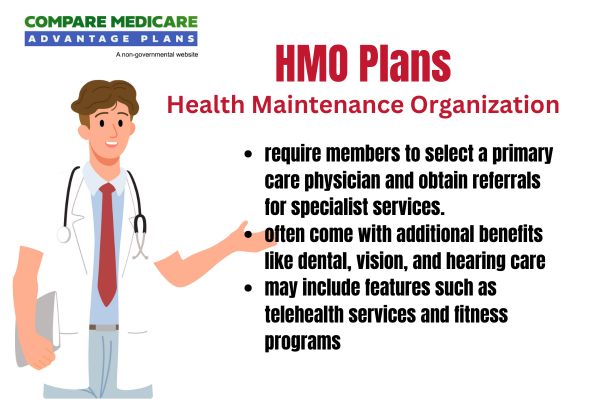
Health Maintenance Organizations (HMOs) are one of the most common forms, characterized by their network-based care system. HMO plans require beneficiaries to select a primary care physician and generally need referrals to see specialists.

Coverage under HMO plans typically does not extend to out-of-network services except in emergencies, making them suited for those who are comfortable seeking care within a specific network of providers.

Conversely, Preferred Provider Organizations (PPOs) offer more flexibility regarding healthcare provider choice. While PPO plans also have network preferences, they allow beneficiaries to access out-of-network providers at a higher cost.

This flexibility caters well to individuals who frequently travel or want more options in provider selection without changing plans. PPOs might be preferred by those who prioritize broader access to healthcare providers without the need for referrals.

Another type is Private Fee-for-Service (PFFS) plans, which offer a different approach. These plans do not require network adherence, letting beneficiaries visit any provider that accepts the plan terms.

However, not all providers may agree to the terms, so pre-confirmation is advisable to ensure coverage. Such plans may appeal to those who seek freedom in choosing providers without the constraint of network rules, although the lack of network often results in higher costs.

Beyond these more common options, Medicare Advantage also includes Special Needs Plans (SNPs) tailored for individuals with specific diseases or characteristics. SNPs provide targeted care and services fitting unique health requirements, offering coordinated care for complex conditions.

Eligibility for SNPs is typically based on specific health statuses or enrollment in certain assistance programs. This specialization provides an additional level of support for those with particular health challenges, sometimes including coordination with Medicaid benefits if applicable.

Making an informed choice about Medicare Advantage plan options involves understanding coverage specifics, plan costs, and the compatibility of services with your healthcare needs.

Beneficiaries are encouraged to review each plan annually during the open enrollment period, ensuring their current plan continues to meet their needs or if another offering might better align with any changes in their health or financial situation.

Utilizing resources that offer comparisons and education, like CompareMedicareAdvantagePlans.org, is invaluable in navigating these options, ensuring you maximize the benefits and coverage suitable for your health journey.


Here are key considerations for choosing the right Medicare Advantage Plan that suits your health needs:

  • Evaluate your preferred healthcare providers and see if they’re in-network.
  • Consider travel habits and need for flexibility in provider access.
  • Check eligibility for Special Needs Plans if you have specific health conditions.
  • Review differences in costs and services offered in each plan.
  • Assess the need for referrals in plans like HMOs.
  • Investigate if your medications are covered under the plan formulary.
  • Use resources to compare plan specifics during open enrollment.


These considerations will assist you in selecting the plan best aligned with your healthcare requirements.

Compare plans and enroll online


 Advertisement

Speak with a licensed insurance agent

1-833-641-4938
TTY 711

Mon-Fri : 8am-9pm ET

compare medicare advantage plans

Understanding Medicare Supplement Plans

Medicare Supplement plans, also known as Medigap, provide a means to fill in coverage gaps left by Original Medicare. These private insurance policies are designed to help with costs such as copays, coinsurance, and deductibles that Medicare doesn’t fully cover.

For seniors comparing Medicare Advantage and Medigap, understanding how Medicare Supplement plans can complement your existing Medicare policy is crucial. Choosing between these options involves evaluating how each can manage out-of-pocket expenses and support your financial needs for healthcare.

How Medicare Supplement Complements Medicare Coverage

Medicare Supplement Insurance, often referred to as Medigap, bridges the coverage gaps present in Original Medicare. By design, Medigap policies provide financial relief to those who foresee heavy reliance on medical services, as these plans cover certain costs not taken care of by Medicare Part A or Part B.

For instance, Medigap can cover expenses like copays, which occur when a patient pays a fixed amount during each medical visit, and percent-based coinsurance, which can accumulate with frequent health needs. Additionally, these policies manage deductibles for both hospital and outpatient care, simplifying the budgeting for financial responsibilities.

Medigap plans are standardized and identified by letters A through N, each offering different levels of coverage, but all adhering to Medicare’s regulations for uniformity across insurers.

This standardization makes it easier for seniors to compare options, knowing that a Medigap Plan G in one company offers the same basic benefits as a Plan G from another company, allowing individuals to focus more on the price and customer service aspects.

Regulated at the state level, Medigap’s pricing can vary widely, so prospective buyers must carefully assess multiple offers to find one that aligns with their financial expectations. Another key advantage of Medigap is its nationwide applicability, as it is accepted by any healthcare provider who accepts Medicare.

These plans ensure beneficiaries have access to preferred doctors and specialists without network restrictions, providing peace of mind to seniors who travel frequently or split their time living in different states.

It’s important to note that Medigap policies do not include coverage options for prescription drugs, a gap that can be complemented with a separate Medicare Part D plan. This modular approach appeals to those who seek specialized coverage, tailoring health insurance to fit individual needs while anticipating potential changes in health status.

Choosing Medigap works well for those who value predictability in medical expenses. These policies offer a straightforward pay structure, typically, you pay your Medigap premium, and most out-of-pocket costs are minimized.

Navigating through numerous options, it’s essential for seniors and caregivers to consider how varying premiums and coverage differences might balance against expected healthcare usage.

Resources like CompareMedicareAdvantagePlans.org provide unbiased guidance that can illuminate these complex decisions, allowing seniors to confidently select a plan that offers abundant health benefits, financial protection, and peace of mind throughout their healthcare journey.


Choosing Between Medicare Supplement and Medicare Advantage

 

Choosing Between Medicare Supplement and Medicare Advantage


As seniors weigh their options between Medicare Supplement Insurance and Medicare Advantage, understanding each approach’s strengths is integral. Medicare Supplement plans, or Medigap, embody simplicity and predictability by helping with expenses not fully covered by Original Medicare, including deductibles, coinsurance, and copays.

This financial safety net ensures that unexpected healthcare costs don’t disrupt fixed retirement budgets, especially for beneficiaries needing frequent medical services. Conversely, Medicare Advantage plans come with unique bundled benefits, potentially including vision, dental, and even gym memberships, extras not offered by Original Medicare or Medigap.

Choosing Medicare Advantage may appeal to individuals who prefer an all-in-one plan that streamlines healthcare service coordination under a single insurer. Given that these plans are offered by private companies approved by Medicare, they may introduce varying costs compared to Medigap’s defined model.

While Medicare Advantage might feature network restrictions, requiring members to use specific healthcare providers or hospitals, it also often includes prescription coverage, removing the need for separate Part D enrollment.

When deciding between Medigap and Medicare Advantage, consider personal lifestyle and health needs. Medigap is advantageous for those valuing extensive provider access and who might frequently travel or live in multiple regions across the year.

Medicare Advantage, on the other hand, suits those who seek additional coverage services bundled in one package, especially if access to regional medical networks suffices. Importantly, Advantage plans often include an annual out-of-pocket spending limit, a feature absent in Original Medicare, which can protect against significant health expenses over the year.

The decision can hinge on individual comfort with plan specifics. Medigap requires separate policies for drug coverage, while Medicare Advantage can simplify this via integrated Part D benefits.

Given that each option presents ongoing premium responsibilities, analyzing potential benefits against cost, with an eye toward personal health predictions, can guide choices effectively. Every year, enrollees should reassess their needs during the open enrollment period to ensure their plan remains supportive through health changes or life events.

For comprehensive understanding, engaging with tools like CompareMedicareAdvantagePlans.org can clarify these facets, offering unbiased comparisons and useful insights.

By enhancing knowledge and comparing features side by side, seniors can embark on this significant decision with confidence, ensuring that their choice aligns economically and health-wise, meeting future healthcare demands without financial strain.


Comparing Coverage: Medicare Advantage vs. Traditional Medicare

Comparing Medicare Advantage and Traditional Medicare plans is crucial for seniors seeking the right healthcare solution. These options offer unique structures, benefits, costs, and limitations. Understanding these differences can lead to better decision-making regarding coverage needs.

While Traditional Medicare offers federal management with straightforward coverage for hospital and medical services, Medicare Advantage provides private insurance plans bundling additional benefits. This comparison helps senior adults and caregivers determine which type of coverage is the best fit for their current and future healthcare needs.


Coverage Differences Explained

When considering Medicare Advantage and Traditional Medicare, it’s essential to delve into their fundamental coverage differences. Traditional Medicare, managed by the government, consists of Part A, which covers hospital services, and Part B, which covers outpatient healthcare services.

It provides a familiar structure with the simplicity of widespread acceptance by healthcare providers, yet it lacks coverage for certain areas such as dental, vision, and hearing, often leaving beneficiaries to seek supplementary coverage or Medigap policies for comprehensive protection.

The structure of original Medicare, being a fee-for-service model, allows flexibility in provider choice, meaning you can see any doctor that accepts Medicare. However, keep in mind Part B often requires a 20% coinsurance post-deductible payments, which could leave beneficiaries with significant out-of-pocket costs without added coverage.

Medicare Advantage plans offer a distinct approach, they’re offered by private insurers and approved by Medicare, combining services that include Part A and B coverage with additional benefits, like vision and dental services.

Some plans even incorporate Part D, saving beneficiaries from the need to enroll in separate prescription drug plans. Another significant difference with Medicare Advantage plans lies in their network restrictions.

Many plans operate within Health Maintenance Organization (HMO) or Preferred Provider Organization (PPO) structures, which may necessitate choosing a primary care doctor within a specified network for services covered at lower costs while offering no or limited out-of-network services.

These structural differences are critical for senior adults to consider since they might prefer the hassle-free nationwide provider access offered by Traditional Medicare.

Cost structures further differentiate these two options.

While Traditional Medicare involves separate premiums for Part B and potentially higher out-of-pocket costs due to lack of an overall spending cap, many Medicare Advantage plans implement an annual out-of-pocket limit that can safeguard against unexpected expenses, a fundamental consideration for budget-conscious seniors.

Additionally, Medicare Advantage may offer lower or zero premiums due to the bundling of services, and they often include annual wellness visits and an array of preventive services at no extra cost.

Importantly, the intricacies and potential changes in Medicare Advantage plans on an annual basis make it essential for beneficiaries to review the specifics of their plan yearly to ensure ongoing coverage fits with their evolving health needs.

Understanding these coverage nuances will empower educated decisions, balancing cost, flexibility, and comprehensive health services.


Finding the Right Fit for Your Health Needs

 

Finding the Right Fit for Your Health Needs - Plan Comparison Tool


Choosing between Medicare Advantage and Traditional Medicare is a personalized decision, heavily reliant on individual health needs and lifestyle preferences. Evaluating these options requires a thorough understanding of what each plan can provide and how it aligns with the personal health priorities of seniors.

Traditional Medicare, with its trademark flexibility, might appeal to individuals who travel frequently or have diverse healthcare needs requiring access to a wide range of providers. This can be particularly beneficial for those living in rural areas where a broad selection of institutions and specialists is necessary.

However, such flexibility comes with the necessity to manage additional policies for comprehensive coverage, such as supplemental insurance for prescription drug plans and gap coverage for out-of-pocket costs.

Conversely, Medicare Advantage plans might suit seniors looking for a more consolidated healthcare solution. The convenience of bundled services often including drug coverage, dental, vision care, and sometimes fitness programs or nutritional counseling, affords an appealing package for individuals interested in holistic health management.

That said, the network restrictions inherent in many Medicare Advantage plans necessitate careful provider choice, tailored to those content with localized care networks or those residing in regions offering broad in-network provider options.

A comprehensive evaluation of personal health conditions, frequency of medical service use, preferred providers, and projected health care expenditures will guide decisions tailored to meet unique health profiles and financial circumstances.

A critical step when thinking about healthcare coverage is planning for the future. The right fit today must also account for potential changes in health status.

Medicare Advantage plans, given their structure and coverage enhancements, may evolve annually, requiring routine evaluation to ensure ongoing alignment with personal and financial needs.

Resources like CompareMedicareAdvantagePlans.org provide valuable tools to facilitate this decision, offering unbiased, senior-friendly guidance to help navigate complex plan details, ensuring sound healthcare choices that offer peace of mind.

Take advantage of comparison tools and expert insights, which will be indispensable as you decipher coverage specifics, potential cost implications, and any changes in personal healthcare scenarios.

I hope this guide has helped you understand the key differences between Traditional Medicare and Medicare Advantage. Remember, choosing the right plan depends on your healthcare needs and preferences.

For even more clarity, consider entering your ZIP code on our website to explore local Medicare Advantage plans for 2026. When available, you’re also welcome to call our friendly team for tailored guidance.

Our goal is to provide the information you need to make informed choices with confidence and ease.


Frequently Asked Questions


What is the main difference between Traditional Medicare and Medicare Advantage?

Traditional Medicare, managed by the federal government, offers broad access to healthcare providers nationwide with separate Parts A (hospital) and B (medical). Medicare Advantage, offered by private insurers, includes the same coverage as Parts A and B but often adds extra benefits like dental, vision, and sometimes prescription drugs, while operating within provider networks.


How do costs compare between Traditional Medicare and Medicare Advantage plans?

With Traditional Medicare, you generally pay separate premiums for Part B and possibly for Part D, plus any Medigap policy you choose. Medicare Advantage plans might offer different premiums, sometimes with additional benefits at lower costs, and they often include an annual out-of-pocket spending limit, which Traditional Medicare does not.


Does Medicare Advantage include extra benefits not offered by Traditional Medicare?

Yes, Medicare Advantage plans typically bundle additional benefits like dental, vision, and hearing care, and also include health wellness programs. This all-in-one approach contrasts with Traditional Medicare, where such services often require separate coverage enrollment.


Can I choose any doctor with Medicare Advantage like I can with Traditional Medicare?

Medicare Advantage plans often have network restrictions, requiring you to use doctors and hospitals within their network for lower costs. Traditional Medicare offers greater flexibility, allowing you to see any healthcare provider nationwide that accepts Medicare without network constraints.


What should I consider when choosing between Medicare Advantage and Medigap (Medicare Supplement Insurance)?

Consider your health care needs, lifestyle, and financial preferences. Medicare Advantage might suit those who prefer an all-in-one plan with potential network limitations, while Medigap offers more predictable costs and the ability to see any doctor that accepts Medicare. Evaluating how each aligns with your personal needs and reviewing plan details annually during open enrollment can guide your decision.

call today for help

 ZRN Health & Financial Services, LLC, a Texas limited liability company

Find & Compare Plans Online 


 Advertisement

Speak with a licensed insurance agent

 1-833-641-4938
TTY 711

Mon-Fri : 8am-9pm EST

( Medicare Expert )

Russell Noga is the CEO of ZRN Health & Financial Services, and head content editor of several Medicare insurance online publications. He has over 15 years of experience as a licensed Medicare insurance broker helping Medicare beneficiaries learn about Medicare, Medicare Advantage Plans, Medigap insurance, and Medicare Part D prescription drug plans.