Types of Medicare Advantage Plans
Medicare Advantage Plans come in various types, each with its own set of rules and provider access, including different plan options. Health Maintenance Organization (HMO) plans typically require members to use network doctors and obtain referrals for specialists. A health plan like the Preferred Provider Organization (PPO) offers more flexibility, allowing visits to out-of-network providers at higher costs.
There are several types of Medicare plans:
- Private Fee-for-Service (PFFS) plans: Allow members to see any Medicare-approved provider who accepts the plan’s terms.
- Special Needs Plans (SNPs): Cater specifically to individuals with certain chronic conditions or needs.
- Medical Savings Account (MSA) plans: Combine a high-deductible insurance policy with a medical savings account for health expenses.
Understanding the different types of Medicare Advantage Plans helps you choose one that fits your healthcare needs and preferences. Each type has unique benefits and limitations, so consider your specific requirements when selecting a plan.
Enrollment Periods for Medicare Advantage Plans
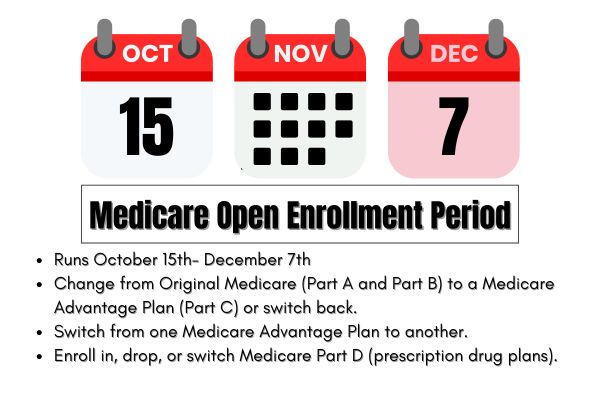
Understanding enrollment periods for Medicare Advantage Plans is essential to avoid penalties and ensure continuous coverage. The Initial Enrollment Period includes:
- Begins three months before Medicare coverage starts
- Lasts until three months after Medicare coverage starts
- Allows you to switch plans within the first three months of your Medicare coverage
The Medicare Advantage Open Enrollment Period runs from January 1 to March 31, during which beneficiaries can change plans or revert to Original Medicare. The general Medicare Open Enrollment Period occurs annually from October 15 to December 7, allowing changes to Medicare Advantage or drug plans.
Special Enrollment Periods are available under specific circumstances, such as moving or losing other health coverage and other life events.
Tips for Choosing the Right Plan
Choosing the right Medicare Advantage Plan involves considering many factors related to your healthcare needs, lifestyle, and budget. Changes like starting a new medication or seeing a new specialist may affect your coverage. The size of the provider network is also crucial, as many seniors want to choose and retain their doctors.
Consulting a Medicare expert provides:
- Access to accurate, personalized information about coverage options.
- Free, unbiased counseling through State Health Insurance Assistance Programs (SHIPs) to help you understand Medicare options.
- Clarification of details about Medicare Advantage Plans and associated costs by engaging with local SHIP representatives.
Personalized consultations help identify Medicare options based on your individual needs. Comparing Medicare Advantage options during the open enrollment period from October 15 to December 7 ensures informed decisions tailored to your health needs and financial situation.
Consulting a Medicare Expert
Consulting a Medicare expert is essential for making informed decisions about Medicare Advantage Plans. Experts provide personalized advice to address your unique healthcare needs, helping you navigate the complexities and choose the best plan for your situation.
Seek professional help to navigate the complexities of Medicare Advantage options. Expert advice is invaluable in understanding your options and making informed choices about your medical care coverage.
Common Mistakes to Avoid
Failing to sign up for Medicare during the designated enrollment period can lead to lifetime penalties. Not recognizing the significance of a special enrollment period can result in costly delays in obtaining coverage. Assuming job-based insurance is sufficient can create coverage gaps if Medicare is not enrolled at age 65.
Key points to consider regarding Medicare enrollment:
- Delaying enrollment in Medicare Part B can incur a 10% penalty for each year of delay past the initial sign-up period.
- It’s important to compare Original Medicare and Medicare Advantage Plans to make informed decisions tailored to personal health needs.
- Not purchasing a Medigap policy during the open enrollment window can lead to higher costs or denial due to preexisting conditions later.
Many Medicare enrollees underestimate potential out-of-pocket expenses, despite original Medicare covers a major portion of healthcare costs. Choosing a Medicare Advantage Plan solely based on additional perks may overlook essential network restrictions and coverage limitations. Ensuring that prescribed medications are covered by the plan is critical, as not all drugs may be included in the formulary.
Believing that Medicare is unaffordable can prevent eligible individuals from accessing necessary financial assistance programs.