Comparing Medicare Advantage Plan Types
Several types of Medicare Advantage plans exist, each with unique features designed to meet various healthcare needs. The main categories are:
- HMO (Health Maintenance Organization)
- PPO (Preferred Provider Organization)
- PFFS (Private Fee-for-Service)
- SNP (Special Needs Plans)
Understanding the differences in provider networks, referrals, and out-of-pocket costs for each plan type is crucial for choosing the best one for your needs.
HMO Plans
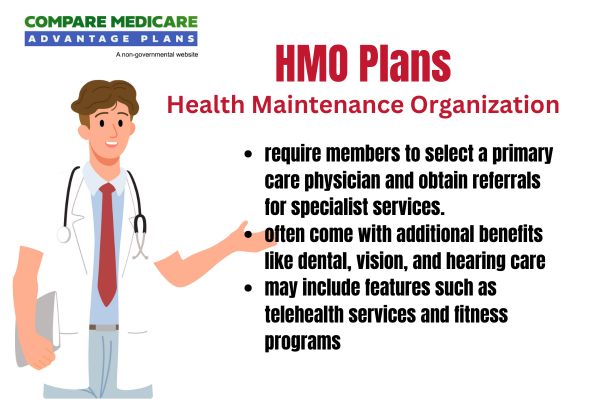
Health Maintenance Organization (HMO) plans focus on coordinated care, requiring members to use in-network providers for their healthcare services. One significant feature of HMO plans is the necessity for members to obtain referrals from their primary care physician to see specialists. This structure ensures that all aspects of a member’s healthcare are well-coordinated, potentially leading to better health outcomes.
While HMO plans often come with lower premiums, they also require members to stay within the plan’s network for most services. This can limit flexibility but may result in lower overall costs. Additionally, many HMO plans offer extra benefits like gym memberships and wellness programs, making them an attractive option for those looking for comprehensive health management.
PPO Plans
Preferred Provider Organization (PPO plan) plans offer more flexibility compared to HMO plans. A defining feature of PPO plans is that they do not require members to choose a primary care provider or obtain referrals to see specialists. This flexibility makes PPO plans ideal for individuals who frequently visit specialists.
While PPO plans generally have higher premiums, they provide the convenience of seeing out-of-network providers at a higher cost.
PFFS Plans
Private Fee-For-Service (PFFS) plans offer the freedom to choose any Medicare-approved doctor or hospital that accepts the plan’s payment terms. This flexibility can be advantageous for those who travel frequently or prefer not to be restricted by network limitations. However, it’s essential to confirm that the providers accept the plan’s terms before each specialist or hospital visit.
PFFS plans do not require members to select a primary care doctor or obtain referrals for specialist visits. While this plan type offers significant flexibility, it may come with higher out-of-pocket costs if providers charge more than the plan’s allowed amount. Thus, understanding the payment terms and ensuring provider acceptance is important when considering a PFFS plan, especially if you may need to pay out of pocket. Additionally, it is crucial to know how much the plan pays for services.
SNP Plans
Special Needs Plans (SNPs) are tailored to individuals with specific health conditions or financial challenges. They provide:
- Specialized care and services
- Care coordination for individuals with chronic conditions
- Care coordination for individuals with dual eligibility for Medicare and Medicaid.
SNPs offer additional benefits beyond standard Medicare coverage to address the unique healthcare needs of their members, making them an excellent choice for those requiring specialized care.
Top Medicare Advantage Companies for 2026
Selecting a reputable provider is a key part of choosing the right Medicare Advantage plan. In 2026, several companies stand out for their offerings, customer satisfaction, and plan options.
UnitedHealthcare, Humana, Aetna, Blue Cross Blue Shield, and Kaiser Permanente are among the best Medicare Advantage companies. Each of these providers has its strengths, from extensive provider networks to unique benefits, making them popular choices among Medicare beneficiaries.
UnitedHealthcare
UnitedHealthcare is a leader in the Medicare Advantage market, known for its extensive provider network and variety of plan options. Many UnitedHealthcare plans offer $0 premiums, making them accessible to a wide range of Medicare beneficiaries. However, double-checking local details ensures the plan provides adequate coverage in your area.
The company’s robust network ensures that members have access to a broad range of doctors and specialists, which can be particularly beneficial for those with complex healthcare needs. UnitedHealthcare’s commitment to providing comprehensive coverage and additional benefits makes it a top choice for many Medicare beneficiaries.
Humana
Humana is another prominent player among major competitors in the Medicare Advantage space, operating in nearly all states and offering coverage to 85% of U.S. counties. Many Humana plans include a Part B Giveback benefit, which helps cover Medicare Part B premiums, providing significant savings for members.
Humana’s extensive network and range of plan options make it a reliable choice for many Medicare beneficiaries.
Aetna
Aetna offers Medicare Advantage plans with the following features:
- $0 monthly premium, making them accessible to over 80% of Medicare beneficiaries
- $0 coverage for Tier 1 and Tier 2 generic drugs at preferred pharmacies, which can be a significant cost-saving feature
- Wellness support benefits, such as fitness programs
- Some plans offer dental, vision, and hearing coverage
However, some customers have reported challenges with consistency and customer service when dealing with Aetna. Despite these issues, Aetna remains a strong contender in the Medicare Advantage market due to its extensive coverage options and additional benefits.
Blue Cross Blue Shield
Blue Cross Blue Shield is a trusted brand in the Medicare Advantage market, known for its strong community ties and reliable coverage. The strength of Blue Cross Blue Shield’s Medicare Advantage plans can vary significantly by state, so it’s important to consider the specific plans available in your area.
Anthem, which is also referred to as Elevance Health, provides Medicare Advantage plans. These plans are offered through Blue Cross Blue Shield affiliates, enhancing the brand’s extensive reach.
Kaiser Permanente
Kaiser Permanente is recognized for its integrated care model, which includes both insurance and care delivery. This approach enhances care coordination and provides a seamless experience for members, leading to higher performance outcomes and overall satisfaction. Kaiser Permanente’s focus on integrated care makes it a leading organization in the Medicare Advantage sector.
By combining insurance with care delivery, Kaiser Permanente ensures that members receive coordinated and comprehensive health services. This model contributes to improved health outcomes and a higher level of member satisfaction.