How Much Is Medigap Insurance? Average Medigap Costs Explained – Find Out How Much Is Medigap Insurance

Understanding the cost of Medigap insurance is essential for anyone considering supplemental Medicare coverage. Medigap policies, also known as Medicare Supplement plans, help cover out-of-pocket expenses like copayments, coinsurance, and deductibles not paid by Original Medicare.

In this comprehensive guide, we explain average Medigap costs, factors that impact your premiums, and what you can expect when shopping for coverage. Use this resource to make informed decisions about your healthcare and discover how much Medigap insurance may cost for your unique situation.


Key Takeaways


  • Medigap plans fill coverage gaps left by Original Medicare, helping with deductibles, copayments, and coinsurance.


  • Average Medigap monthly premiums typically range from $100 to $250, depending on factors like location, age, and plan type.


  • Premium costs are influenced by age, geographic location, chosen plan type, and the insurer’s pricing method.


  • CompareMedicareAdvantagePlans.org enables side-by-side comparisons of Medigap, Medicare Advantage, and supplement plans by local rates and benefits.


  • Expert advice and smart enrollment timing can reduce costs, with licensed agents providing personalized support and guidance.

Compare Plans in One Step!

Enter Zip Code


 Advertisement

Understanding Medigap: What Is It and How Does It Work?

How Much Is Medigap Insurance - Average Medigap Costs Explained - Find Out How Much Is Medigap Insurance


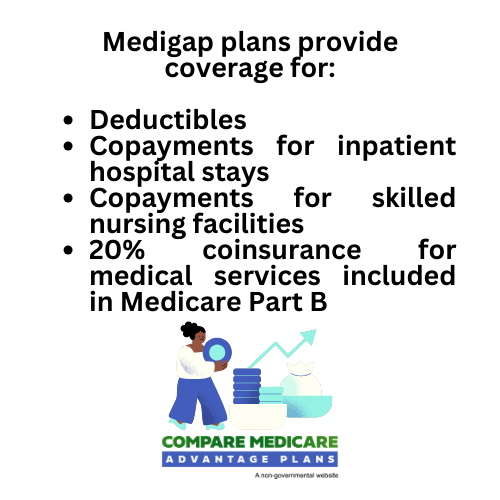
Medigap, also known as Medicare Supplement insurance, is an important safety net for many individuals enrolled in Original Medicare. While Medicare Part A and Part B offer substantial coverage, they leave gaps, like deductibles, copayments, and coinsurance, which could lead to unexpected out-of-pocket costs.

Medigap plans are designed to supplement those expenses, easing the financial burden for beneficiaries. By clarifying the role of Medigap policies and explaining how they interact with standard Medicare coverage, you can make more informed choices about managing healthcare costs. Understanding these foundational principles ensures you’re better prepared to explore available supplement plans with confidence.


The Role of Medigap in Covering Gaps Left by Original Medicare


The Role of Medigap in Covering Gaps Left by Original Medicare


Original Medicare, comprised of Part A (hospital insurance) and Part B (medical insurance), forms the backbone of health coverage for millions of Americans. However, it doesn’t pay for everything. This is where Medigap, sometimes called Medicare Supplement insurance, becomes vital.

Medigap plans are specifically designed to fill the coverage gaps left by standard Medicare, hence the name “Medigap.” These plans help cover costs such as copayments, coinsurance, and deductibles that are not fully paid by Medicare itself.

When you enroll in a Medigap plan, you gain access to supplemental insurance that reduces unexpected out-of-pocket expenses for medical care covered under Medicare. This can include coverage for skilled nursing facility care, certain emergency health coverage when traveling abroad, and even the remaining percentages of doctors’ fees that Medicare only partially pays. Without a Medigap policy, these expenses would become your sole responsibility.

Each Medigap plan, offered through private insurance companies, must follow regulations set by both federal and state governments to ensure standardized basic coverage. While each type of Medigap plan provides a different set of benefits, every plan type (such as Plan G, Plan N, and others) must deliver the core benefits required for that standard. This makes it easier to compare Medigap policies based on price and the coverage they offer.

Importantly, Medigap plans only work alongside Original Medicare. If you have a Medicare Advantage plan (also known as Part C), you cannot use Medigap to supplement that coverage; the law restricts Medigap policies to pair only with Original Medicare.

The structure of Medigap is carefully coordinated with Medicare Part A and Part B, so when a medical expense arises, Medicare pays its share first. Your Medigap insurance then steps in to handle the eligible remaining costs.

This model gives beneficiaries the peace of mind that they’ll have robust financial protection during hospital stays, doctor’s office visits, or other covered services where standard Medicare leaves a gap. As healthcare expenses continue to climb, having a Medigap policy is a powerful way to prevent significant financial strain, particularly for those with chronic conditions or those who expect to require recurring treatments or hospitalizations.

CompareMedicareAdvantagePlans.org is dedicated to giving you a clear understanding of how different supplement plans fill these gaps, ensuring you’re able to choose the best Medigap plan for your personal needs and budget.

Using the website, you can easily compare Medigap plans, view estimates for plan cost, and evaluate which supplemental insurance options align with your health situation and financial goals. Our goal is to provide you with a comprehensive outlook, so you can avoid unpleasant surprises in your healthcare expenses.

You can also connect with our licensed insurance agents if you want one-on-one guidance on finding the right Medigap policy.

In summary, Medigap serves as a critical supplement plan for anyone relying on Original Medicare alone. It actively fills those often costly gaps in Medicare, acting as a financial buffer and ensuring that you maintain coverage without exposing yourself to unpredictable, sometimes overwhelming expenses.

Understanding the key ways Medigap works with Medicare equips you to evaluate plan costs, compare coverage details, and make well-informed decisions about your supplemental insurance needs.


Average Medigap Costs: What You Can Expect to Pay

Understanding the average cost of Medigap plans is essential for anyone considering supplementing their Original Medicare coverage. Medigap, also known as Medicare Supplement insurance, is designed to cover gaps left by standard Medicare, helping with deductibles, copayments, and coinsurance. But just how much should you expect to pay for this valuable coverage? Medigap costs can vary based on several important factors, but having a sense of the typical monthly premiums and how these rates are structured will make it much easier to plan your healthcare budget.

We’ll explore real-world plan costs, break down monthly premiums across supplement plans, and discuss what influences the expenses associated with Medigap policies. This practical knowledge empowers you to compare plan premiums confidently, avoid unexpected costs, and ultimately make the right decisions for your medical and financial well-being.


Breaking Down Monthly Premiums for Medigap Plans

When evaluating Medigap costs, one of the first considerations is the monthly premium you’ll pay for your chosen Medigap plan. Monthly premiums for supplement plans can vary significantly, primarily depending on the coverage amount, chosen Medigap policy, location, age, and even household discounts offered by some insurance companies.

The average cost for a Medigap plan in the United States generally sits between $100 and $250 a month, but these rates aren’t set in stone. They’re just a guideline; your actual monthly costs could be lower or higher based on your personal circumstances, the plan type you select, and local market conditions.

The monthly premiums represent the amount you’ll pay the insurance company each month to keep your Medigap policy active. These premiums are separate from your Medicare Part B premium, which you must continue to pay when holding any supplement plan.

It’s vital to remember that plan premiums aren’t the only factor in the overall cost of coverage; deductibles and potential out-of-pocket costs also play significant roles in your yearly healthcare expenses.

Many people choosing Medigap focus on core plans like Plan G, Plan N, or Plan F (for those eligible before 2020), since these supplement plans offer robust coverage. For example, Plan G premiums may range from around $120 to as high as $300 per month, depending on your state, age, and insurer.

These monthly premiums cover doctor visits, hospital stays, and, in some cases, foreign travel emergencies, creating a predictable monthly expense rather than facing unpredictable out-of-pocket costs. Plan N is often a more budget-friendly option, with premiums generally ranging from $90 to $200 per month, though you may be responsible for some small copayments and the Medicare Part B deductible.

When comparing supplement plans, it’s critical to look not just at the premium, but at the value you’re receiving for that cost. High-deductible options, like the High Deductible Plan G, feature much lower monthly premiums, sometimes under $50 per month, but require you to pay a higher deductible before full benefits kick in.

This creates a trade-off between lower upfront premium costs and potentially higher out-of-pocket spending if you experience significant medical needs during the year.

The way insurance companies set plan premiums can also affect your rates over time. There are three primary pricing methods: community-rated, issue-age-rated, and attained-age-rated. Community-rated plans charge the same premium to everyone regardless of age; issue-age-rated plans base your premium on your age at the time you enroll, and it generally won’t increase as you age (apart from normal inflation); attained-age-rated plans increase premiums as you get older.

It’s important to know which method your chosen insurance provider uses, as this can impact the long-term affordability of your Medigap coverage and influence what you might pay several years down the line.

Some consumers qualify for discounts on their supplement plans, such as household or multi-policy discounts if more than one person in your household has a Medigap plan with the same insurer. These can help lower your monthly premiums and make the total cost of Medigap insurance more manageable.

Finally, using a comprehensive resource like CompareMedicareAdvantagePlans.org gives you the advantage of easily comparing real-time plan costs, viewing local rates, and understanding the unique benefits of each Medigap policy before you commit.

You can even enlist expert help from licensed agents if you need personalized guidance on balancing premiums, deductibles, and overall plan costs. This thorough approach ensures you won’t face surprises in your monthly premiums or overall Medigap costs and makes it easier to select an effective supplement plan that fits within your budget.


Factors That Influence Medigap Plan Cost

Medigap plan costs aren’t one-size-fits-all. The amount you’ll pay for premiums can differ widely based on a range of personal and market-driven factors. Where you live, your age at enrollment, and the type of supplement plan you choose all play significant roles in determining your rates.

Additionally, aspects such as your health status and the pricing method used by insurance companies can impact both initial and future plan premiums. Understanding how these variables interact is crucial for anyone looking to keep plan costs under control and find the best balance between monthly premiums, deductible amounts, and comprehensive coverage.

By recognizing what shapes Medigap policy expenses, you’ll be in a stronger position to compare supplement options and make smart, budget-friendly decisions using CompareMedicareAdvantagePlans.org.

Compare plans and enroll online


 Advertisement

Speak with a licensed insurance agent

1-833-641-4938
TTY 711

Mon-Fri : 8am-9pm ET

compare medicare advantage plans

How Age, Location, and Plan Type Affect Your Premiums

Age, location, and plan type are perhaps the most influential factors in shaping the cost of any Medigap plan, directly impacting your monthly premiums and overall coverage expenses. Let’s start with age, arguably the cornerstone in Medigap pricing.

Insurance companies often use age-based pricing methods, such as attained-age or issue-age ratings, to determine the premium for your supplement plan. With attained-age-rated plans, your rates typically start lower when you’re younger and gradually increase each year as you age, leading to higher plan costs as you grow older.

Issue-age-rated plans, by contrast, lock in your premium based on your age at the time you enroll; while these rates don’t increase due to age alone, they can still rise due to inflation or company-wide adjustments. Community-rated plans, meanwhile, ignore age completely, charging the same premium to all enrollees in a given area or market, regardless of how old they are when they sign up.

Location is another defining element in determining overall Medigap policy costs. Insurance companies set plan costs by region, so where you live can heavily affect your monthly premiums. Premiums for the same supplement plan, such as Plan G, can differ by hundreds of dollars per year between states or even zip codes.

This variability is tied to local healthcare costs, state-level regulations, and the competitive landscape among insurance providers. For example, Medigap plan premiums in densely populated metropolitan regions or states with higher healthcare expenses are generally steeper than premiums in rural or lower-cost regions.

It’s not uncommon for two individuals with identical ages and health statuses to pay very different premiums for the same Medigap plan simply because they live in different locations. This makes using tools on CompareMedicareAdvantagePlans.org especially valuable, as they allow you to view local plan costs and compare coverage options specifically tailored to your market.

The type of plan you choose, referred to as “plan type”, also significantly affects both your monthly premiums and potential out-of-pocket costs. There are several standardized Medigap plan types (such as Plan G, Plan N, and Plan F for those eligible), each offering a predefined set of benefits and coverage levels. Higher-coverage plan types like Plan G or Plan F typically have higher premiums because they offer more robust protection against out-of-pocket expenses like deductibles and coinsurance.

On the flip side, lower-premium options, such as Plan N or high-deductible Plan G, may look attractive upfront, but can leave you with more out-of-pocket medical costs in certain situations. It’s a trade-off; lower monthly premiums can come at the cost of higher deductibles or copayments down the line, so it’s essential to balance upfront affordability with the level of protection you require, based on your health and expected medical expenses.

Besides age, location, and plan type, insurance companies may adjust rates based on other underwriting factors if you’re enrolling outside your initial guaranteed issue period. Health status and tobacco use may impact your eligibility or rates, and some carriers offer discounts for things like multiple policies in one household or automatic payments.

Additionally, different insurers still charge various premiums for the exact same Medigap policy, adding another layer of complexity to your decision-making. That’s why it’s so important to use a comparison resource like CompareMedicareAdvantagePlans.org, which cuts through the complexity by letting you compare real-time premiums, view plan costs, and assess which supplement policy provides the best value for your location, age, and desired coverage.

When examining potential plan premiums and Medigap costs, consider not just the monthly rate but also associated deductibles and what’s included in the overall coverage. Some plans opt for a higher deductible, which lowers premiums but may increase your out-of-pocket burden when you need care.

Other policies provide low deductibles and copayments for a higher monthly cost, giving you financial predictability throughout the year. Evaluating these factors in tandem and understanding how your age, geographic location, and desired plan type interact puts you in control of your healthcare budget.

Whether you’re new to Medicare or exploring a new supplement plan, CompareMedicareAdvantagePlans.org offers expert tools and licensed agent support to help you compare plan premiums, review deductible details, and lock in a Medigap policy that fits your personal needs as well as your financial priorities.

Comparing Medigap, Medicare Advantage, and Supplement Plans

 

Comparing Medigap, Medicare Advantage, and Supplement Plans


Navigating the world of Medigap, Medicare Advantage, and other supplement plans can feel overwhelming due to the variety of coverage options, insurance terms, and cost structures involved. Understanding the differences between these plans, as well as how to evaluate their premiums and benefits, is the key to making well-informed choices about your healthcare protection and out-of-pocket expenses.

These insurance options are designed to fill different roles. Medigap plans help with expenses not covered by Original Medicare, while Medicare Advantage plans offer comprehensive, bundled alternatives.

By exploring plan costs, premiums, and supplemental coverage side-by-side, you’ll be able to identify the solution that best matches your medical needs, budget, and lifestyle goals. Our website offers robust tools to assist you in this crucial comparison process, whether you’re examining average Medigap plan costs, shopping for the best supplement policy, or vetting Medicare Advantage options in your area.


Using Our Website to Explore Plan Premiums and Benefits in Your Area

 

Using Our Website to Explore Plan Premiums and Benefits in Your Area


When you’re considering different types of Medicare coverage, whether it’s Medigap, a Medicare Advantage plan, or another type of supplement plan, having a clear and direct comparison of the policies available in your area is essential to finding the right fit.

CompareMedicareAdvantagePlans.org is specifically designed to put all the details you need at your fingertips. You can seamlessly browse Medigap plans and their monthly premiums, compare the full range of supplement plans, and evaluate which solutions offer the blend of insurance coverage and plan cost that matches your budget.

To begin, simply enter your ZIP code on our website to access up-to-date rates and coverage information tailored to your location. Local rates can significantly impact the monthly premiums you’ll pay, and since insurance companies base Medigap costs and supplement plan pricing on geographic factors, this real-time, area-specific information is crucial.

Our site shows you not only the range of average costs for Medigap insurance in your region but also the specific monthly premium amounts from leading insurance providers. This gives you the ability to directly compare plan premiums, view deductible details, and see both high-coverage and budget-friendly supplement plan options side by side.

Our online tools break down each Medigap plan by type, Plan G, Plan N, high-deductible options, and more, so you can assess exactly what each policy covers and how much it will cost monthly. You’ll find clear details about the coverage included under each plan, such as copayment and coinsurance coverage, deductible limits, and any extra benefits. This helps you determine whether paying a slightly higher premium for a more comprehensive supplement plan makes sense for your needs, or if a lower-cost plan with higher deductibles might be better suited to your expected healthcare usage.

Each policy is presented with its unique plan cost, monthly premium, deductible, and total expected out-of-pocket costs within a standardized comparison chart. This makes it easy for you to compare the benefits of various Medigap plans and other supplement policies quickly, without missing out on crucial differences that might impact your budget or coverage down the road. Plus, by using our cost-calculator tools, you can estimate your total annual premiums based on your specifics, age, gender, tobacco use, and desired coverage tier, giving you a highly personalized view of what your insurance might cost.

You’re never limited to just Medigap plans. Our platform also lets you see how Medicare Advantage plans compare, factoring in premiums, deductibles, and extra perks like drug coverage or dental and vision.

Understanding these differences is vital, since Medicare Advantage plans commonly bundle various benefits, often with different plan premiums or cost-sharing structures, while Medigap policies help specifically with the gaps in Original Medicare coverage.

Use the comparison features to weigh supplement plans against one another, ensuring you know exactly how each plan stacks up in terms of coverage, insurance reliability, policy costs, and plan premiums.

If you ever get stuck or have in-depth questions about plan cost, benefits, or Medigap policy choices, our network of licensed insurance agents is available to assist. You can reach out through the platform for expert, unbiased advice at no extra cost. Agents can help you interpret monthly premiums, uncover hidden costs, weigh deductible differences, and pick the supplement plan that fits your needs and budget.

There’s no obligation to enroll just by browsing; you’re in full control of your decision every step of the way.

Ultimately, using CompareMedicareAdvantagePlans.org empowers you to make truly informed decisions about Medicare supplement coverage.

Our website takes the guesswork out of comparing plan premiums, calculating average cost, and understanding what each supplement or Medigap policy will provide in return for your monthly investment. Whether you need a quick quote, a deep dive into coverage and policy benefits, or you’re ready to enroll online, our resources seamlessly guide you from shopping to selection with confidence and clarity.

Start your search for supplement plans today and take advantage of real-time insights and expert support, all focused on helping you manage your Medicare coverage, insurance costs, and healthcare security for the future.


Tips for Reducing Medigap Expenses and Getting the Best Value

Finding practical ways to reduce your Medigap expenses while still securing robust supplemental insurance coverage can make a real difference in your overall healthcare budget. Reviewing plan costs, comparing policy options, and evaluating monthly premiums are only the first steps, but the path to true savings often involves a blend of expert advice, strategic enrollment, and careful timing.

Savvy consumers take advantage of every cost-saving opportunity, from household discounts to leveraging comprehensive comparison tools. Learn how to minimize premiums, maximize deductible efficiency, and combine available resources for the best value, all while maintaining the high-quality coverage you deserve.


Expert Advice on Supplemental Insurance and Enrollment Assistance

Securing the most value from your Medigap, also known as Medicare Supplement insurance, begins with understanding not only plan costs but the underlying factors that influence monthly premiums, deductibles, and overall policy expenses.

As an insurance expert with CompareMedicareAdvantagePlans.org, I’ve seen firsthand how effective strategies and expert guidance can lead to substantial savings. The process typically begins with a holistic analysis of your unique medical needs and anticipated healthcare usage, medical history, recurring prescriptions, upcoming procedures, or the frequency of doctor’s visits ,all play a pivotal role in selecting the right supplement plan. Unlike a one-size-fits-all approach, customizing your coverage means you’re less likely to pay for benefits you won’t use, keeping unnecessary expenses in check.

The timing of your Medigap enrollment is one of the most overlooked aspects of reducing plan costs and premiums. For most people, the best time to enroll in a Medigap policy is during your six-month Medigap Open Enrollment Period, which starts the month you turn 65 and enroll in Medicare Part B. In this window, you enjoy guaranteed issue rights, insurers can’t deny coverage, impose waiting periods for pre-existing conditions, or charge higher plan premiums due to health status.

Missing this enrollment window could result in higher premiums, stricter underwriting, or even declined applications. This timing advantage alone can yield long-term savings, so monitoring your eligibility and acting proactively is vital to minimizing both short-term and lifetime Medigap expenses.

Expert advice from licensed insurance agents can illuminate supplemental insurance options that you may otherwise overlook. For example, some companies offer premium discounts for non-smokers, multiple policies in a single household, or setting up automatic bank payments.

Others may reduce monthly premiums if you pay annually, rather than monthly. These are nuanced details that an expert understands and can calculate, likely going unnoticed if you’re comparing supplement plans on your own. Our website, CompareMedicareAdvantagePlans.org, enables you to view up-to-date premiums in your area, compare deductible limits, and see which plans offer the most robust coverage for your budget.

Comparing multiple supplement policies is central to finding the best value. Plan costs fluctuate not just with plan type, such as Plan G versus Plan N, but based on your state, zip code, gender, age, and, for some providers, current health.

With our online tools, you can enter specific details and immediately see which Medigap policies offer the lowest monthly premiums for the coverage you need. This transparency helps you avoid overpaying, especially as different insurers can charge vastly different rates for identical coverage.

Some plans have higher deductible amounts with lower premiums, which could appeal to healthier individuals who expect fewer claims; others may cost more per month but save you money during a year with unforeseen medical needs.

Assessing your total costs means considering more than just the advertised “premium.” Factor in expected deductible outlays, copayments, coinsurance responsibility, and any potential rate increases based on the insurer’s pricing structure, community-rated, issue-age, or attained-age.

Comparing Medigap, supplement plans, and even Medicare Advantage on a single dashboard clarifies which policy delivers the best premium-to-coverage ratio and helps you avoid underinsurance or unnecessary premium payments.

Don’t forget that your needs may change, so periodic re-evaluation with the help of licensed experts can lead to additional savings down the line by switching to more cost-effective policies or taking advantage of new plan discounts that become available in your area.

Enrollment assistance is especially valuable for those who may not feel comfortable navigating plan cost comparisons or confusing Medicare Supplement insurance details on their own. At CompareMedicareAdvantagePlans.org, you can connect with knowledgeable, unbiased agents who analyze your unique situation and recommend options that balance premium costs and comprehensive coverage.

Our goal is always to help you find an affordable Medigap plan without sacrificing the benefits you need. We also walk you through online enrollment, answer questions about deductibles or premiums, and ensure all paperwork is accurate, so you avoid missing deadlines or facing unexpected policy changes.

Ultimately, the key to reducing Medigap expenses and securing the best supplement plan value is combining technology-driven comparison tools, insightful expert advice, and proactive enrollment strategies. Start your journey to optimal savings at CompareMedicareAdvantagePlans.org by comparing plan premiums, deductible levels, and supplemental coverage options.

Use expert insights, available free of charge, to understand every cost factor, minimize unnecessary expenses, and lock in a Medigap policy that aligns with both your health priorities and your budget for the years ahead.

Understanding the average costs of Medigap insurance is the first step toward making an informed decision about your healthcare coverage. By comparing options in your area, you can find a plan that fits both your needs and your budget.

Use our free comparison tool to review Medigap plans, benefits, and prices easily. If you have questions or need assistance, our licensed insurance agents are ready to help you navigate your choices and make the best selection for your situation. Secure your healthcare future today by exploring personalized Medigap insurance rates.


call today for help

 ZRN Health & Financial Services, LLC, a Texas limited liability company

Find & Compare Plans Online 


 Advertisement

Speak with a licensed insurance agent

 1-833-641-4938
TTY 711

Mon-Fri : 8am-9pm EST