Types of Medicare Advantage Plans and Referral Requirements
Medicare Advantage Plans come in various forms, each with its own set of rules regarding referrals. Navigating your healthcare efficiently requires understanding Medicare Advantage plans and your medicare plan. The main types of Medicare Advantage Plans include:
- Health Maintenance Organization (HMO) plans
- Preferred Provider Organization (PPO) plans
- Private Fee-for-Service (PFFS) plans
- Special Needs Plans (SNPs) and Medicare Advantage Part C.
Each type of plan has unique referral requirements. For instance, HMOs and SNPs typically require referrals for specialist care. On the other hand, PPOs offer more flexibility by not requiring referrals for specialist visits.
Let’s delve deeper into each of these plan types to understand how their referral systems work and highlight some key takeaways.
Health Maintenance Organization (HMO) Plans
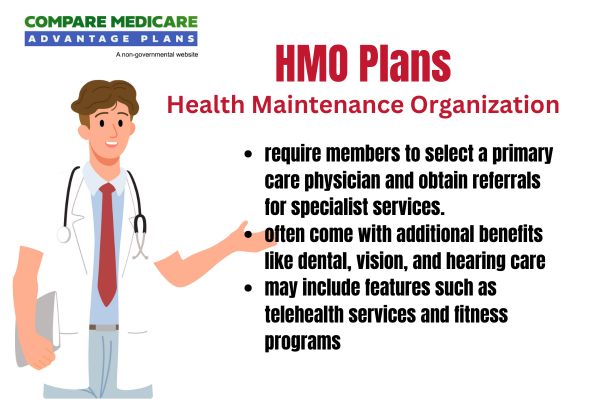
Health Maintenance Organization (HMO) plans are a popular choice among Medicare Advantage Plans. One of the defining features of HMO plans is the requirement for referrals when seeking specialist care. Before seeing a specialist, you must first obtain a referral from your primary care physician (PCP).
In HMO plans, the primary care physician acts as the gatekeeper to your healthcare, managing your overall health and coordinating your care with specialists. This usually involves providing a written referral or making a phone call to the specialist. Without this, the specialist’s services are unlikely to be covered by your plan.
There are some exceptions to this rule, such as routine specialist services like mammograms, which may not require a referral. However, it’s always best to confirm with your health plan and ensure that the referral is properly sent to avoid any issues.
Preferred Provider Organization (PPO) Plans
Preferred Provider Organization (PPO) plans offer greater flexibility compared to HMO plans. A significant advantage of PPO plans is the lack of need for referrals for specialist consultations.
This flexibility allows you to see any healthcare provider, including specialists, without needing a referral, thus giving you more freedom in managing your healthcare.
Private Fee-for-Service (PFFS) Plans
Private Fee-for-Service (PFFS) plans are another type of Medicare Advantage plan that provides members with the freedom to choose their healthcare providers. Unlike HMO and PPO plans, PFFS plans do not require referrals to see specialists, as outlined in part c.
You can visit any Medicare-approved provider or other providers who agree to accept Medicare payment terms set by your PFFS plan. This flexibility makes it easier for members to access the care they need without the constraints of referral requirements, including those related to medicare coverage.
Special Needs Plans (SNPs)
Special Needs Plans (SNPs) are designed for individuals with specific health needs and often require referrals for specialist visits within a specific network. In SNPs, you must obtain a referral from your primary care physician to access specialized care.
This ensures that the medical care provided is tailored to the unique needs of the patient and is coordinated effectively.
The Role of Primary Care Doctors in Medicare Advantage Plans
Primary care doctors are pivotal in Medicare Advantage Plans, managing your overall healthcare and ensuring services align with your health needs. Selecting a primary care doctor within your plan’s network is crucial, as they provide referrals to specialists and coordinate your care. This relationship is the cornerstone of effective healthcare management in Medicare Advantage Plans.
Primary care doctors often serve as the first point of contact for patients, guiding them through the healthcare professionals’ system and facilitating access to necessary treatments. Effective communication between a particular primary care doctor and specialists ensures seamless and well-managed healthcare.
Additionally, certain specialists, such as mental health providers and nutritionists, may not require a referral in some plans, offering direct access to these essential services. Selecting a primary care doctor who understands your health needs and provides timely referrals ensures a smooth and well-coordinated healthcare journey. This is especially important in plans like HMOs and SNPs, where referrals are a requirement for specialist care.