➤ Which Medigap plan covers the most?
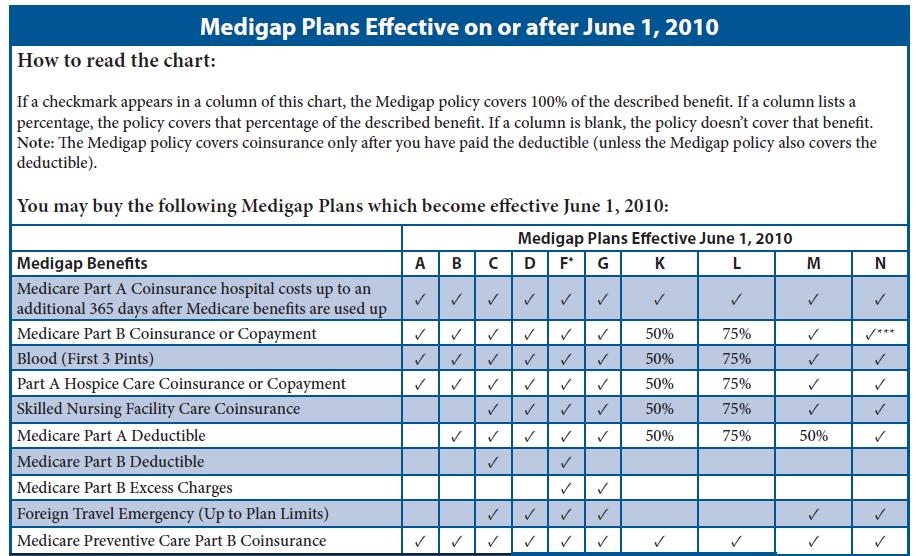
Plan F offers the broadest coverage, but it is only available to people first eligible for Medicare before January 1, 2020. For everyone else, Plan G is the most complete option, covering everything Plan F does except the Part B deductible.
➤ Which plans cover excess charges?
Plans F and G cover Part B excess charges, which some doctors bill above the Medicare-approved amount. Plan N does not cover excess charges, so this difference matters most if your doctors do not accept Medicare assignment.
➤ Are plans the same in every state?
Yes, in most states. Medigap plans are standardized by letter, so a Plan G covers the same benefits no matter which insurer sells it. Massachusetts, Minnesota and Wisconsin are the exceptions because they use their own standardized plan designs.
➤ Does Medigap cover prescriptions?
No. Medigap policies do not include Part D drug coverage, so you need to buy a separate Part D plan alongside your supplement. For 2027 the Part D deductible can be up to $700 and the yearly out-of-pocket cap is $2,400.
➤ What is the High-Deductible Plan G deductible for 2027?
The 2027 deductible for High-Deductible Plan G and Plan F is $3,050, up from $2,950 in 2026. After you meet it, the plan pays covered costs like the standard version, generally in exchange for a lower premium.
➤ What standardized Medigap plans are available?
Most states offer standardized plans A, B, C, D, F, G, K, L, M and N. Plans C and F are only available to people first eligible for Medicare before January 1, 2020, so newer enrollees choose from the remaining letters.
➤ Which Medigap plans cover foreign travel emergencies?
Plans C, D, F, G, M and N include foreign travel emergency coverage. They pay 80% of approved emergency costs abroad after a $250 deductible, up to a $50,000 lifetime limit. Plans A, B, K and L do not include this benefit.
➤ When should I buy a Medigap plan?
Your six-month Medigap Open Enrollment Period is the strongest window, starting the month you are 65 or older and enrolled in Part B. Insurers cannot use medical underwriting then, while outside that window most states let them ask health questions.