Dental and Vision Insurance for Seniors - Dental and Vision Insurance Plans

Understanding dental and vision insurance can be crucial for maintaining health as we age. These plans offer valuable coverage for essential services like regular eye exams and dental check-ups, providing peace of mind for seniors 55 and older.

Learning about different insurance options, coverage details, and potential costs can help when exploring plans that fit individual needs. It’s important to compare what’s available for your specific area, considering both dental and vision benefits together. This straightforward guide aims to assist seniors in making informed decisions about their insurance choices.


Brief Overview

Understanding dental and vision insurance is crucial for seniors aiming to maintain their health without financial strain. These plans cover essential services like regular check-ups and eye exams, helping seniors manage their healthcare needs effectively. Evaluating different insurance options, recognizing coverage details, and comparing costs can aid in selecting plans tailored to individual needs and location.

Combining dental and vision plans may offer streamlined benefits and financial predictability. Anyone can explore specific plans on this website using their ZIP code for personalized options, ensuring they make informed insurance decisions that support their health and peace of mind.


Key Takeaways

  • Dental and vision insurance aids seniors in maintaining essential health and managing costs.


  • Seniors should assess specific healthcare needs and compare plans for the best coverage.


  • Spirit Dental offers no wait periods and an increasing annual maximum on benefits.


  • Combining dental and vision plans helps streamline healthcare management and reduce costs.


  • Locational differences in insurance availability necessitate area-specific plan comparisons.

Compare Dental Plans in One Step!

Enter Zip Code


 Advertisement

Understanding Dental and Vision Insurance for Seniors

Dental Vision Insurance for Seniors: Senior Dental and Vision Insurance Plans


Navigating dental and vision insurance for seniors can be complex, but understanding these plans can bring peace of mind. As you age, your healthcare needs, especially related to dental and eye health, may increase. Insurance plans designed for seniors often cover a wide array of services tailored to these specific needs. Dental and vision insurance, often referred to as DHV insurance, can help manage costs and ensure you receive needed care without financial strain. Knowing the type of coverage available, potential benefits, and costs can help you make informed decisions.

Let’s dive into the basics of dental and vision insurance for seniors.


What is Dental Insurance?

Dental insurance for seniors is designed to assist with the cost of dental care, helping to cover services you might need to maintain good oral health. Plans typically provide coverage for preventive services like cleanings and check-ups, which are essential for keeping dental issues at bay.

However, dental coverage can also extend to more involved procedures such as fillings, crowns, and even dentures. Each plan varies in what it covers, so it’s crucial to review the details of any seniors’ plan you’re considering carefully. These plans often include provisions for different dentist networks, impacting where you can receive care.

While some plans offer coverage for a broad array of services, others may limit coverage to specific procedures, so understanding these distinctions is key.

Beyond basic coverage, it’s important to consider the costs associated with dental insurance. Premiums, deductibles, and copayments can all influence the overall expense. For seniors, finding an insurance plan with predictable costs is particularly beneficial in avoiding large, unexpected bills. Dental insurance should help manage dental expenses and allow seniors to prioritize their healthcare without added financial burden. Moreover, it’s essential to consider waiting periods that some dental plans might impose, especially for non-preventive services, as these can affect when coverage starts.

Dental plans also differ in terms of benefits. Some insurance plans might offer discounts on services that fall outside of typical coverage, or they might have higher annual limits. Senior-focused plans often tailor benefits to cover services more frequently needed by older adults, like tooth replacement and periodontal disease treatments.

When exploring plans, it’s recommended that seniors conduct a thorough comparison based on their specific dental needs and geographical location. This ensures that the plan’s coverage aligns closely with what you anticipate requiring, maximizing the value of the insurance and keeping your dental health in optimal condition.


Explaining Vision Coverage Options

Vision insurance is equally important for seniors, as eye health tends to require more attention with age. Vision insurance typically covers yearly eye exams, prescription glasses, and sometimes even contact lenses. Plans might offer additional discounts on laser eye surgery, which can be a meaningful consideration for those considering this procedure.

Vision plans provide essential services that can help maintain overall eye health, monitor existing conditions, and identify new ones early through regular examinations.

Understanding the benefits involved in vision insurance is crucial. Plans can differ widely, with some offering extensive coverage for a variety of services, while others focus on basics like exams and eyewear. As with dental plans, reviewing the specifics of each vision insurance plan is a must.

Some plans include networks of preferred providers that can lower out-of-pocket costs, though these might restrict where you receive care. On the flip side, out-of-network options might come with higher costs but can afford more freedom in choosing your optometrist or ophthalmologist.

The costs associated with vision insurance also deserve attention. Like dental insurance, vision insurance can include premiums, copayments, and deductibles. For seniors, having a comprehensive understanding of these costs can aid in planning and budget management. Moreover, some Medicare Advantage plans amalgamate dental and vision coverage, potentially providing a more streamlined approach to healthcare services.

For those already enrolled in such plans, it might make sense to review what their Medicare Advantage plan covers under the banner of vision insurance.

Ultimately, selecting the right vision insurance plan involves comparing the benefits each plan offers and measuring them against typical eye care expenses. It’s worthwhile for seniors not just to consider immediate needs, but also to anticipate future changes in eye health.

By carefully examining the coverage, benefits, and potential limitations of each plan, seniors can ensure that they’re choosing the vision plan that best supports their long-term vision care needs. As always, keep your location in mind while comparing plans, as this can affect availability and specific offerings.

Seniors are encouraged to explore and find a plan that meets their unique vision care requirements while providing financial reassurance.


How Dental Coverage Works for Seniors

Dental coverage is a vital resource for seniors, offering support in maintaining oral health. Understanding how dental insurance works can empower seniors to choose the best coverage for their needs. While most plans cover preventive services like cleanings and exams, coverage extends to necessary restorative treatments.

However, it’s crucial to recognize any limitations or exclusions that might apply, ensuring informed decisions. With diverse options available, seniors can find plans that balance benefits and costs effectively. Let’s delve into the specific services included in dental plans and potential coverage limitations to help you navigate these choices confidently.


Services Included in Dental Plans
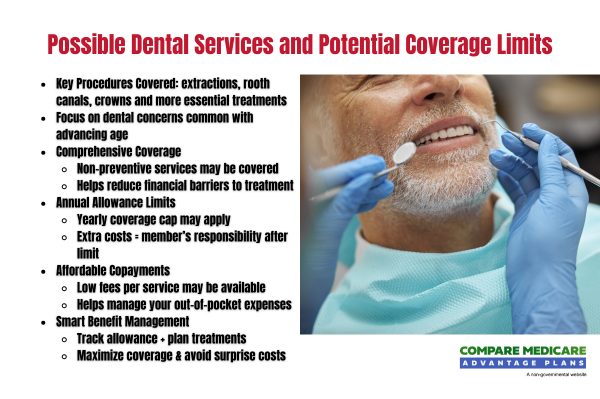
 

Services Included in Dental Plans


Dental plans for seniors typically provide a structured coverage approach, focusing heavily on maintaining oral health through preventive care. These plans usually cover routine services such as regular check-ups and cleanings, which are fundamental in preventing decay and gum disease.

Covering these visits means seniors can frequently visit their dentist without financial strain, allowing for early detection and treatment of dental issues. Besides preventive services, many dental plans also include basic procedures in their coverage. This might mean coverage for fillings, which address cavities before they can evolve into more severe problems, or tooth extractions when necessary.

Some plans further cover major services like crowns, bridges, and dentures. These procedures can be essential for tooth replacement, ensuring seniors maintain both function and aesthetics of their smile. Coverage for such services can significantly reduce out-of-pocket costs, making them more accessible for those on a tight budget.

A notable inclusion in several dental plans is the coverage for periodontal treatments. As gum disease becomes more prevalent with age, having a plan that includes such coverage can be invaluable. Treatment of periodontal issues helps in maintaining overall oral health, preventing further complications that might arise if left untreated.

Seniors should check if their plan includes benefits for oral surgery or emergency services. Although less frequently needed, these services can provide peace of mind in unexpected situations, allowing seniors to access crucial dental care without worrying about exorbitant costs. However, it’s important to note that specific benefits and coverage can vary widely between insurance plans.

Some insurance plans might partner with networks of dentists, impacting where seniors can receive their care. Opting for in-network dentists often results in better coverage benefits and reduced expenses for services.

Furthermore, seniors’ plans might offer additional benefits like discounts on non-covered services. While these discounts don’t equate to full coverage, they can make dental care more affordable, especially for procedures outside standard coverage. To maximize the benefits received, seniors should regularly review their policy details, ensuring a comprehensive understanding of the services included in their plans. By doing so, they not only maintain optimal oral health but also optimize the value of the insurance they hold.

It’s particularly important for seniors to select a plan aligning with their unique dental needs and financial situation, considering both current and potential future requirements. If you’re interested in exploring plans that fit your needs, enter your ZIP code on our website to see local options available to you.


Recognizing Key Limitations of Coverage

While dental insurance for seniors offers various advantages, it’s critical to understand its potential limitations. Transparency in what a plan won’t cover is as vital as knowing what’s included. Many seniors might find that their chosen plans have exclusions or coverage caps, particularly in more complex or costly procedures.

For example, insurance might not fully cover implants or cosmetic procedures, leaving seniors responsible for high out-of-pocket costs. Coverage limits or maximums per year are another common constraint, meaning once you’ve reached this limit, further dental expenses won’t be covered by the insurance for the remainder of the year.

Such coverage ceilings are especially pertinent when planning for ongoing or higher-cost treatments over a span of multiple appointments.

In addition to cost caps, seniors might encounter waiting periods before their insurance kicks in for certain types of treatments. This means that even if a plan covers a specific service, you might have to wait several months before you can access this benefit.

It’s crucial to anticipate such waiting periods, particularly if immediate dental care is required. Moreover, out-of-pocket costs like deductibles and copayments often apply, necessitating a thorough understanding of these expenses when selecting a plan.

Knowing these limitations allows seniors to better manage finances and avoid surprises when visiting the dentist. Furthermore, network restrictions might limit which dental providers you can use without incurring additional costs. Some plans might offer wider networks or sliding scale fees, potentially beneficial if flexibility in choosing a dentist is preferred.

Understanding these network specifics is essential, particularly for those who favor or rely on specific dental professionals.

Considering these limitations, it’s advisable for seniors to weigh their options carefully. Studying plan details, comparing multiple policies, and acknowledging potential limitations are steps toward making a well-informed decision. While focusing on current needs, it’s wise to anticipate future dental requirements too, like potential tooth replacement needs or increased periodontal care.

As you explore dental coverage, remember that location can affect availability and specifics, making it important to enter your ZIP code on our website to review plans in your area. This proactive approach ensures you find a dental plan fulfilling your needs, thereby helping avoid financial stress and ensuring seamless access to essential dental care.

Doing thorough research upfront can prevent unexpected expenses and provide a strong foundation of coverage tailored to your unique needs.


Exploring Dental Insurance Plans

Selecting the right dental insurance plan is crucial for maintaining oral health while managing expenses. This section focuses on understanding different insurance options, including specific details about Spirit Dental, a notable provider. We’ll also explore tips for choosing a plan that fits your healthcare needs and budget.

Dental insurance plans can vary significantly in terms of benefits, coverage, and costs. By shedding light on how these components work, seniors can confidently navigate their options, ensuring comprehensive dental care that’s both accessible and affordable.


The Role of Spirit Dental in Insurance Plans

Spirit Dental stands out due to its unique offerings designed to address the specific needs of seniors. When evaluating dental insurance, it’s vital to consider providers like Spirit Dental that offer comprehensive coverage options.

With Spirit Dental, seniors can expect plans that cover a wide range of services, from routine check-ups to more extensive treatments like bridges and dentures. These plans often include no waiting periods for major services, a significant advantage for seniors requiring immediate care.

Such features help seniors avoid the frustration of delayed treatments due to coverage start times.

The benefits of choosing a Spirit Dental plan extend beyond typical coverage. Many plans come with annual maximums that increase over time, incentivizing long-term customer relationships and providing growing coverage as needs evolve. Spirit Dental also emphasizes preventive care by covering cleanings and exams without affecting the annual maximum, a crucial factor for maintaining oral health.

The inclusion of preventive services without dipping into the yearly cap ensures that routine visits don’t eat away at your insurance benefits reserved for more significant procedures.

Moreover, Spirit Dental’s networks often include a wide variety of dentists, giving seniors the flexibility to choose practitioners they trust. This flexibility in provider choice can enhance both comfort and satisfaction with the dental care experience.

In selecting a Spirit Dental insurance plan, it’s crucial for seniors to understand the specifics of their network, as this can influence where and how they access dental services. By aligning provider networks with their personal dentist preferences, seniors can make optimal use of their benefits.

Spirit Dental plans typically offer coverage for major services like periodontal treatments and oral surgery, which are often necessary for ageing adults. These services are covered comprehensively, contrasting with some other plans that may impose tight limitations. Additionally, some plans provide partial coverage for orthodontics and cosmetic services, expanding the scope of services available to seniors. Understanding these offerings helps seniors make informed decisions based on their current and anticipated dental needs.

Overall, Spirit Dental plays a crucial role in offering plans that cater to the diverse and often specific needs of seniors, making it a beneficial option to consider when exploring dental insurance. It’s important for seniors to evaluate Spirit Dental alongside other options to ensure the best fit for their healthcare needs.

To see what plans are available in your area, consider entering your ZIP code on our site, facilitating a tailored exploration of offerings.


Compare plans and enroll online


 Advertisement

Speak with a licensed insurance agent

1-833-641-4938
TTY 711

Mon-Fri : 8am-9pm ET

compare medicare advantage plans

Tips for Selecting the Right Insurance Plan

Tips for Selecting the Right Insurance Plan


Choosing the right insurance plan requires evaluating both immediate dental needs and anticipating future requirements. Start by assessing your current oral health and forecasting potential future treatments. Consider whether you may need basic services soon or anticipate requiring more complex procedures like denture fittings or bridges.

Identifying these needs will help filter plans based on their coverage of essential services while staying cost-effective.

Balancing costs and benefits is another critical aspect of selecting an insurance plan. Carefully examining premiums, deductibles, and copayments is necessary to understand the financial commitment involved. Seniors should aim for plans offering predictable out-of-pocket expenses to minimize surprise bills. Calculating the total cost of these financial elements in conjunction with the services covered ensures informed decision-making and effective budgeting.

It’s also essential to understand what each plan does not cover. Some insurance plans might exclude coverage for certain procedures like implants or cosmetic services, leaving seniors responsible for high out-of-pocket costs.

Reviewing these exclusions and waiting periods before committing to a plan prevents unwanted expenditures and stresses. Understanding these potential limitations equips seniors with the knowledge to plan for any out-of-pocket expenses strategically.

Moreover, network restrictions can significantly impact which healthcare providers you can access. Some plans might offer a limited network to ensure lower costs, but might not include your preferred dental professionals. In such cases, thorough checking of in-network providers is crucial. Opting for plans with wider networks might be worthwhile if having a choice of dentists is a priority. Seniors should also consider the implications of using out-of-network services, which can incur higher costs.

Lastly, location is an essential factor. Insurance services may vary based on where you live, impacting availability and specifics of the coverage. For a strategic approach, entering your ZIP code on our site can help you find the plans tailored to your local conditions, ensuring you have access to options that will serve your specific community and its needs.

By taking these steps, seniors can select a plan that provides the necessary coverage and peace of mind.

Vision Plans and How They Complement Dental Coverage

Seniors often need to manage both dental and vision health, and combining these insurance plans can offer valuable benefits. Vision plans and dental coverage often go hand-in-hand, providing a comprehensive approach to maintaining overall health as we age. Understanding how these insurance plans work together can help seniors minimize out-of-pocket costs while maximizing the benefits available to them.

This section explores the advantages of combining dental vision plans and outlines the vision services often covered by insurance.


The Benefits of Combining Dental Vision Plans

Combining vision plans and dental coverage can significantly enhance the healthcare experience for seniors. By integrating these insurance plans, seniors are often able to streamline their healthcare management, addressing eye and dental health concerns together.

This integration can lead to enhanced benefits and cost efficiency, as insurance providers may offer bundled discounts for choosing both plans together. In some cases, this might reduce premiums or consolidate billing, making it easier to manage and budget for healthcare expenses.

One of the key advantages of combining dental vision plans lies in the comprehensive coverage provided. For instance, while dental insurance focuses on oral health services like check-ups and procedures, vision insurance adds another layer of care by covering eye exams, prescription eyewear, and sometimes contact lenses.

This combination ensures that seniors receive routine exams to catch any early signs of issues, whether dental or visual, before they become more significant health problems. Some insurance plans might even allow coverage for corrective procedures like laser eye surgery, although this varies by provider.

Financial predictability is another benefit. Having dental vision insurance plans under one umbrella can mean fewer separate copayments, allowing seniors to structure their year-round medical visits efficiently. Additionally, some Medicare Advantage plans offer the option to include both dental and vision coverage, creating a seamless way to manage health needs within familiar policy terms.

Though not all Medicare Advantage plans are the same, exploring their offers can be rewarding for seniors seeking comprehensive care within a single plan structure.

Choosing combined insurance plans often also means that seniors have access to a broader network of service providers, improving flexibility and accessibility for care. This broader network can be particularly beneficial for those living in areas with limited healthcare providers or who have a favorite dentist or eye specialist within a larger network. By ensuring they have the right combination of plans, seniors can better tailor their coverage to meet their individual health and personal preferences, making health management more straightforward and less stressful.

Understanding these benefits can empower seniors to make informed decisions about combining their insurance options, enhancing their overall quality of care. As you consider whether combined dental vision plans are right for you, reviewing the individual benefits, costs, and network limitations will provide clarity.

Keeping location in mind can also affect plan specifics, so inputting your ZIP code into our site might help tailor these searches to options available nearby, ensuring the most accurate comparisons.


Vision Services Often Covered by Insurance

Vision insurance plans for seniors play a crucial role in maintaining eye health and should be chosen with an understanding of the services typically covered. Most vision insurance plans offer coverage for annual eye exams, which are vital for detecting changes in vision and diagnosing conditions like cataracts or glaucoma early on. These regular check-ups ensure seniors maintain optimal eye health and address issues as they arise, preventing more severe complications over time.

In addition to exams, many vision plans include coverage for prescription eyewear, such as glasses and contact lenses. Depending on the plan, you might find partial or full coverage for these necessities. This benefit can substantially decrease out-of-pocket costs for seniors who regularly need corrective lenses.

Some plans also extend discounts to related optical services or products, making maintaining clear vision more affordable over the long term.

Some plans go beyond basic services to cover specialized treatments and surgeries. For example, insurance might provide partial coverage for corrective surgeries like LASIK, though this is more common among comprehensive or premium plans. Coverage for such treatments can be a decisive factor for seniors considering these options to improve vision clarity without continual reliance on glasses or contacts.

Insurance plans sometimes offer perks like discounts on designer frames or additional lenses, which cater to personal style preferences while managing costs. Additionally, plans might cover some preventive care initiatives, which include improved rates for services aimed at preventing conditions like macular degeneration, particularly beneficial as these are common concerns among older adults.

Like dental plans, the network of service providers available within a vision insurance plan can impact accessibility and cost. Many plans partner with specific eye care professionals, which may offer reduced rates for in-network services. Reviewing these networks can ensure seniors choose the most suitable plan for their preferred providers or avoid unexpected expenses for out-of-network care.

For seniors considering vision insurance, understanding these typical coverages is essential for selecting a plan that suits their needs. While focusing on current vision requirements, anticipating future changes in eye health can further inform a wise insurance choice.

Entering your ZIP code on our website might offer insight into local plans, helping ensure your vision needs are well-supported by available insurance options.


Finding Affordable Solutions

As seniors face increasing healthcare needs, finding affordable insurance solutions becomes essential. Dental and vision insurance can help cover important services, but how do you ensure these plans fit your budget? Understanding coverage is crucial. Compare costs and explore various plans to uncover the best fit. By knowing how to efficiently compare insurance options, you can find plans that offer substantial savings and comprehensive coverage.

Insurance plans differ widely, so gaining insights into plan comparisons helps seniors make informed decisions for dental and vision care without straining their finances.


Ways to Compare Insurance Options in Your Area


Ways to Compare Insurance Options in Your Area


Finding the right dental and vision insurance options in your area can seem daunting, especially with so many plans to choose from. However, there’s a methodical approach to comparing insurance options that can make the process straightforward and effective for seniors.

Begin by assessing your personal healthcare needs. List the services you anticipate using, such as routine dental cleanings, vision exams, or any specialist visits you foresee. This step is critical because many insurance plans are tailored to offer specific benefits that may better align with your particular needs. Understanding the core services you require will give you a great starting point to compare available plans against.

Another factor to consider is the associated cost of these services. Evaluate the premiums, deductibles, and copayments of each plan. Affordable plans will often have a balance between monthly costs and the medical services they cover. Some plans might appear initially economical but come with higher out-of-pocket costs when services are used. By calculating these costs, you can better gauge the financial commitment of each insurance plan. It’s essential to be honest about how often you visit dentists or eye care professionals to accurately predict any potential financial strains.

Coverage for procedures like fillings, crowns, or eyeglasses can add additional value, so consider these when tallying costs.

Location also plays a pivotal role in insurance plan selection. Plans differ from region to region, so it’s advisable to compare the options specifically available in your area. Local options might offer unique coverage benefits or participating provider networks, impacting where and how you receive care.

Checking the network of healthcare professionals within a plan is vital. Most insurance plans have preferred provider lists that offer services at reduced rates. A broader network means more choice and potentially better convenience for receiving care. Conversely, some plans restrict which professionals you can see without incurring high out-of-pocket costs.

It’s also worth noting insurer-specific customer service ratings. Reading consumer reviews and ratings can provide insights into insurers’ reputations for handling claims, customer service, and overall satisfaction. Companies with higher ratings often indicate better service and straightforward claims processes, which can significantly enhance your experience as a policyholder. Ensure the chosen insurer supports a pleasant, hassle-free service.

Lastly, use online resources and tools to enter your ZIP code and narrow down your search. Websites focusing on senior insurance can help streamline plan comparisons, offering side-by-side breakdowns of costs, coverage, and networks. Utilize these comparisons to make information-based decisions, enhancing your confidence that you’ve selected the most suitable and affordable insurance options available. By following these steps, seniors can secure comprehensive dental and vision coverage that meets their needs without financial strain.

Remember, the right plan offers peace of mind and ensures continued access to critical healthcare services.


Here are additional practical tips to streamline your insurance comparison process:

  • Compare plan networks for the widest choice of providers in your area.
  • Evaluate customer service ratings alongside claims handling efficiency.
  • Use comparison websites to assess plan costs, coverage, and network benefits.
  • Check for additional coverage options like fillings, crowns, and eyeglasses.
  • Calculate total costs by combining premiums, deductibles, and copayments.
  • Review consumer feedback for insights into insurer reputation and service quality.
  • Assess how often you’ll utilize services to predict financial commitments.


By keeping these tips in mind, you can ensure informed and confident decision-making when selecting insurance options.

Choosing the right dental and vision insurance can feel overwhelming. But taking time to explore different plans ensures you find one that suits your needs and budget. Remember, dental and vision coverage can vary by location, so it is important to compare options available in your area. Enter your ZIP code on our website to explore plans and make informed decisions confidently. Understanding your options helps you protect your health and finances while keeping you prepared for any surprises.

Feel empowered and reassured in your insurance choices today.


What are the typical services covered by dental insurance for seniors?

Dental insurance for seniors often covers preventive services like regular cleanings and check-ups. It may also provide coverage for basic procedures such as fillings and extractions, as well as major services like crowns and dentures. These plans help manage dental expenses effectively.


Why is it important for seniors to combine dental and vision insurance plans?

Combining dental and vision insurance plans can streamline healthcare management, reduce overall costs, and enhance benefits. This integration allows seniors to manage both dental and vision needs together, often resulting in cost savings and more comprehensive coverage.


How can seniors evaluate their dental insurance needs?

Seniors can evaluate their dental insurance needs by assessing their current oral health, anticipating future treatments, and comparing coverage options. Important factors include the services covered, costs (such as premiums and copayments), and any network restrictions for dental professionals.


What costs should seniors expect with dental and vision insurance?

Seniors should consider costs like premiums, deductibles, and copayments when selecting dental and vision insurance. These expenses vary by plan, so understanding them helps in budgeting and planning. Comparing these costs across multiple plans can aid in finding an option that fits financially.


How does location affect available dental and vision insurance plans for seniors?

Location impacts the insurance plans available due to network restrictions and regional offerings. Entering your ZIP code on resources like CompareMedicareAdvantagePlans.org can help seniors explore options tailored to their location, ensuring they find coverage suited to their community.

 ZRN Health & Financial Services, LLC, a Texas limited liability company

Find & Compare Plans Online 


 Advertisement

Speak with a licensed insurance agent

 1-833-641-4938
TTY 711

Mon-Fri : 8am-9pm EST

Russell Noga
( Medicare Expert )

Russell Noga is the CEO of ZRN Health & Financial Services, and head content editor of several Medicare insurance online publications. He has over 15 years of experience as a licensed Medicare insurance broker helping Medicare beneficiaries learn about Medicare, Medicare Advantage Plans, Medigap insurance, and Medicare Part D prescription drug plans.