Types of Medicare Advantage Plans in 2026

Curious about the types of Medicare Advantage plans in 2026? This guide covers all the available options, including HMOs, PPOs, and specialized plans, and explains any new updates and changes you should be aware of. Stay informed to make the best healthcare choice for the coming years.


Key Takeaways


  • Medicare Advantage plans, provided by private insurers, cover all Original Medicare services and often include additional benefits such as dental and vision coverage.


  • Different types of Medicare Advantage plans include HMO, PPO, PFFS, SNPs, and MSA plans, each with unique features regarding provider access and cost management.


  • Selecting the right Medicare Advantage plan requires careful evaluation of healthcare needs, provider networks, and an understanding of associated costs, including premiums and out-of-pocket limits.

Compare Plans in One Step!

Enter Zip Code


 Advertisement

Overview of Medicare Advantage Plans

Types of Medicare Advantage Plans in 2026


Medicare Advantage plans, also known as Medicare Part C, offer an alternative to traditional Medicare. These plans are provided by private insurance companies that have a Medicare contract and must cover all services that Original Medicare covers. One of the appealing aspects of Medicare Advantage plans is that they often include additional benefits not found in Original Medicare, such as dental, vision, and hearing coverage.

It’s important to note that Medicare Advantage plans offered in Texas may be significantly different than those offered in another state. You must live in the region where the plan is offered to enroll.

By enrolling in a Medicare Advantage plan, you receive your Medicare coverage through a private insurer without losing your benefits. These plans can also offer prescription drug coverage, which is a significant advantage for those who require ongoing medications. Another noteworthy point is that these plans cannot charge more for certain services than Original Medicare would charge.

Medicare Advantage plans vary by location and may offer different features and benefits depending on the area. Typically, these plans charge a monthly premium in addition to the Part B premium, but the exact costs can vary. Reviewing the specific details of each plan available in your area helps you find the best fit for your needs.


Health Maintenance Organization (HMO) Plans


Health Maintenance Organization (HMO) Plans - Types of Medicare Advantage Plans in 2026


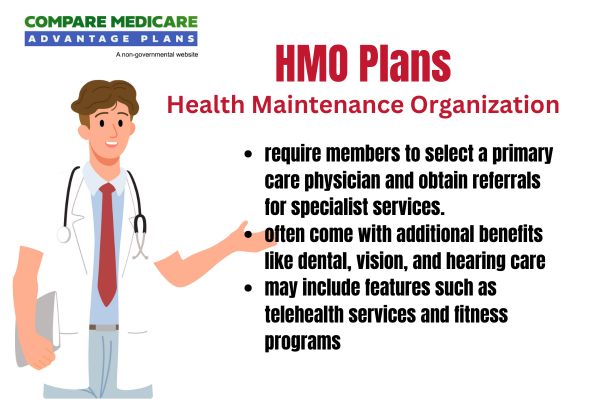
Health Maintenance Organization (HMO) plans are a popular type of Medicare Advantage plan. These plans generally require members to use healthcare providers within the plan’s network for non-emergency services. The network requirement helps keep costs lower, making HMO plans a cost-effective choice for many Medicare beneficiaries.

Members of HMO plans usually need to select a primary care provider who oversees their healthcare and provides referrals to doctors and specialists. While HMO plans often feature lower premiums and cost-sharing requirements compared to other Medicare Advantage plans, preventive care received outside of the network can result in higher out-of-pocket costs unless it’s an emergency. Some services within HMO plans may also require prior approval to confirm they are medically necessary.


Preferred Provider Organization (PPO) Plans

Preferred Provider Organization (PPO) plans offer greater flexibility compared to HMO plans. These plans allow members to:

  • See any doctor or hospital that accepts Medicare, providing more freedom in choosing healthcare providers.
  • Avoid the requirement to select a primary care doctor.
  • No need for referrals to see specialists, unlike HMO plans.


While PPO plans offer flexibility, members typically pay less when using healthcare providers within the plan’s network. Key points about PPO plans include:


Private Fee-for-Service (PFFS) Plans

Private Fee-for-Service (PFFS) plans are another type of Medicare Advantage plan. These plans determine the payment amounts for healthcare providers and the cost-sharing responsibilities of patients. PFFS plans offer the flexibility to see any provider who accepts the plan’s payment terms, giving beneficiaries more freedom in choosing their healthcare providers.

However, not all providers and other providers accept PFFS plans. Therefore, verifying that your chosen providers are willing to accept the plan’s payment terms before enrolling is crucial. This flexibility can be both an advantage and a limitation, making it necessary to carefully consider your healthcare needs and provider availability.


Special Needs Plans (SNPs)

Special Needs Plans (SNPs) are tailored for individuals with specific health conditions or circumstances. There are three main types of SNPs: Dual Eligible SNPs (D-SNP), Chronic Condition SNPs (C-SNP), and Institutional SNPs (I-SNP). These plans are designed to cater to individuals with severe or chronic diseases, unique health care requirements, or those who are also eligible for Medicaid.

Eligibility for SNPs requires individuals to have both Medicare Part A and Part B and reside within the plan’s designated service area. SNPs typically offer care coordination services and customize benefits and provider options to meet the specific needs of their members.

SNPs can only maintain enrollment for members who continue to meet the specific eligibility criteria defined by the plan, with certain limitations.

Compare plans and enroll online


 Advertisement

Speak with a licensed insurance agent

1-833-641-4938
TTY 711

Mon-Fri : 8am-9pm ET

compare medicare advantage plans

Medicare Medical Savings Account (MSA) Plans

Medicare Medical Savings Account (MSA) Plans combine a high-deductible health insurance policy with a medical savings account for healthcare expenses. Key features include:

  • Beneficiaries can select their healthcare services and providers freely, as these plans typically do not have a set network.
  • Medicare deposits an annual sum into the MSA.
  • The deposited funds can be used for eligible medical costs before meeting the plan’s deductible.


MSA Plans have the following features:

  • Do not charge a monthly premium, but enrollees must continue paying their standard Part B premium.
  • Participants use a checking account or a designated debit card provided by their bank to access MSA funds.


Any unspent funds in the MSA at the year’s end can be carried over for future healthcare expenses.

Prescription Drug Coverage in Medicare Advantage Plans

 

Prescription Drug Coverage in Medicare Advantage Plans


Prescription drug coverage is an essential aspect of many Medicare Advantage plans. Since not all Medicare Advantage plans provide separate drug coverage, enrolling in a plan that includes it is important if you require ongoing medications. All Special Needs Plans (SNPs) must include Medicare prescription drug coverage (Part D) as part of their benefits.

PFFS plans may or may not include Medicare Part D drug coverage; if not, members must enroll in a separate drug plan. Most HMO and PPO plans include coverage for prescription medications, but not all plans specifically offer this benefit.

When comparing plans, check whether they include prescription drug coverage, as many offer this benefit.


Extra Benefits Offered by Medicare Advantage Plans

Many Medicare Advantage plans include additional benefits that go beyond what Original Medicare offers, including covered services. Dental coverage, for instance, can range from routine cleanings to more extensive procedures like dentures and root canals. Vision benefits typically cover routine eye exams and can provide discounts on eyewear, including glasses and contact lenses.

Hearing services, often included in Medicare Advantage plans, cover routine check-ups and can help with the cost of hearing aids. Some plans also offer wellness programs that may include gym memberships, fitness classes, and preventive health services to support overall health. These extra benefits, including hearing benefits, can make a significant difference in the overall value of the plan. Additionally, UnitedHealthcare offers these valuable services to enhance the benefits of its plans.


Enrollment Periods for Medicare Advantage Plans

Knowing the enrollment periods for Medicare Advantage plans is crucial for timely and effective coverage. The Initial Enrollment Period spans seven months, starting three months before you turn 65 and ending three months after your birthday month. The Annual Enrollment Period, from October 15 to December 7, allows individuals to change their Medicare plans.

The Special Enrollment Period permits beneficiaries to switch or enroll in Medicare plans based on significant life events, such as moving or losing current coverage.

Those already enrolled in a Medicare Advantage plan can make one-time changes during the Medicare Advantage Open Enrollment Period from January 1 to March 31 each calendar year. If you miss your Initial Enrollment Period, you can enroll during the General Enrollment Period from January 1 to March 31, with coverage starting on July 1.


Costs Associated with Medicare Advantage Plans

 

Costs Associated with Medicare Advantage Plans


The costs associated with Medicare Advantage plans can vary significantly based on the specific plan chosen. These expenses include:

  • Premiums
  • Deductibles
  • Copayments
  • Coinsurance


The average monthly premium for all Medicare Advantage plans, including those with prescription drug coverage, is projected to slightly increase from $17.86 to $18.50 in 2024.

Each Medicare Advantage plan has an out-of-pocket limit, which varies, ensuring full coverage of health services once the limit is reached. Beneficiaries must continue paying their Part B premium while enrolled in a Medicare Advantage plan.

Additionally, those with very high drug costs will have a cap on their out-of-pocket expenses in the catastrophic phase of the Medicare Part D benefit. Reviewing the specific rising costs and coverage details of each plan helps understand how to lower costs and the potential financial impact.


Choosing the Right Medicare Advantage Plan

Choosing the right Medicare Advantage plan involves careful consideration of several factors. First, consider your preferred healthcare providers, as some plans may restrict you to a specific network. Evaluating out-of-pocket costs is also crucial, as expenses can vary significantly between different Medicare Advantage plans based on their coverage and deductibles.

Compare the plan options available in your area and consult with a Medicare advisor if needed. Taking the time to review and understand the benefits, costs, and provider networks of each plan can help ensure you choose the Medicare Advantage plan options that best meet your healthcare needs and financial situation.


How to Enroll in a Medicare Advantage Plan

To enroll in a Medicare Advantage plan, you need to:

  • Have Medicare Part A and Part B, as this is a prerequisite for enrollment.
  • Live in the service area of the plan you wish to join.
  • Have your Medicare Number and the start dates of your Part A and/or Part B, which are essential for enrollment.


Once you select a plan type, you can enroll online, by contacting the plan directly, or by submitting a paper form. It’s important to verify that the chosen plan covers your medications and includes necessary benefits.

Having all the required information and understanding the enrollment process can make the transition to a Medicare Advantage plan smooth and straightforward, allowing you to enjoy all the benefits.


Summary

Medicare Advantage plans offer a range of options that can significantly enhance your healthcare coverage. From HMO and PPO plans to SNPs and MSA plans, each type has its unique benefits and considerations. Understanding the associated costs, enrollment periods, and additional benefits can help you make an informed decision.

As you navigate your Medicare options, remember to evaluate your healthcare needs, preferred providers, and financial situation. Making an informed choice can lead to better health outcomes and greater peace of mind. Embrace the opportunity to find the Medicare Advantage plan that best suits your needs and take control of your healthcare journey.

Frequently Asked Questions


What is the difference between HMO and PPO plans?

HMO plans necessitate the use of in-network healthcare providers and typically require referrals from a primary care physician, while PPO plans provide greater flexibility in provider choices without the need for referrals.


Can I change my Medicare Advantage plan outside of the Annual Enrollment Period?

You can change your Medicare Advantage plan outside of the Annual Enrollment Period if you qualify for a Special Enrollment Period due to significant life events, or during the Medicare Advantage Open Enrollment Period from January 1 to March 31.


What additional benefits do Medicare Advantage plans offer compared to Original Medicare?

Medicare Advantage plans provide additional benefits not found in Original Medicare, including dental, vision, and hearing coverage, along with access to wellness programs and fitness memberships. These offerings enhance overall health management and improve access to necessary services.


How can I determine if a Medicare Advantage plan includes prescription drug coverage?

To determine if a Medicare Advantage plan includes prescription drug coverage, you should review the plan’s details specifically for Medicare Part D benefits, as certain plans, such as SNPs, are mandated to provide this coverage.


What are the costs associated with Medicare Advantage plans?

Medicare Advantage plans typically involve monthly premiums, deductibles, copayments, and coinsurance, with costs varying significantly between plans. Additionally, beneficiaries must continue to pay their Part B premium, and each plan has an out-of-pocket limit.

call today for help

 ZRN Health & Financial Services, LLC, a Texas limited liability company

Find & Compare Plans Online 


 Advertisement

Speak with a licensed insurance agent

 1-833-641-4938
TTY 711

Mon-Fri : 8am-9pm EST

( Medicare Expert )

Russell Noga is the CEO of ZRN Health & Financial Services, and head content editor of several Medicare insurance online publications. He has over 15 years of experience as a licensed Medicare insurance broker helping Medicare beneficiaries learn about Medicare, Medicare Advantage Plans, Medigap insurance, and Medicare Part D prescription drug plans.