Speak with a licensed insurance agent

1-833-641-4938

TTY user 711 Mon-Fri : 8am-9pm EST

How Doctor Networks Work in Medicare Advantage Plans

Reviewed by Russell Noga, Licensed Medicare Insurance Broker (all 50 states) | Last updated October 8, 2026

Medicare Advantage plans contract with networks of doctors, hospitals and other providers; how much you pay, and whether care is covered at all, depends on whether the provider is in your plan’s network and on your plan type.

HMOs generally cover only in-network care except emergencies, PPOs cover out-of-network care at a higher cost, and Private Fee-for-Service plans let providers decide whether to accept the plan. Networks can change each year.

See Medicare Advantage plans 2027.

✔ Licensed across all 50 states
✔ Built on CMS 2027 data
✔ No-cost plan comparison

Key Highlights

✔

Networks decide what you pay.

✔

HMOs: in-network only, except emergencies.

✔

PPOs: out-of-network at higher cost.

✔

Networks can change each year.

Compare plans and enroll online

Network Rules by Plan Type

Plan Type In-Network Out-of-Network Referrals
HMO Covered Emergencies and urgent care only Often required
HMO-POS Covered Some services, at higher cost Often required
PPO Lowest cost Covered at higher cost Usually not required
PFFS Network or non-network providers who accept the plan’s terms Provider decides per visit Usually not required
SNP Covered Depends on plan Depends on plan

How to Check Whether Your Doctor Is In Network

Step by Step

1

Search the plan’s 2027 provider directory. Use the exact plan name, not just the insurer.

2

Call your doctor’s office. Ask whether they will be in that specific plan for 2027.

3

Check your hospital too. Specialists often follow their hospital’s contracts.

4

Ask about labs and imaging. They may need to be in network as well.

5

Write down who confirmed it and when. Useful if a dispute comes up.

How Doctor Networks Work in Medicare Advantage Plans

Find & Compare Plans Online

Speak with a licensed insurance agent

1-833-641-4938TTY 711

Mon-Fri: 8am-9pm ET

When Networks Change

Networks are set each year and can change. If a doctor leaves your plan during the year, the plan generally must notify you, and in some cases a Special Enrollment Period may be available when a plan makes significant network changes. Most network changes take effect January 1, which is why checking every doctor during Annual Enrollment matters.

Watch for: many insurers are cutting PPOs for 2027. If you move from a PPO to an HMO, out-of-network doctors you used to see may no longer be covered.

Narrow vs Broad Networks

Narrower Network

✔

Often lower premiums and copays

✔

Fewer doctors and hospitals

✔

Works if your doctors are in it

Broader Network

✔

More choice

✔

Often higher costs

✔

Better if you see many specialists

How Medicare Advantage Works

Medicare Advantage, sometimes called Part C, lets you receive your Medicare benefits through a Medicare-approved private insurer. These plans cover everything Original Medicare Part A and Part B cover, with the exception of hospice care, which Original Medicare continues to pay for. Most also bundle Part D drug coverage, and many may tack on extras like routine dental, vision and hearing benefits.

The trade-off is that Medicare Advantage plans generally rely on doctor and hospital networks and may call for referrals or prior authorization for certain services. Each Medicare Advantage plan sets a yearly out-of-pocket maximum for covered medical care, something Original Medicare lacks. You still pay your Part B premium, along with the plan’s premium if there is one.

Feature HMO PPO
Out-of-network care Not covered except emergencies and urgent care Covered at a higher cost
Referrals for specialists Usually required Usually not required
Premiums Usually lower Usually higher
Out-of-pocket maximum In-network limit In-network limit plus a higher combined limit
Best for Lower costs, local care Flexibility, travel, keeping specific doctors

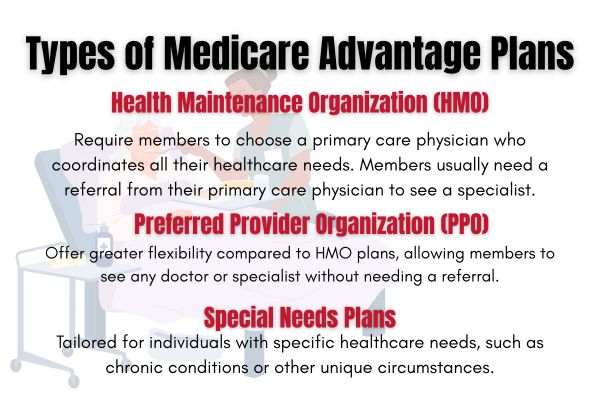
Types of Networks in Medicare Advantage Plans - Doctor Networks Work

If Your Plan Is Ending

A non-renewal notice should have reached you in early October if your plan won’t be available in your county for 2027. Coverage doesn’t end immediately; it runs through December 31, 2026, which gives you time to decide.

If Your Plan Is Ending

1

Review your non-renewal letter. It verifies that your plan is ending and lays out your choices.

2

Write down your doctors and drugs. Comparing replacement plans requires them.

3

Compare your 2027 plan choices. Look at networks, drug coverage and the out-of-pocket maximum, not only the premium.

4

Pick a plan by December 31 to avoid a gap. If you enroll during Annual Enrollment by December 7, your coverage starts January 1, 2027.

5

Rely on your Special Enrollment Period if necessary. If your plan is ending, you generally have until the end of February 2027 to make a choice.

If you take no action: on January 1, 2027, you go back to Original Medicare, and you will have no drug coverage unless you pick a Part D plan. Being without drug coverage may result in a late enrollment penalty.

Medigap rights: if your Medicare Advantage plan exits your area, you generally get a guaranteed issue right, lasting up to 63 days after your coverage ends, to purchase certain Medicare Supplement plans with no health questions.

How to Compare

How to Compare

1

Review your Annual Notice of Change. It spells out every 2027 change to the plan you have now.

2

Verify your doctors and hospitals. Make sure every provider is in the 2027 network, not only the 2026 network.

3

Review your prescriptions. Verify every drug, the tier it falls on and any step therapy or prior authorization rules.

4

Look at the full annual cost. Total up the premium, usual copays and drug costs, and review the out-of-pocket maximum.

5

Look at star ratings. Medicare scores plans on quality and service using a 1 to 5 star scale.

6

Sign up by December 7. Coverage under your new plan begins January 1, 2027.

Enrollment Periods

Enrollment Period Dates What You Can Do
Annual Enrollment Period October 15 to December 7, 2026 Join, change or drop a Medicare Advantage or Part D plan effective January 1, 2027
Medicare Advantage Open Enrollment January 1 to March 31, 2027 In Medicare Advantage, you can change to another plan or go back to Original Medicare one time
Initial Enrollment Period 7 months around your 65th birthday month Sign up for Medicare and choose your first plan
Special Enrollment Periods Varies Switch plans after events such as a move, a loss of other coverage or your plan exiting your area

Annual Enrollment is when most people make changes. If you like your current plan, no action is needed; it renews on its own. Even so, review your Annual Notice of Change, since networks, premiums, copays and drug lists can all change on January 1.

Reading Your Annual Notice of Change

Check Every Line

✔

Your 2027 premium and deductible

✔

Doctor, specialist and hospital stay copays

✔

The out-of-pocket maximum

✔

Updates to your formulary, drug tiers and coverage rules

✔

Whether your doctors, hospitals and pharmacy stay in network

✔

Updates to dental, vision, hearing and other extras

The Annual Notice of Change must reach members by September 30. It is the most useful single document you receive each fall, since it spells out exactly how your plan will change on January 1.

Special Enrollment Periods

Outside of the fall and early-year windows, changing plans generally requires a Special Enrollment Period. Typical reasons include:

You May Qualify If

✔

Your plan is leaving your area or ending

✔

You move outside your plan’s service area

✔

You lose employer or union coverage

✔

Your Medicaid status changes, or you qualify for a Medicare Savings Program or Extra Help

✔

You want to join a 5-star plan, once a year

Every Special Enrollment Period has a separate time limit, so move as soon as the event occurs.

Prior Authorization and Referrals

Prior authorization is required by most Medicare Advantage plans for certain services, including some surgeries, advanced imaging, skilled nursing stays and some drugs. While your doctor usually submits the request, ask whether a scheduled service needs approval so you are not caught off guard by a denial.

You or your doctor can appeal a denied request. Medicare rules give plans deadlines for decisions, and those deadlines are shorter when a wait could seriously harm your health.

Emergency, Urgent and Out-of-Area Care

Emergency and urgent care are covered by every Medicare Advantage plan anywhere in the U.S., whether in or out of network, and an emergency does not require prior approval. Routine care while traveling is different: HMOs generally do not cover it, and PPOs cover out-of-network care at a higher cost.

If you’re away from home for months each year, ask every plan how it covers care where you stay. This is among the most frequent reasons people change plans partway through the year.

Appeals and Complaints

You have the right to appeal if your plan denies a service, a drug or payment for care. The denial notice from the plan explains the process. Appeals have several levels, beginning with the plan and moving on to independent reviewers.

If your issue isn’t about coverage, such as wait times or customer service, you can file a grievance with your plan. For help, you can also reach out to 1-800-MEDICARE or your State Health Insurance Assistance Program.

The 2027 Part B Premium

Of the major figures, only the Part B premium is not published alongside the plans. CMS typically announces it in November. Projections in the 2026 Medicare Trustees Report put the 2027 standard premium at about $209.50 a month and the deductible at about $292, up from $202.90 and $283 in 2026. You continue paying it even with Medicare Advantage.

If You Miss December 7

Miss the Annual Enrollment deadline and your current plan automatically renews for 2027, including the changes listed in your Annual Notice of Change. Medicare Advantage members get one more opportunity, from January 1 to March 31, 2027, to change Medicare Advantage plans or go back to Original Medicare and join a Part D plan.

Telehealth

Many Medicare Advantage plans may cover telehealth for some services, at times with a lower copay than an in-person office visit. It is handy for follow-ups and minor problems, but you still need to confirm that your regular doctors are in network.

Pros and Cons of Medicare Advantage

Advantages

✔

Often a low or $0 premium

✔

A yearly out-of-pocket maximum

✔

Drug coverage usually included

✔

Dental, vision and hearing benefits may be included in many plans

✔

One card and one plan

Tradeoffs

✔

Networks; except for emergencies, HMOs require in-network care

✔

Prior authorization and referrals are common

✔

Copays add up if you use a lot of care

✔

Plans and networks can change every year

✔

Moving to Medigap later may involve health questions

Special Needs Plans

Special Needs Plans (SNPs) are Medicare Advantage plans designed for particular groups. Their benefits, networks and drug lists are shaped around the members they serve, and many come with care coordinators. In 2027, SNPs are one of the few places large insurers are adding plans, even while cutting PPOs.

Type Who Qualifies What Is Different
Dual Special Needs Plan (D-SNP) People with both Medicare and Medicaid Coordinates both programs; costs are often very low, with extra benefits
Chronic Condition SNP (C-SNP) People who have qualifying conditions like diabetes, heart failure or chronic lung disease Doctors, drugs and programs designed around the condition
Institutional SNP (I-SNP) People who live in a nursing home or need that level of care at home Care delivered where the member lives

Getting Help

You do not need to compare plans by yourself, and help should not cost you anything. Here are the free options:

Free Help Comparing Plans

✔

Available any time: Medicare Plan Finder on Medicare.gov

✔

1-800-MEDICARE (1-800-633-4227), reachable 24 hours a day on all seven days of the week

✔

Your State Health Insurance Assistance Program (SHIP), which provides free, unbiased counseling

✔

A licensed agent or insurance broker, who can compare plans across several insurers for free

Gather your Medicare card, a list of your drugs and doses, your doctors and your preferred pharmacies before you call. That way a long conversation becomes a quick one.

Bottom Line

The Bottom Line

Doctor networks drive what you pay in Medicare Advantage. Check every doctor and hospital in the plan’s 2027 directory and by phone before you enroll.

Compare plans and enroll online

Frequently Asked Questions

➤ What is a Medicare Advantage network?

A network is the group of doctors, hospitals, pharmacies and other providers that contract with a Medicare Advantage plan. Using in-network providers costs less, and in HMOs, out-of-network care is generally not covered except emergencies and urgent care.

➤ What happens if I see an out-of-network doctor?

In an HMO, non-emergency out-of-network care is generally not covered, so you may pay the full bill. In a PPO, it is covered at a higher cost. Emergency and urgent care are covered anywhere in the U.S. in every plan.

➤ How do I check if my doctor is in network?

Search the plan’s 2027 provider directory using the exact plan name, then call your doctor’s office to confirm it will be in that plan for 2027. Check your hospital, labs and imaging centers as well.

➤ Can my doctor leave my Medicare Advantage network?

Yes. Networks can change, most often on January 1, and sometimes during the year. Plans generally must notify affected members. Check your doctors every fall during Annual Enrollment, when you can switch plans. Ask your doctor directly as well.

➤ Do I need referrals to see specialists?

It depends on the plan. HMOs often require a referral from your primary care doctor before you see a specialist, while PPOs usually do not. Check your plan’s Evidence of Coverage for its referral rules.

➤ What is a PFFS plan network?

Private Fee-for-Service plans set how much they pay providers, and providers can decide visit by visit whether to accept the plan’s terms. Some PFFS plans also have networks. Confirm before each visit that your provider will accept the plan.

➤ Are hospitals part of the network too?

Yes. Hospitals, skilled nursing facilities, labs and imaging centers are all part of a plan’s network. Specialists often work through specific hospitals, so check your preferred hospital when choosing a plan. A plan without your hospital may also leave out your specialists.

➤ What if no plan includes all my doctors?

Rank your doctors by importance and choose the plan that covers the most essential ones, or consider a PPO that pays for out-of-network care. Original Medicare with Medigap can be used with any U.S. provider that accepts Medicare.

➤ Are PPO networks shrinking for 2027?

PPO options are. UnitedHealthcare is cutting 34 PPOs, Humana 37, Aetna 20 and HCSC 48 for 2027, and Kaiser is dropping its last 3. If your PPO is ending, check whether an HMO’s network includes your doctors.

➤ When can I change plans if my doctor leaves the network?

During Annual Enrollment, October 15 to December 7, 2026, or from January 1 to March 31, 2027, if you are in Medicare Advantage. Significant network changes may also trigger a Special Enrollment Period in some cases.


Have Questions?

Speak with a licensed insurance agent

1-833-641-4938

TTY users 711

Mon-Fri: 8am-9pm ET

Find & Compare Plans Online

Speak with a licensed insurance agent

1-833-641-4938TTY 711

Mon-Fri: 8am-9pm ET

ZRN Health & Financial Services, LLC, a Texas limited liability company

Russell Noga, licensed insurance agent
( Medicare Expert )

Russell Noga is the CEO of ZRN Health & Financial Services, and head content editor of several Medicare insurance online publications. He has over 15 years of experience as a licensed Medicare insurance broker helping Medicare beneficiaries learn about Medicare, Medicare Advantage Plans, Medigap insurance, and Medicare Part D prescription drug plans.