






Medicare Advantage 2026 Eligibility Requirements
To qualify for Medicare Advantage 2026 eligibility requirements, you must be at least 65, eligible for Medicare due to age or disability, or have received SSDI for at least 24 months. This article will guide you through these criteria and additional pathways for those with specific conditions like ESRD.
Key Takeaways
- Eligibility for Medicare Advantage plans in 2026 requires individuals to be at least 65 years old or to have received SSDI for a minimum of 24 months, with specific pathways for those with end-stage renal disease.
- The Initial Enrollment Period (IEP) for Medicare Advantage lasts seven months, allowing beneficiaries to enroll with start dates aligned to their Medicare coverage, promoting timely healthcare access.
- Special Enrollment Periods (SEPs) provide flexibility for beneficiaries to adjust their Medicare Advantage plans due to life changes, ensuring continued optimal healthcare coverage.
Compare Plans In One Step!
Eligibility Criteria for Medicare Advantage Plans in 2026
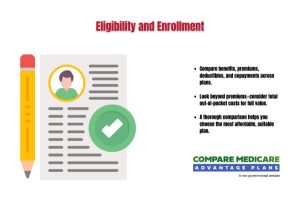
To qualify for Medicare Advantage plans in 2026, individuals must meet specific criteria:
- Be eligible for Medicare due to age or disability
- Be at least 65 years old, or
- Have received Social Security Disability Insurance (SSDI) for at least 24 months
These criteria ensure that the benefits of Medicare Advantage are available to those who need them most.
Individuals with end-stage renal disease (ESRD) have specific pathways to qualify for Medicare Advantage plans.
This provides significant advantages for those dealing with ESRD, offering tailored healthcare coverage options. Knowing these eligibility pathways is key to accessing the full range of benefits offered by Medicare Advantage plans.
Meeting these eligibility requirements opens the door to various special supplemental benefits that can significantly enhance your healthcare experience. From prescription drug coverage to wellness programs, Medicare Advantage plans offer a comprehensive approach to healthcare that surpasses Original Medicare.
This holistic approach is designed to meet the diverse needs of Medicare beneficiaries, ensuring access to necessary care and services, including extra help, as well as prescription plans and prescription coverage.
Meeting the eligibility criteria is the first step toward unlocking the benefits of Medicare Advantage plans. Whether through age, disability, or specific medical conditions like ESRD, understanding these requirements will help you navigate the enrollment process with confidence.
Initial Enrollment Period (IEP) for Medicare Advantage
The Initial Enrollment Period (IEP) is a crucial time frame for new Medicare beneficiaries to enroll in Medicare Advantage plans.
Spanning seven months, it starts three months before your 65th birthday month, includes your birthday month, and extends three months after. This window allows ample time to explore your options and make an informed decision about your healthcare coverage.
During the IEP, you can enroll in any Medicare Advantage plan that suits your needs. If you sign up before your Medicare coverage starts, your plan coverage will begin on the same day as your Medicare, ensuring there are no gaps in your healthcare coverage.
If you enroll after your Medicare coverage has already begun, your Medicare Advantage plan will start on the first day of the month following your enrollment request. This flexibility accommodates different circumstances, ensuring all Medicare beneficiaries have timely access to healthcare coverage.
Special Enrollment Periods (SEPs) for Medicare Advantage Plans

Special enrollment period allows Medicare beneficiaries to adjust their Medicare Advantage or drug coverage based on specific life events.
These periods provide the flexibility to switch plans when circumstances change, such as moving to a new area, losing Medicaid eligibility, or receiving misleading information, ensuring your healthcare coverage remains optimal.
A common trigger for a SEP is moving outside the service area of your current Medicare Advantage plan. In such cases, you have two months to switch to a new plan that covers your new location.
Similarly, if released from incarceration, you have two full months to enroll in a Medicare plan, provided you maintained your Part A and/or Part B coverage.
Losing Medicaid eligibility triggers a SEP, allowing you to enroll in a Medicare Advantage plan or drug plan within three months. This ensures there are no gaps in healthcare coverage. Additionally, if misled about your plan, you have two months to switch to a new Medicare Advantage plan.
Understanding SEPs and their triggers is crucial for maintaining continuous and adequate healthcare coverage. These periods provide flexibility, ensuring that Medicare beneficiaries can adapt their plans to changing needs.
Compare plans and enroll online

Medicare Advantage Plan Choices and Service Areas
Selecting the right Medicare Advantage plan involves considering the service area where you reside. Service areas for Medicare Advantage plans are determined by local costs of care and can vary significantly across regions, affecting the availability and types of coverage options.
Local competition among Medicare Advantage plans can impact the cost and coverage options available in network.
In areas with higher competition, you may find a wider range of plans and benefits. Conversely, in regions with less competition, options may be more limited. Thoroughly researching and comparing plans in your specific service area is essential to finding the best fit for your healthcare needs.
To qualify for enrollment in a Medicare health plan, you must reside in the plan’s service area and have Medicare Part A and Part B. Meeting these criteria is crucial for accessing the full range of benefits, including Part D plans.
Carefully considering the service area and available options will help you make an informed decision that best suits your healthcare needs.
Understanding Dual Eligibility for Medicare and Medicaid

Dual eligibility for Medicare and Medicaid is a significant advantage, allowing beneficiaries to leverage the strengths of both programs. Over 13 million Americans are enrolled in both, highlighting the importance for low-income individuals.
Dual eligibility provides access to a broader range of benefits and services, reducing out-of-pocket costs and ensuring comprehensive healthcare coverage.
Individuals can maintain their Medicaid benefits even after enrolling in Medicare, provided they continue to meet necessary Medicaid eligibility criteria.
Medicaid can cover costs that Medicare does not, including long-term care and various out-of-pocket expenses, ensuring access to needed care and services without financial strain.
Many dual-eligible beneficiaries can also receive help from the Medicare savings program to lower their out-of-pocket Medicare costs, including any deductible and drug costs.
These programs assist low-income individuals in managing healthcare expenses, making it easier to access necessary care and services. Understanding dual eligibility and maximizing these benefits, including the low-income subsidy, is crucial for ensuring comprehensive and affordable healthcare coverage.
Enrollment Request Process for 2026
As of January 1, 2026, all Medicare Advantage plans must adopt the updated enrollment request form excluding optional demographic fields. This change simplifies the enrollment process, ensuring all necessary information is collected without unnecessary complexity.
The updated form and guidance were officially announced by CMS on May 6, 2025, and will apply to all model enrollment forms starting January 1, 2026.
Starting in 2026 Medicare Advantage, there will be expected adjustments in Medicare Advantage service areas next year.
These changes may lead to some plans being discontinued, and affected beneficiaries will receive annual notice notifications regarding the non-renewal of their plans. Staying informed about these changes is crucial to avoid disruptions in your healthcare coverage.
The benchmark payments set by the government influence which plans may be financially viable in a given service area, leading to potential discontinuations or adjustments.
If affected, you have the option of paying to drop your Medicare Advantage plan and change plans to return to Original Medicare within 12 months if still in the trial period after joining d plans.
Resources for Medicare Beneficiaries

Medicare beneficiaries have access to various resources to navigate the complexities of Medicare Advantage plans. Online platforms enable beneficiaries to compare different plans based on specific needs, providing invaluable tools for making informed decisions about healthcare coverage and selecting the best plan for their situation.
The Centers for Medicare & Medicaid Services (CMS) offers a comprehensive tool for beneficiaries to access information about their Medicare options, including coverage and enrollment details.
This tool provides a wealth of information and is an essential resource for anyone looking to understand their Medicare coverage better.
State Health Insurance Assistance Program (SHIPs) provide free, personalized counseling to help beneficiaries understand their Medicare options.
These programs offer one-on-one guidance and support, making it easier to navigate the enrollment process and select the best plan. Additionally, the Medicare Rights Center offers a helpline and online resources for beneficiaries seeking assistance with their Medicare coverage.
Summary
Navigating the changes in Medicare Advantage eligibility and enrollment for 2026 can be complex, but understanding the key criteria and enrollment periods is crucial for securing the best healthcare coverage. From eligibility requirements and initial enrollment periods to special enrollment periods and plan choices, this guide has covered all the essential information you need to know.
As you prepare for the upcoming changes, remember to utilize the resources available to you, such as online comparison tools, CMS information, and SHIPs. These resources can help you make informed decisions and ensure that you have access to comprehensive and affordable healthcare coverage. Stay informed, stay prepared, and make the most of your Medicare Advantage benefits.
Frequently Asked Questions
→ What are the income limits for Medicare premiums in 2026?
In 2026, individuals with an adjusted gross income exceeding $109,000 and couples earning over $218,000 will face higher Medicare Part B premiums, paying more than $202.90 per month. This adjustment reflects the income-based premium structure for Medicare beneficiaries.
→ Who is eligible for Medicare Advantage plans in 2026?
In 2026, individuals aged 65 and older, those who have received Social Security Disability Insurance (SSDI) for at least 24 months, and individuals with End-Stage Renal Disease (ESRD) are eligible for Medicare Advantage plans.
→ What is the Initial Enrollment Period for Medicare Advantage?
The Initial Enrollment Period (IEP) for Medicare Advantage is a seven-month period that begins three months before your 65th birthday month, includes your birthday month, and ends three months after. It is essential to enroll during this time to ensure you receive coverage without penalties.
→ What triggers a Special Enrollment Period?
A Special Enrollment Period (SEP) is triggered by significant life events, including moving to a new state, losing Medicaid eligibility, or encountering misleading information regarding your health insurance plan. These circumstances allow individuals to enroll in or change their health coverage outside of the standard enrollment period.
→ How do service areas affect Medicare Advantage plan choices?
Service areas significantly influence Medicare Advantage plan choices, as they dictate the availability and variety of plans based on local healthcare costs and competition. Therefore, understanding your service area is crucial when selecting a suitable plan.
Have Questions?
Speak with a licensed insurance agent
1-833-641-4938
TTY users 711
Mon-Fri: 8am-9pm ET
Find & Compare Plans Online
ZRN Health & Financial Services, LLC, a Texas limited liability company

Russell Noga is the CEO of ZRN Health & Financial Services, and head content editor of several Medicare insurance online publications. He has over 15 years of experience as a licensed Medicare insurance broker helping Medicare beneficiaries learn about Medicare, Medicare Advantage Plans, Medigap insurance, and Medicare Part D prescription drug plans.