





Speak with a licensed insurance agent

1-833-641-4938

TTY user 711 Mon-Fri : 8am-9pm EST

Medicare Advantage Dental Plans 2027

Welcome to our guide on 2027 Medicare Advantage Dental Plans, where we offer valuable insights to help you understand your options. As you explore these plans, we’ll break down how they work, what benefits they may include, and how costs can vary. Whether you’re new to Medicare Advantage or re-evaluating your dental coverage, our goal is to provide simple, clear information that supports confident, informed decisions. Let us help you navigate the ever-evolving landscape of Medicare Advantage Dental Plans, tailored for seniors and caregivers seeking reliable, unbiased guidance.

Brief Overview

In 2027, Medicare Advantage offers seniors a streamlined way to receive Medicare benefits through private insurance, combining essential health coverage with additional services like dental care. Unlike Original Medicare, Advantage plans often include extras such as prescription drugs and dental benefits, though they require navigating network restrictions and potential waiting periods. As needs vary, selecting the right plan involves weighing coverage options, costs, and personal dental health needs to ensure comprehensive care without financial surprises. Seniors can compare local plans by visiting our site or calling once service is available, ensuring informed decisions.

Key Highlights

  • Medicare Advantage (Part C) combines Parts A and B, often including dental, vision, and additional benefits.
  • Medicare Advantage dental coverage varies, offering preventive to complex procedures, influencing overall healthcare costs.
  • Different plan types, like HMOs and PPOs, impact costs and provider choices, affecting dental care access.
  • Dental needs guide plan choice; understanding waiting periods, network restrictions, and coverage caps is crucial.
  • Enrollment periods dictate when you can join or switch Medicare Advantage plans, impacting coverage timing.

Compare plans and enroll online

Understanding Medicare Advantage Plans for 2027

As we step into 2027, seniors and their caregivers seek clarity on Medicare Advantage plans. These plans, part of the broader Medicare Advantage system, continue to offer an alternative to Original Medicare, providing unique coverage options and benefits that cater to diverse needs. In exploring Medicare Advantage, we’ll delve into what these plans entail and how they differ from Original Medicare, making it easier for you to find the coverage that suits your health needs and budget in the upcoming year.

What is Medicare Advantage?

Medicare Advantage, also known as Medicare Part C, is a popular choice for many seniors. It’s an alternative way to receive Medicare benefits, offered by private insurance companies contracted with Medicare. These plans must cover everything Original Medicare (Part A and Part B) covers except hospice care. When considering Medicare Advantage, it’s vital to understand it combines your Part A (hospital insurance) and Part B (medical insurance) into one plan. This streamlining can sometimes mean less hassle, as you deal directly with the plan provider rather than navigating separate segments of Original Medicare.

Medicare Advantage often bundles additional benefits that Original Medicare doesn’t cover. Think dental, vision, and hearing benefits – even gym memberships. You might come across terms like plans HMO (Health Maintenance Organization), PPO (Preferred Provider Organization), or even plans with point-of-service options, which refer to types of networks, each with particular rules about which healthcare providers you can see and how much your plan will pay for those visits. Understanding these can significantly impact your healthcare experience, from selecting a primary care physician within the network to needing referrals to see specialists.

It’s essential to consider that, while many enjoy the perks of these all-in-one plans, they do come with their own set of premiums, copayments, and out-of-pocket expenses. Some plans offer zero premium, which sounds enticing, but it’s crucial to remember that you still have to pay your Part B premium along with any other costs your plan requires. We always recommend looking at the big picture – which involves understanding your health needs and evaluating how a particular plan’s expenses and benefits align with those needs.

Lastly, enrollment periods are a part of the mix, with specific times during the year when you can join or change Medicare Advantage plans. These include the Initial Enrollment Period when you first become eligible for Medicare, the Annual Election Period from October 15 to December 7 each year, and the Medicare Advantage Open Enrollment Period from January 1 to March 31 for making changes to your Medicare Advantage coverage. Understanding these timelines helps ensure that you’re not caught off guard, and helps you to make the necessary adjustments to your plan when the time comes.

How Medicare Advantage Differs from Original Medicare

The transition from Original Medicare to Medicare Advantage is a common journey among seniors seeking more tailored healthcare options. While Original Medicare remains a stalwart for providing core health benefits, Medicare Advantage plans offer a different approach, often packaging additional benefits into their plan program. This includes extras often absent in Original Medicare, like prescription drug coverage in many plans, without the need for a separate Part D plan.

One key difference lies in the structure of network access. Original Medicare offers a broad acceptance across the U.S., allowing you to visit any doctor or specialist that accepts Medicare, which means extensive flexibility but sometimes at higher costs. Conversely, Medicare Advantage plans network restricts you to their healthcare provider network, which can impact where you can seek treatment without incurring extra expenses. However, for many, the trade-off includes fewer out-of-pocket expenses due to these network agreements, offering predictable costs for services.

Coverage differences are another notable distinction. Medicare Advantage plans must cover all services Original Medicare covers except hospice care, which remains under Part A. Many plans enhance their offerings with additional services like vision, dental, and wellness programs, which attract seniors looking to consolidate their medical and personal health coverage. This integrated approach often simplifies the health management journey by providing multiple services under a single network, eliminating the need for supplemental plans to cover these areas.

The cost structure also varies, as Original Medicare typically involves separate out-of-pocket expenses, including coinsurance and deductibles. In contrast, Medicare Advantage plans offer set copays for doctor’s visits and services, which can simplify predicting healthcare costs. However, premiums and cost-related plan specifics like out-of-pocket maximums can vary significantly, necessitating a thorough comparison of plans regarding the services utilized and potential costs incurred.

The overall decision between Original Medicare and Medicare Advantage often boils down to individual health needs and preferences for consistency and predictability in healthcare spending. Seniors should weigh the potential benefits of additional services against the network restrictions and cost overrides to determine the most suitable option for their circumstances in 2027. By understanding these differences, seniors and caregivers can better navigate the healthcare landscape, ensuring choices improve long-term health and well-being.

Exploring Medicare Advantage Dental Coverage

As Medicare Advantage plans gain popularity, understanding their dental coverage becomes crucial for seniors seeking comprehensive care. Medicare Advantage, or Part C, offers benefits beyond Original Medicare, frequently bundling dental services geared towards seniors’ needs. We’ll delve into the dental options available, highlighting included benefits and how these can impact overall health and financial preparedness. From understanding what’s typically covered to exploring different plans’ nuances, this section aims to help seniors and caregivers make informed decisions regarding dental care in their Medicare Advantage package.

Introduction to Advantage Dental Options

Medicare Advantage, a valuable alternative to Original Medicare, opens doors to a wider array of health benefits, prominently featuring dental coverage. For seniors considering these plans, understanding how Advantage dental options function is a key step in making informed decisions. Typically, these dental offerings are part of what makes Medicare Advantage appealing, as they often include services that Original Medicare does not cover. This can encompass various aspects of dental care, from routine dental check-ups to more comprehensive treatments like root canals and crowns. These plans, provided by private insurance companies, are designed to be comprehensive, offering something akin to all-in-one healthcare packages. This means seniors don’t have to juggle separate insurance plans for different health needs, simplifying the process significantly.

The inclusion of dental coverage within these plans varies widely, allowing individuals to select plans based on their specific health needs and financial situations. Many Advantage plans include preventive dental services at no additional cost, which can be a boon for maintaining oral health, crucially connected to overall well-being. Some plans might also provide more extensive coverage, including restorative dental procedures. However, it’s important to understand that not all dental services will necessarily be covered, and there might be associated costs depending on the plan program chosen. This underscores the importance of comprehensively reviewing available plans, comparing what they offer, considering possible out-of-pocket expenses, and understanding the provider network’s limitations.

Another aspect to consider is how these plans integrate with healthcare providers. Most Medicare Advantage plans operate within specific networks. This network structure impacts which dental service providers you can visit, affecting both the financial and practical sides of accessing care. Seniors must ensure their preferred dental care providers are within network to maximize the benefits of their chosen Advantage dental plan and control out-of-pocket expenses. This highlights the necessity for careful consideration and comparison of plan options. Understanding these networks can ensure access to needed treatments without unexpected costs, facilitating a smoother continuity of care. Whether it’s through HMO, PPO, or other plan structures, knowing how the network functions and what dental options are included can strategically position seniors to enjoy better health outcomes.

Included Dental Benefits in Medicare Advantage Plans

Diving deeper into the specifics of Medicare Advantage, we find that included dental benefits are a significant draw for many seniors. Dental benefits in these plans can greatly vary depending on the carrier and the specific Medicare Advantage plan chosen. Typically, most plans offer a set of basic dental services aimed at maintaining oral health, such as cleanings, exams, and X-rays. These preventive services are crucial, as they help seniors maintain good dental hygiene, which is intrinsically linked to their overall health. However, the scope of comprehensive dental coverage doesn’t stop at prevention. Many Advantage plans extend into more advanced dental services and treatments. Routine fillings, extractions, and even more complex procedures like dentures or dental implants may be covered, at least partially, under some Medicare Advantage plans.

Understanding these included benefits requires a close look at what each plan offers. While some plans may provide generous coverage for basic services, others may require higher co-payments or have limitations on more costly procedures. These variations necessitate careful scrutiny of the detailed offer within each insurance plan. It’s crucial for seniors to evaluate these offerings in light of their personal dental health history and potential future needs. For instance, someone with ongoing dental issues might benefit more from a plan with extensive coverage, even if it means higher premiums or co-pays.

In addition to the range of services covered, the structure of these benefits can include important aspects like waiting periods. Some plans require waiting periods before certain benefits kick in, affecting the immediacy of care accessibility. This can influence the choice of which plan to opt for, as immediate needs might necessitate finding a plan that provides more immediate benefits or negligible waiting periods. Also, it’s wise to consider network restrictions, which can impact which dentists are accessible and how covered these services are from a cost perspective. Considering all these factors can ensure that the dental coverage one picks is both practically comprehensive and financially astute.

Moreover, looking beyond the coverage itself, seniors should consider other financial aspects like maximum benefit amounts and co-payments. Medicare Advantage plans might have a limit on how much they will pay for dental services annually, compelling beneficiaries to cover any costs exceeding this limit. Knowing these details helps in making comparisons between different plans, encompassing everything from expected dental care treatments to out-of-pocket expenses. This comprehensive evaluation aids in aligning dental benefits with personal healthcare planning, ensuring that chosen plans genuinely support one’s dental health needs without unexpected financial strain.

Evaluating Costs and Coverage: Things to Consider

Factors Influencing Medicare Dental Coverage Costs

In 2027, the cost of Medicare dental coverage is shaped by several key factors, making it crucial for seniors and caregivers to understand these variables. When choosing between differing insurance plans, considering how dental coverage costs are affected by plan variations and personal dental needs allows for better financial planning. By diving into how unique plan structures influence expenses, and how individual dental needs guide plan selection, seniors can make informed decisions. This empowers them to make more knowledgeable choices regarding dental insurance, ensuring that their selected programs align with their health needs and budget.


Factor Impact on Costs Considerations Potential Benefits
Plan Type Different plan types, such as HMOs or PPOs, lead to varying premium costs and coverage levels. Evaluate the overall cost versus benefits of the plan types available, including premium and service costs. May offer diverse options allowing for better alignment with personal dental care requirements.
Coverage Extent The scope of coverage can greatly affect out-of-pocket expenses, with more extensive coverage usually raising premiums. Consider the balance between coverage extent and affordability, focusing on necessity versus extra features. Potential for comprehensive dental care, limiting out-of-pocket expenses for extensive dental work.
Network Constraints Limited provider networks can lead to increased costs if care is sought outside the network constraints. Assess network availability and flexibility to ensure access to preferred dental care providers. Provides cost savings when using in-network providers, minimizing additional expenses.
Cost-Control Mechanisms Mechanisms like copayments, coinsurance, and deductibles impact overall consumer costs for dental services. Review plan stipulations for out-of-pocket maximums and cost-sharing structures. Helps in managing and predicting dental care expenses, ensuring financial clarity and control.

This table highlights the pivotal factors in determining Medicare dental coverage costs, aiding seniors in aligning their insurance plans with both personal health needs and financial considerations.

Find & Compare Plans Online

Speak with a licensed insurance agent

1-844-919-4660TTY 711

Mon-Fri: 8am-9pm ET

How Plan Differences Affect Cost

The landscape of Medicare Advantage dental coverage is diverse, with plan differences significantly impacting overall costs. One major factor in determining costs is the type of insurance plan selected. Different plans, such as Health Maintenance Organizations (HMOs) or Preferred Provider Organizations (PPOs), offer varying benefits and require members to follow certain rules. For example, HMOs typically require members to use a network of healthcare providers to control costs, which means dental services might only be covered if received from in-network providers. On the other hand, PPOs offer more flexibility in choosing dental care providers, though this often comes at the expense of higher premiums or out-of-pocket expenses. Seniors should evaluate which type of plan offers the best value based on their specific dental health needs and budget.

Another consideration is the extent of coverage within each plan. Some Medicare Advantage plans offer comprehensive dental coverage that includes preventive, restorative, and even periodontal treatments. However, others might only cover basic dental care like cleanings and exams, which would mean higher costs for extensive procedures such as crowns or bridges. These differences can lead to substantial variations in pocket expenses depending on the procedures covered. It’s vital for seniors to assess their current dental health and predict future needs, ensuring their chosen plan minimizes potential expenses. Many plans also have copayments for certain procedures, affecting the final cost calculation for dental care.

Benefit caps and maximums within a plan can also drive costs. Most Medicare Advantage dental plans set annual limits on the amount they will pay for covered services. Once this cap is reached, any additional procedures can lead to out-of-pocket expenses. Considering both the premiums and the potential for additional costs if plan limits are exceeded is crucial. When selecting a plan, understanding these financial terms helps seniors avoid unexpected expenses, ensuring their dental coverage remains affordable. With the right plan, seniors can manage their dental health needs effectively without undue financial burden, aligning the plan program with their anticipated care requirements.

Role of Dental Needs in Choosing Plans

Choosing the right Medicare Advantage plan involves closely examining personal dental needs, as these play a pivotal role in determining which options offer the best coverage and value. Seniors and their caregivers should begin by taking stock of current dental health. Regularly visiting a dentist for preventive care will have different coverage requirements compared to addressing complex dental issues that might need frequent or specialized treatments. Understanding these needs is key to selecting a plan that provides adequate coverage while managing costs effectively.

For instance, seniors with a history of dental problems might prefer plans that offer robust coverage for procedures such as fillings, crowns, or root canals. These plans could come with higher premiums but potentially lower out-of-pocket expenses for necessary treatments. Conversely, someone with generally good dental health might benefit more from a plan focusing on preventive care with lower premiums, keeping overall expenses down while ensuring coverage for regular checkups and cleanings. Therefore, matching a plan’s coverage with anticipated dental needs can lead to greater satisfaction and fewer unexpected healthcare costs.

Network constraints are another crucial factor to consider when choosing a Medicare Advantage plan. Plans often have preferred networks of dental care providers, and using services outside these networks can result in higher out-of-pocket costs. Therefore, ensuring a preferred dentist is in-network can help maintain both dental care continuity and financial predictability. Additionally, some plans might offer access to a broader network of dental care providers, which could be advantageous for those requiring treatment from specialists. Understanding how these networks operate and considering future dental needs can help ensure that chosen plans provide the necessary coverage without exceeding budget limits.

Moreover, examining each plan’s fine print, such as waiting periods for certain dental benefits to start, adds another layer of understanding. Some plans may impose waiting periods before coverage for more extensive dental procedures begins. This could affect decision-making, especially for seniors who need immediate dental treatments. Ultimately, aligning dental insurance plans with specific needs not only provides better care but also optimizes financial management across the board. It underscores the importance of thoroughly comparing insurance plans to ensure they offer comprehensive dental benefits tailored to individual health circumstances, enabling seniors to maintain optimal oral health in a cost-effective manner.

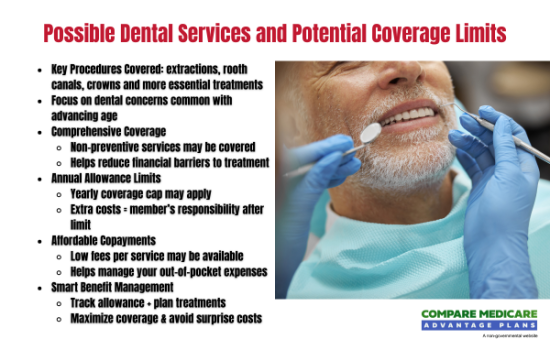
Possible Dental Services and Potential Coverage Limits

How Medicare Advantage Plans Address Dental Limitations

Medicare Advantage plans offer a broad spectrum of benefits beyond what Original Medicare includes, particularly addressing dental limitations that concern many seniors. These plans often integrate dental services, providing seniors a more comprehensive approach to health care that includes dental benefits. By covering procedures that Original Medicare does not, they ensure that seniors receive essential dental care without overwhelming costs. This section delves into the specifics of how Advantage plans navigate limitations, focusing on crucial considerations such as waiting periods and restrictions, providing clear insights for seniors and caregivers.

Considering Waiting Periods and Restrictions

Navigating the complexities of Medicare Advantage plans, particularly concerning dental coverage, requires a keen understanding of waiting periods and restrictions. Many Advantage dental plans include waiting periods before certain benefits kick in, which can impact the immediacy of care available to seniors. Typically, preventive services such as cleanings and exams might become accessible immediately, while more extensive procedures like crowns or root canals could be subject to waiting periods that may extend months. This layered approach allows insurance companies to manage costs effectively but necessitates careful planning by policyholders to ensure that their dental care needs are timely met.

Understanding these waiting periods is crucial, especially for seniors with urgent dental needs. If extensive procedures are anticipated, choosing a plan with the shortest waiting period becomes a priority, allowing for sooner access to necessary treatments. This consideration aligns well with seniors’ objectives to maintain oral health, as prolonged delays in care can escalate both health complications and financial costs. When choosing a plan, it’s vital to meticulously review each policy’s specifics, evaluating how they align with personal health timelines. A thorough grasp of these factors can prevent unwelcome surprises, offering smoother access to essential services.

Additionally, restrictions within Medicare Advantage plans can manifest in unexpected ways. Networks play a pivotal role, dictating which providers policyholders can visit without incurring significant out-of-pocket expenses. Understanding these network rules, whether the plan is HMO or PPO, helps in anticipating potential restrictions. For example, HMOs often require enrollees to stay within a defined provider network, limiting flexibility but often reducing costs. Conversely, PPOs offer greater freedom at a potentially higher cost. Recognizing these constraints aids in making strategic choices tailored to individual preferences and necessities.

Also, be aware of annual limits on how much the plan will cover for dental services. Once this cap is reached, seniors must shoulder additional costs, making it imperative to factor these limits into financial planning. When a dental plan caps expenses, beneficiaries face paying out-of-pocket for any excess. Seniors should weigh these financial limits against their projected needs, ensuring plan selections provide not just immediate coverage, but also align with expected dental expenses over the year. Comprehensive understanding of waiting periods, restrictions, and network specifics equips seniors and caregivers to choose Advantage dental plans confidently, paving the way for informed decisions that enhance health outcomes while offering financial peace of mind.

Taking proactive measures when navigating Medicare Advantage plans can help individuals effectively manage waiting periods and restrictions. Here are some additional strategies to consider:

  • Conduct a thorough review of benefit summaries to understand specific service restrictions imposed by each plan.
  • Research state-specific rules that might influence waiting periods or coverage availability.
  • Engage with customer service representatives to clarify confusing policy details or restrictions.
  • Utilize online tools and resources provided by Medicare to compare plans and identify those with minimal restrictions.
  • Join forums or support groups where peers share experiences and advice on handling plan limitations.
  • Consider insurance counseling services that can offer personalized guidance and support.
  • Plan a consultation with healthcare professionals to align dental needs with available plan benefits.

By incorporating these proactive approaches, individuals can more effectively navigate the intricacies of Medicare Advantage plans, ensuring they make informed decisions that cater to their healthcare requirements.

Understanding Medicare Advantage plans can seem a bit overwhelming, but taking the time to explore your dental coverage options for 2027 can be rewarding. As you navigate these choices, remember that your needs are unique. Our resource helps you learn more, and by entering your ZIP code on our site, you can compare plans available locally. Once our phone line is open, feel free to reach out for personal guidance. We’re here to support your journey as you consider how Medicare Advantage can enhance your dental health coverage.

Compare plans and enroll online

Frequently Asked Questions

What are Medicare Advantage Dental Plans and how do they differ from Original Medicare?

Medicare Advantage Dental Plans are offered by private insurance companies and often include additional benefits like dental coverage, unlike Original Medicare, which does not cover dental services. Medicare Advantage combines Part A and Part B, and may include other services such as prescription drugs and vision care, depending on the plan.

What types of dental services are generally covered under Medicare Advantage plans?

Coverage can vary significantly between plans, but generally, Medicare Advantage plans can cover preventive services like cleanings and exams, and might also include more complex procedures like fillings, crowns, or even dentures, depending on the specific plan and carrier.

How do plan types like HMO and PPO affect my dental coverage in Medicare Advantage?

HMO plans typically require you to use a network of providers for dental services, which can help control costs but limit your choice of dentists. PPO plans offer more flexibility in choosing providers, although this might come with higher premiums or out-of-pocket costs. Understanding your needs and how each plan works is key.

What are some financial considerations for Medicare Advantage dental plans?

The cost of Medicare Advantage plans can include premiums, copayments, and deductibles. Plans often have annual limits on coverage which, once exceeded, could lead to out-of-pocket expenses. It’s important to evaluate these costs alongside your dental needs to choose a financially viable plan.

What are waiting periods and how do they affect my coverage?

Waiting periods are the time you must wait before certain benefits start. Some plans might have no waiting periods for preventive care but require waiting for more extensive treatments. Checking these details helps ensure you receive timely care without unexpected delays.

Have Questions?

Speak with a licensed insurance agent

1-844-919-4660

TTY users 711

Mon-Fri: 8am-9pm ET

Find & Compare Plans Online

Speak with a licensed insurance agent

1-844-919-4660TTY 711

Mon-Fri: 8am-9pm ET

ZRN Health & Financial Services, LLC, a Texas limited liability company